
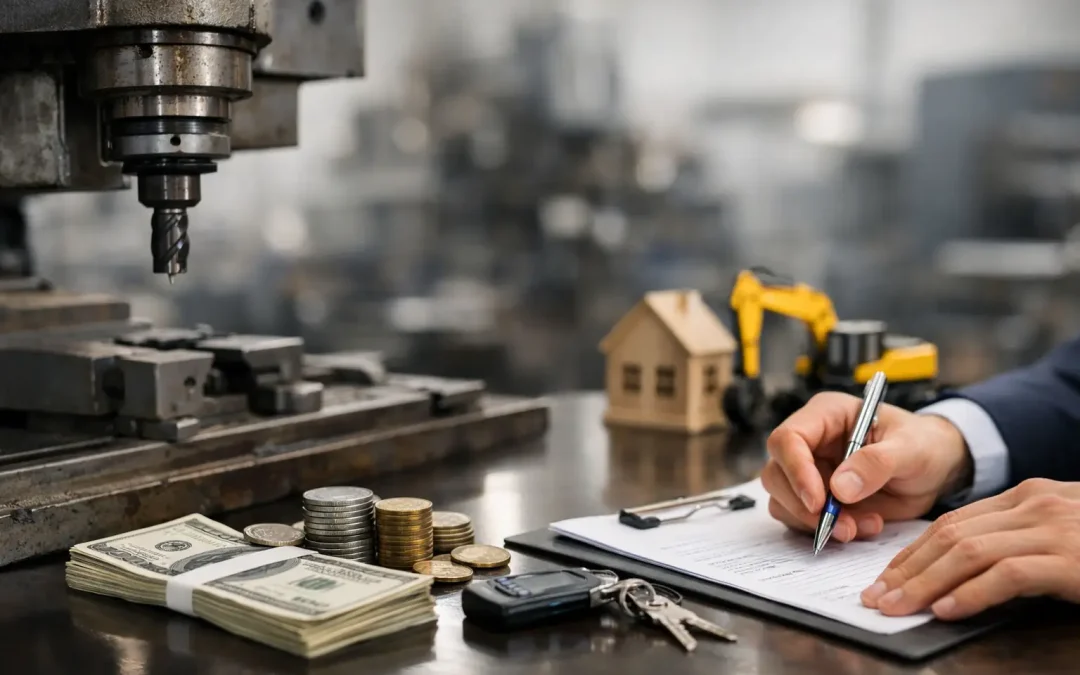
A late-model CNC machine, press brake, or fiber laser can add capacity without the lead time and price of new equipment. But the purchase only works if the payment structure supports the operation. The right used machinery financing options help manufacturers put productive assets on the floor while preserving cash for labor, tooling, material, freight, installation, and the next opportunity.
For a shop owner or plant manager, financing should not be treated as an afterthought after equipment has been selected. It affects the true cost of ownership, approval timeline, monthly operating budget, and flexibility to upgrade as customer demand changes. A good financing decision starts with the equipment’s expected workload and revenue contribution, not just its purchase price.
Start With the Machine’s Job on the Floor
Before comparing financing offers, define what the equipment must accomplish. Is a used vertical machining center replacing a down machine? Is a multi-axis lathe allowing the shop to bring outsourced work in-house? Is a fabrication machine needed to support a contract that has already been awarded?
The answers shape the best structure. A machine tied to predictable, long-term production may justify a longer repayment term and a fixed monthly payment. Equipment intended for a short-run capacity increase, a temporary contract, or a rapidly changing process may call for more flexibility, even if the monthly cost is higher.
Also account for the full project cost. The machine price is only one part of the capital requirement. Rigging, freight, electrical work, foundations, tooling, controls integration, inspection, startup labor, and any needed repairs can materially affect the budget. Some financing programs can include certain soft costs, while others fund only the equipment itself. Confirm that distinction early.
Common Used Machinery Financing Options
Most manufacturers evaluating pre-owned industrial equipment will encounter several primary financing structures. The right choice depends on credit profile, equipment type, cash reserves, tax strategy, and how long the machine is expected to remain in service.
Equipment term loans
An equipment term loan provides funding for the purchase, and the borrower repays principal and interest over a defined period. The purchased machinery typically secures the loan. Once the loan is paid off, the company owns the asset free and clear.
This is often a practical fit for durable, revenue-producing equipment that a business expects to keep for years. Term loans can offer predictable payments and may allow a borrower to match the loan term to the machine’s useful life. A down payment is commonly required, particularly for older equipment or borrowers with limited credit history.
The trade-off is that the buyer takes on ownership risk from day one. If the machine is no longer needed, its resale value and disposition become the owner’s responsibility. That is not necessarily a drawback for established shops, but it should be recognized before signing.
Equipment finance agreements
An equipment finance agreement, sometimes called an EFA, works similarly to a loan but is often designed specifically for business equipment purchases. It can provide a straightforward path to ownership with structured payments and fixed rates in many cases.
For buyers acquiring recognized brands with strong secondary-market demand, an EFA can be attractive because the lender may view the machinery as easier to value and remarket. The age, condition, controls, hours, and market liquidity of the equipment all matter. A well-maintained CNC machine from a respected manufacturer may receive more favorable consideration than highly specialized equipment with a narrow buyer pool.
Capital leases and $1 buyout leases
A capital lease, including a $1 buyout lease, generally gives the customer use of the equipment during the term and a clear path to ownership at the end. With a $1 buyout structure, the customer purchases the machine for a nominal amount after making all scheduled payments.
This option can suit manufacturers that know they want to retain the machine long term but prefer to spread the capital expense over time. It often delivers payment certainty and makes ownership at the end of the term simple. As with any ownership-oriented structure, review the total cost, early payoff terms, insurance requirements, and any personal guarantee provisions.
Fair market value leases
A fair market value lease, or FMV lease, may offer lower monthly payments because the customer has an end-of-term option to return the equipment, renew the lease, or purchase it at its then-current fair market value. This approach can make sense for technology-sensitive equipment or operations that expect their needs to change.
For industrial machinery, the fit depends on the asset. A standard machine with broad resale demand may work well in an FMV structure. A machine heavily customized for one process can be more complicated. Ask how the end-of-term value is determined and what condition standards apply if equipment is returned.
Working capital and business lines of credit
A line of credit is not always the lowest-cost way to purchase machinery, but it can be useful when speed and flexibility matter. It may help cover a deposit, freight, installation, tooling, or a smaller equipment purchase. Some manufacturers use a line to move quickly on an auction purchase, then refinance the asset into a longer-term equipment facility after the acquisition.
The risk is using short-term working capital for a long-lived asset without a clear repayment plan. That can put unnecessary pressure on operating cash flow. If a line of credit is used, make sure the payment requirements align with the production ramp-up and expected customer receipts.
What Lenders Evaluate on Used Equipment
Financing used machinery is common, but lenders generally underwrite it differently than new equipment. They want confidence in both the borrower and the collateral. A clean, well-documented machine with identifiable serial numbers, maintenance records, and established resale demand is easier to finance than equipment with uncertain condition or limited marketability.
Expect a lender to review business financials, time in business, debt obligations, credit history, cash flow, and the proposed transaction details. For the equipment, they may request a quote or invoice, machine specifications, photographs, year of manufacture, hours where applicable, and an appraisal or inspection for higher-value assets.
Older equipment is not automatically disqualified. Many lenders finance older machines when the asset is productive, serviceable, and supported by a credible value assessment. Still, advance rates and term lengths may be more conservative as equipment age increases. That is why accurately representing condition matters. A transparent equipment package reduces delays and helps prevent last-minute changes to approval terms.
Compare More Than the Monthly Payment
A lower payment can be useful, but it is not the only number that matters. Compare the total financing cost, repayment term, down payment, documentation fees, prepayment terms, end-of-term obligations, and whether the rate is fixed or variable.
A longer term can protect near-term cash flow, especially when a machine will take several months to reach full utilization. However, stretching payments too far can raise the total cost and leave the business owing more than the equipment’s market value if plans change. A shorter term builds equity faster but can make a new machine payment difficult to carry during slower periods.
It is also wise to look at the machine payment alongside projected gross margin, not revenue alone. If a press brake is expected to generate $20,000 in monthly sales but requires material, labor, programming, maintenance, and outsourced finishing, the actual cash contribution may be much lower. Finance the asset around conservative production assumptions, not the best-case forecast.
Build Speed Into the Buying Process
Good used machinery moves quickly, particularly when it is a late-model machine from a sought-after brand or part of a plant closure. Buyers who wait to organize financial information until after locating the right asset can lose time and negotiating leverage.
Prepare recent financial statements, tax returns if requested, ownership information, bank details, and a concise explanation of the equipment’s use before beginning the search. If your company anticipates recurring purchases, consider establishing a financing relationship or equipment credit facility in advance. Pre-approval does not eliminate due diligence, but it can make decision-making faster when the right machine becomes available.
For auction purchases, timing requires even more attention. Confirm buyer’s premiums, payment deadlines, removal requirements, rigging costs, and whether financing proceeds can be delivered within the required window. A winning bid is only the beginning of the transaction.
Work With Equipment Information You Can Use
The financing provider will need clear transaction details, and so will your operations team. Ask for the information needed to assess fit: specifications, available maintenance history, controls, tooling included, inspection opportunities, loading requirements, and any known issues. A low purchase price does not offset weeks of unexpected downtime or a costly controls retrofit.
At Revelation Machinery, buyers can source pre-owned equipment across CNC, chip-making, fabrication, and other industrial categories while working with a team that understands the urgency behind production decisions. Having accurate machine details and responsive transaction support makes it easier to coordinate equipment selection, financing discussions, freight, and installation without losing momentum.
The best financing structure is the one that lets the machine earn its place on the floor. Match the payment to realistic utilization, protect the cash needed to operate, and move forward only when the equipment condition and transaction terms give your team confidence.