
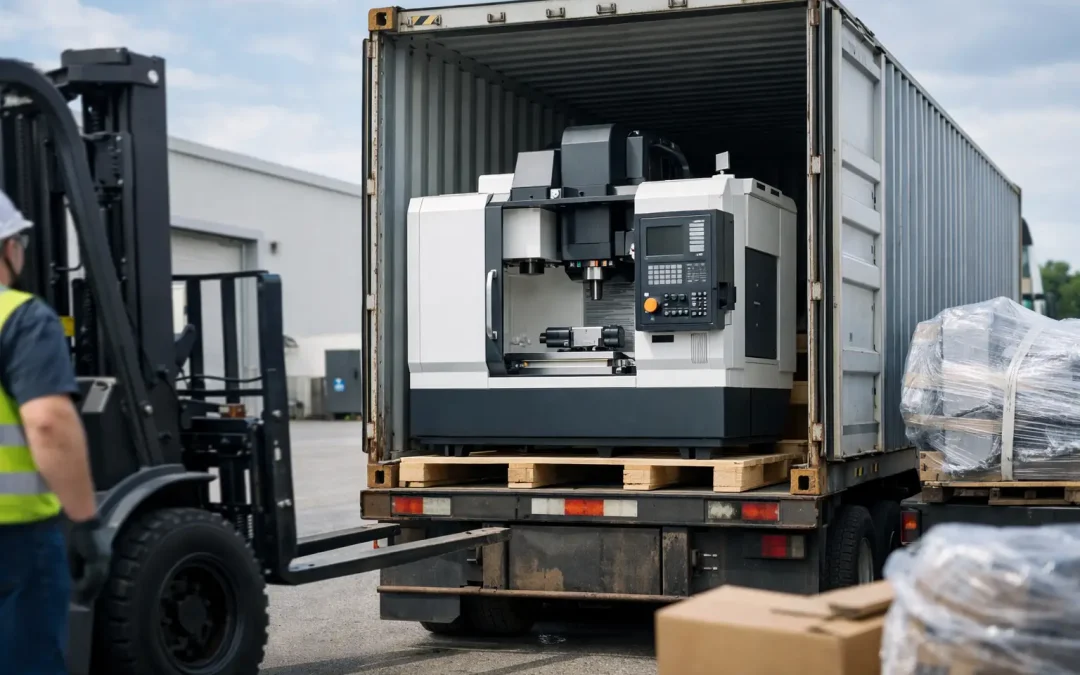
A CNC machine can leave a seller’s floor in running condition and arrive at its destination with a damaged spindle, shifted axis, contaminated way covers, or a missing accessory if the move is not planned correctly. CNC machine shipping is not standard freight. It is a coordinated equipment move that affects production schedules, installation costs, insurance exposure, and the useful life of a major capital asset.
For a machine shop adding capacity, a plant relocating equipment, or a buyer acquiring used machinery from another state, the goal is simple: get the machine delivered safely, completely, and ready for an efficient startup. That requires clear responsibilities before the truck arrives, not problem-solving after the machine is on the dock.
CNC Machine Shipping Starts Before Pickup
The shipping plan should begin with the exact machine configuration, not a generic equipment description. A vertical machining center listed at 18,000 pounds may weigh substantially more once a chip conveyor, tool changer, coolant system, transformer, control cabinet, fourth-axis unit, and loose tooling are included. Dimensions matter just as much. Travel height, door openings, loading dock capacity, ceiling clearance, and the machine’s center of gravity all affect the rigging approach and trailer selection.
Confirm the machine make, model, serial number, overall dimensions, operational weight, and every item included in the sale. Ask whether the machine will ship with manuals, control backups, tooling packages, chucks, hydraulic units, bar feeders, transformers, or automation equipment. Small components are frequently where avoidable losses occur. A properly documented accessory list keeps the transaction transparent for both buyer and seller.
The machine’s condition should also be recorded before it is disconnected. Photos and video of the control, spindle, axes, guarding, electrical cabinet, and any existing cosmetic damage create a useful baseline. If a machine was inspected under power, retain those records. This is especially valuable for used equipment moving across the country, where pickup and delivery may be separated by days or weeks.
Identify Who Is Handling Each Step
A successful move assigns ownership for deinstallation, rigging, loading, freight, unloading, placement, and startup. Do not assume the freight carrier will disconnect a machine, secure loose components, or provide a forklift capable of unloading it. Those services may require separate vendors, separate insurance coverage, and separate scheduling.
The seller typically needs to provide safe site access, utility disconnects, equipment access, and accurate information about the machine’s condition. The buyer needs a prepared delivery site, confirmed receiving hours, adequate floor capacity, and a qualified crew or rigger for unload and set. If a dealer is coordinating the transaction, confirm exactly what is included in the quote and what remains the buyer’s responsibility.
Prepare the CNC Machine for Transport
Proper preparation protects precision components from damage caused by vibration, movement, temperature changes, and moisture. The details vary by machine type and manufacturer, but the preparation process should never be improvised at the last minute.
First, follow the manufacturer’s lifting and transport instructions whenever they are available. Many machines have designated lift points, transit brackets, and axis-locking requirements. If those items are missing, a qualified machinery rigger should determine a safe alternative. Improper lifting can distort castings, damage enclosures, or put personnel at risk.
Axes should be positioned and secured according to the manufacturer’s guidance. Tool changers, automatic doors, pallet changers, and other moving assemblies may need additional restraint. Secure or remove items that can shift during transport, including chip conveyors, coolant tanks, cable bundles, pendant controls, and loose guarding. Remove tools from the spindle and magazine unless the manufacturer specifically directs otherwise.
Fluids deserve special attention. Coolant and sump contents commonly need to be drained before shipping, while lubrication systems may need to remain protected or serviced according to the OEM recommendation. A machine that is allowed to leak during transit can create a safety issue, a freight claim, and contamination inside the trailer. Cap exposed hoses and fittings, protect electrical connections, and seal openings that could admit dust or water.
For long-distance moves, wrapping and weather protection may be appropriate, particularly when a machine will sit outdoors during pickup, cross-dock, or delivery. However, shrink wrap is not a substitute for correct blocking, bracing, and securement. Moisture trapped under poorly applied wrap can create its own problems, so packaging should fit the route and expected storage conditions.
Choose the Right Rigging and Freight Method
The lowest freight quote is not always the lowest total cost. A carrier may offer competitive pricing while excluding equipment, permits, loading support, or appointment flexibility that the move requires. A delayed delivery can cost far more than a properly planned shipment when it holds up installation crews or disrupts production.
Flatbeds, step-decks, lowboys, enclosed trailers, and specialized heavy-haul configurations all have a place in CNC machine shipping. The right choice depends on weight, height, width, loading method, weather exposure, route restrictions, and delivery conditions. An enclosed trailer may offer better protection for sensitive controls and accessories. A lowboy may be necessary for a tall or heavy machining center. A standard dry van can work for some compact machines, but only if loading, blocking, and weight distribution are appropriate.
Oversize and overweight loads can require route planning, permits, escorts, and lead time. The shipment may also be limited by bridge clearances, local road restrictions, or delivery-site access. If the destination has a narrow drive, low power lines, limited turning room, or no dock, raise those details early. A delivery plan that works on paper can fail quickly at the final mile.
Experienced machinery riggers understand how to load equipment so that it remains stable in transit and can be unloaded safely. That includes proper blocking, rated chains or straps, protection at contact points, and load placement that supports legal axle weights. Ask for confirmation that the carrier and rigger are insured for the equipment value and scope of work involved.
Protect the Transaction With Clear Documentation
Freight damage claims become difficult when the paperwork is vague. Before pickup, document the machine condition, included accessories, machine serial number, and any known exceptions. At loading, photograph the equipment after it is secured on the trailer. At delivery, inspect the shipment before signing a clean bill of lading.
If there is visible damage, missing equipment, wet packaging, or evidence that the load shifted, note the issue clearly on the delivery receipt and take photos immediately. A notation such as “subject to inspection” may not provide enough detail for a claim. Record the specific concern, such as damaged enclosure panel, missing chip conveyor, torn wrapping, or shifted control cabinet.
Insurance should be discussed before the machine moves. Carrier liability is often limited and may not equal the replacement value or purchase price of a CNC machine. Determine whether the shipment is covered by cargo insurance, a separate policy, or the buyer’s existing property coverage. The right answer depends on the transaction, but the exposure should never be assumed away.
Plan Delivery Around Installation, Not Just Arrival
Delivery is a handoff point, not the finish line. The receiving site should be ready before the truck is dispatched. Verify slab condition and floor loading, door dimensions, path of travel, electrical requirements, compressed air, coolant management, and clearance for service access. A machine that fits through the building door may still be impossible to position without moving other equipment or using specialized skates, cranes, or lift trucks.
Schedule the unload when the rigger, electrician, machine technician, and key operations contact can respond if needed. If the machine must remain on the trailer because the site is not ready, detention charges and rescheduling costs can escalate quickly. More importantly, rushed unloading increases risk.
After placement, inspect the machine again before installation begins. Confirm that accessories arrived, shipping brackets are removed correctly, and no transport damage is visible. Leveling, electrical connection, lubrication checks, parameter verification, and test cuts should follow the machine manufacturer’s procedures. For equipment with advanced controls, probing, pallet systems, or multi-axis capability, a qualified technician can help shorten the path to reliable production.
When Buying or Selling Used Equipment
Used machinery transactions often involve more variables than new-equipment deliveries. The machine may be located at an active plant, a closed facility, an auction site, or a seller’s warehouse. Access windows can be limited, and the equipment may need to be removed around operating machinery. Buyers should request shipping details early enough to build transportation and rigging into the total acquisition budget.
Sellers can protect value by making removal straightforward. Provide accurate weights and dimensions, identify required rigging points, keep accessories organized, and establish a realistic removal schedule. A well-managed pickup reflects positively on the sale and reduces disputes after the equipment leaves the building.
Revelation Machinery helps buyers and sellers move industrial assets with the practical coordination these transactions demand. From evaluating used CNC equipment to arranging the next steps around removal and delivery, the focus is on a clear process, responsive support, and fewer surprises.
The best equipment move is rarely the one with the fastest pickup date. It is the one that arrives complete, protected, and positioned for startup without creating a new production problem for the team waiting on the other end.