
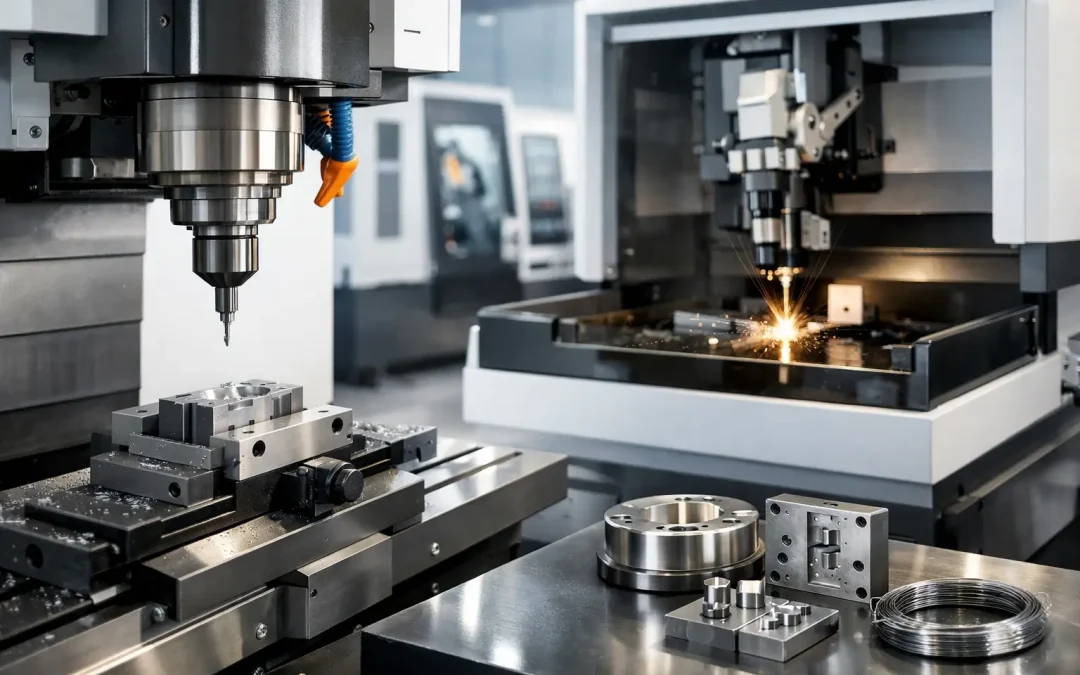
A machine that looks like a bargain can become the most expensive asset on the shop floor if it cannot hold tolerance, accept the required tooling, or keep up with production. The best chip making machines are not defined by brand name alone. They are the machines that match your part mix, material, throughput targets, operator resources, and available capital without creating a new bottleneck.
For manufacturers, chip making equipment means more than a single category. CNC lathes, vertical machining centers, horizontal machining centers, Swiss-type lathes, and multi-axis turning centers all remove material, but they solve very different production problems. Selecting the right platform starts with understanding where your work is headed, not just what is currently on the schedule.
What Makes the Best Chip Making Machines?
The best machine for a prototype department may be a poor choice for a high-volume production cell. A three-axis vertical machining center can be an efficient, versatile answer for prismatic parts, fixtures, plates, and general milling work. A multi-axis lathe may reduce setups and protect margins when the work centers on shafts, fittings, valves, and complex turned components. The right choice depends on the workpiece, required accuracy, cycle time, and how much unattended production the operation needs.
Capacity is the first practical filter. Review table size, travels, spindle bore, chuck size, bar capacity, maximum turning diameter, part weight, and tool capacity against your actual parts. Do not buy to the average job alone. Consider the largest part, the most demanding material, and the next logical family of work you want to bring in-house. A machine with insufficient travel or weight capacity can limit quoting opportunities immediately.
Accuracy and repeatability deserve the same attention. A machine may have an attractive original specification, but used equipment should be evaluated on its present condition. Inspect geometry, spindle performance, backlash, axis movement, lubrication, way condition, alarms, and available maintenance records. For tight-tolerance work, a qualified inspection and, when appropriate, a test cut provide more useful information than a brochure specification.
Control familiarity also affects the return on investment. Fanuc, Haas, Siemens, Mazak, Okuma, and Heidenhain controls each have strengths, but the best option is often one your team can program, troubleshoot, and support without a steep learning curve. A capable machine sitting idle while operators wait for outside programming support is not adding capacity.
Match the Machine Type to the Work
Vertical machining centers
Vertical machining centers, commonly called VMCs, remain a core investment for many machine shops because they handle a broad range of milling work with straightforward setup and strong tooling availability. They are often the most practical entry point for shops adding CNC capacity or replacing an older manual process. For low-to-medium-volume prismatic work, a VMC can offer the right balance of cost, flexibility, and operator accessibility.
The trade-off is setup time. If a part requires machining on several sides, each repositioning adds labor, handling, and the possibility of error. A fourth-axis rotary table or five-axis VMC can reduce those setups, but higher capability brings additional programming, fixturing, and maintenance considerations.
CNC lathes and turning centers
CNC lathes are built for round work and are especially effective for parts made from bar stock, forgings, castings, or cut blanks. A standard two-axis lathe can be a productive solution for bushings, sleeves, pins, flanges, and similar components. Adding a bar feeder supports longer unattended runs, while live tooling and a Y-axis allow drilling, milling, and off-center features in the same cycle.
For shops that regularly complete secondary milling operations after turning, a live-tool turning center can deliver a major reduction in part handling. That benefit must be weighed against complexity. More axes and more functions make the machine more capable, but they also increase the need for skilled programming, tool management, and preventive maintenance.
Horizontal machining centers
Horizontal machining centers, or HMCs, are often the stronger choice for production-oriented milling. Pallet changers allow one fixture to be loaded while another part is being machined, improving spindle utilization. Their configuration can also support better chip evacuation on many parts, particularly deep-pocketed components and castings.
An HMC is not automatically the right answer for every shop. It typically requires a larger capital commitment, more floor space, and a steady enough workload to justify its production advantages. When volumes are consistent and setup reduction matters, however, the productivity gain can be substantial.
Swiss-type lathes and multi-axis machines
Swiss-type lathes excel at small, long, precision parts where support near the cutting tool helps control deflection. Medical, aerospace, electronics, and precision component manufacturers often rely on this format for high-volume work in small diameters. These machines can produce intricate parts quickly, but they demand disciplined tooling, programming, and material handling.
Multi-axis mill-turn machines bring turning and milling into one platform for complex components. They can reduce setups, shorten lead times, and improve feature-to-feature accuracy. They are most valuable when their full capability is used consistently. Buying a highly sophisticated machine to run simple two-axis work can tie up capital without delivering the expected return.
Evaluate Productivity Beyond Spindle Speed
Spindle speed attracts attention, especially when comparing machine listings, but it is only one part of productive capacity. Horsepower and torque matter for heavy cuts and tough materials. Rapid traverse rates, acceleration, tool-change time, chip management, probing, automation readiness, and control cycle time all influence the number of good parts produced per shift.
Focus on the total process. A machine that removes metal quickly but requires frequent manual intervention may lose to a slightly slower machine with reliable probing, sufficient tool storage, and a pallet or bar-feeding strategy. The most useful question is not, “What is the fastest machine?” It is, “What machine will produce acceptable parts at the lowest reliable cost per part?”
Before committing, review these operational questions with production, maintenance, and finance stakeholders:
- Can the machine process the part families that drive current revenue and anticipated growth?
- Does your facility have the electrical service, floor space, rigging access, and coolant or chip-handling capacity it requires?
- Are trained operators, programmers, tooling, and service resources available?
- Will the machine reduce an existing constraint, or simply add capacity where capacity is not needed?
These questions help prevent a common buying mistake: selecting equipment around an impressive feature set rather than a measurable production need.
Buying Used Chip Making Equipment With Confidence
Used machinery gives manufacturers a practical path to recognized brands and higher-capability equipment without the lead times and capital outlay associated with new assets. The opportunity is significant, but the buying process should be disciplined. Condition, configuration, age, hours, included tooling, control generation, and service history can change the value of two outwardly similar machines.
Start with a written requirement. Define the materials you cut, critical tolerances, part envelope, target cycle times, automation needs, preferred control, budget range, and delivery deadline. This creates a clear basis for comparing equipment and avoids spending time on machines that are technically capable but operationally mismatched.
Then assess the total acquisition cost. The purchase price is only part of the investment. Include freight, rigging, installation, electrical work, foundations if needed, tooling, workholding, bar feeders or pallet systems, software, training, and any required repairs. A lower-priced machine located across the country may still be the best value, but only after logistics and commissioning costs are understood.
Availability can also matter as much as specification. A new machine order may not fit a customer deadline, a replacement need, or a plant expansion schedule. A well-matched used machine that can be inspected, purchased, and shipped promptly may protect production continuity and preserve a critical customer relationship.
Revelation Machinery helps buyers source pre-owned CNC and chip making equipment from recognized manufacturers, with responsive support for the practical details that affect the transaction. For sellers, direct purchase, consignment, and auction options can turn idle equipment, surplus assets, or complete plant machinery into working capital without dragging out the process.
Choose for the Next Job, Not Just the Current One
The best chip making machines create a useful margin between what your shop needs today and what it can profitably take on tomorrow. That does not mean buying maximum capacity at any cost. It means selecting equipment with the right travels, tooling, control, reliability, and support path for the work that will keep your spindles productive.
A clear requirement, a careful condition review, and a realistic installation plan make equipment decisions easier to defend. When the machine arrives ready to solve a real production constraint, it becomes more than an asset on the books – it becomes a dependable part of your operating plan.