
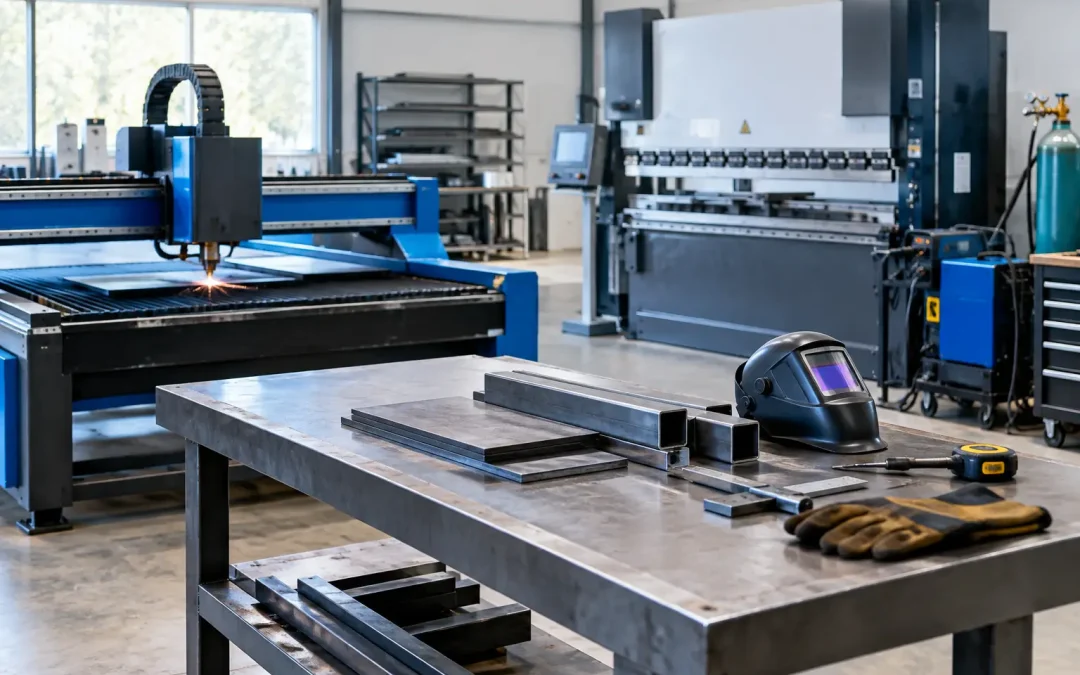
A fabrication shop can lose more money waiting on the wrong machine than it saves on a low purchase price. The best equipment for metal fabrication is not simply the newest or largest option. It is the equipment that matches your material mix, part geometry, production volume, labor availability, and delivery commitments while leaving room for profitable growth.
For most operations, the right buying decision starts with the bottleneck. If cutting is holding up bending, adding another press brake will not improve throughput. If skilled operators are difficult to hire, automation and easier controls may deliver more value than a faster manual process. A clear look at the work moving through your floor turns equipment buying from a capital expense into a capacity plan.
Best Equipment for Metal Fabrication by Process
A capable metal fabrication operation usually combines cutting, forming, machining, welding, and finishing equipment. Not every shop needs every category in-house, but understanding where each machine fits helps you prioritize investments that reduce lead times and subcontracting costs.
Cutting equipment: start with material and edge quality
For sheet and plate work, a fiber laser is often the first machine buyers consider. Fiber lasers offer high speed on thin to medium-gauge material, clean cut edges, low maintenance requirements compared with older laser technology, and efficient processing of common materials such as mild steel, stainless steel, and aluminum. They are a strong fit for shops with repeatable sheet-metal production, tight nest requirements, and a need to move parts quickly into bending or welding.
The trade-off is that laser capacity must be supported by dependable material handling, assist gas supply, maintenance knowledge, and downstream labor. Buying a laser that can outpace every other department may create an expensive work-in-process pileup.
Plasma cutting remains a practical choice for thicker plate, lower-volume work, and operations where ultra-fine edge quality is not the primary requirement. A CNC plasma table can provide productive cutting capacity at a lower entry cost than a fiber laser. Waterjet systems serve different needs, particularly when heat-affected zones are unacceptable or when the shop cuts nonmetal materials alongside metal. Sawing equipment, including horizontal band saws and cold saws, is essential for structural stock, tubing, bar, and cutoff work.
Forming equipment: press brakes earn their floor space
A press brake is central to most sheet-metal fabrication operations. The right brake is determined by more than tonnage. Buyers need adequate bed length, throat depth, daylight, stroke, backgauge capability, tooling compatibility, and controller functionality for the parts they actually run.
CNC press brakes bring repeatability to multi-bend parts and reduce setup variability. They are particularly valuable when a shop handles short runs, frequent changeovers, or work with multiple angles and flange dimensions. Hydraulic press brakes remain a reliable option for many applications, while electric press brakes can be compelling for certain thin-material, high-repeatability jobs because of their energy efficiency and speed.
Do not buy tonnage based on a single occasional job. Review the thickness, bend length, material grade, and inside radius of your regular workload. Oversizing a brake can tie up capital that would have a greater impact in cutting, material handling, or tooling. Undersizing it creates scheduling pressure and may force work outside the shop.
A dependable tooling package matters as much as the machine. Standard punches and dies cover basic work, but specialty tooling, segmented tools, and quick-clamping systems can make a major difference in setup time and part consistency.
Punching, rolling, and specialty forming equipment
Turret punches remain productive for parts with repetitive holes, louvers, forms, embosses, and other features that would require secondary operations after laser cutting. They are not the right answer for every sheet-metal job, but they can be highly efficient when part design and volume support the process.
Plate rolls, angle rolls, ironworkers, notchers, and shears fill important roles in shops serving structural, architectural, HVAC, tank, or general fabrication markets. These machines may not receive the same attention as a fiber laser or press brake, yet they often determine whether a shop can complete a job internally and keep delivery promises. The best purchase is frequently the machine that eliminates the most disruptive outside process.
Machining equipment for fabricated assemblies
Fabrication shops increasingly need machining capability for weldments, fixtures, mounting surfaces, and completed assemblies. Vertical machining centers are a practical starting point for drilling, tapping, milling, and finishing work on a broad range of components. Horizontal machining centers and multi-axis equipment can add productivity for higher-volume or more complex work, but they require stronger programming resources and consistent part flow.
For round components, CNC lathes and multi-axis turning centers can bring shafts, bushings, threaded features, and precision cylindrical parts under one roof. This capability reduces handoffs between suppliers and gives operations teams greater control over final assembly schedules.
The key question is whether machining will run consistently enough to justify ownership. If your need is occasional, outsourcing may still be the better financial choice. If machining delays regularly hold up assemblies, in-house capacity can protect both margins and customer relationships.
Welding and finishing equipment complete the workflow
Welding equipment should match the materials, joint designs, certification requirements, and production pace of the shop. MIG welding supports fast fabrication of steel structures and general assemblies. TIG is better suited to thin materials, stainless, aluminum, and appearance-critical work. Robotic welding can improve consistency and output on repeat jobs, but it requires stable part fit-up, proper fixturing, and enough volume to support programming and cell setup.
Finishing equipment also deserves a place in the capital plan. Deburring machines, timesavers, vibratory finishing systems, grinders, blasting equipment, and paint or powder-coating systems can improve quality while reducing labor-intensive rework. A clean, safe edge is not a cosmetic detail. It affects assembly time, coating adhesion, worker safety, and customer acceptance.
How to Choose the Right Fabrication Equipment
Equipment specifications matter, but operational fit matters more. Before requesting quotes or reviewing available used machinery, document the jobs that consume the most hours, create the longest queues, or generate the most outside-processing expense. Look at the last 12 months of work rather than relying only on the next large order.
A disciplined evaluation should account for four practical factors:
- Material range, including thickness, grade, sheet or plate size, and typical part dimensions.
- Required output, measured by realistic shifts, setup frequency, and actual operator availability.
- Quality standards, including tolerances, edge condition, bend accuracy, weld requirements, and traceability.
- Total ownership cost, including tooling, electrical requirements, rigging, freight, installation, training, preventive maintenance, and consumables.
Used equipment can be an especially effective way to expand capacity without committing the full capital cost of new machinery. A well-maintained pre-owned press brake, fiber laser, machining center, or CNC lathe can provide years of productive service when its condition, controls, service history, and application fit are properly reviewed. The objective is not to find the lowest sticker price. It is to acquire dependable equipment with a clear path to installation and production.
Buyers should also consider supportability. Common brands with available parts, service resources, manuals, and knowledgeable technicians are typically easier to keep productive. Older machines can be excellent values, but proprietary controls, obsolete drives, or unavailable components can turn a bargain into downtime. Ask direct questions about hours, maintenance records, tooling, included accessories, power requirements, and whether the machine can be inspected or demonstrated.
Build Capacity Without Creating New Bottlenecks
The strongest fabrication floors are balanced. A high-output laser paired with slow manual bending, limited welding stations, or inadequate material flow will not produce its rated value. Map each step from receiving through shipment, including programming, material staging, inspection, and part handling. The slowest recurring step is usually the place to invest first.
Material handling is often overlooked during equipment planning. Forklifts, cranes, vacuum lifters, sheet loaders, racks, conveyors, and organized staging areas can protect people and improve machine utilization. A machine operator who spends a large portion of the day searching for material or moving completed parts is not operating at productive capacity.
Revelation Machinery helps manufacturers evaluate used industrial equipment with the urgency and transparency these decisions require. Whether you are adding a single press brake, replacing aging cutting equipment, or outfitting an expanded facility, the right sourcing partner can help you compare available machines, manage logistics, and move forward with confidence.
The next equipment purchase should solve a specific production problem you can measure. When the machine, workflow, and support plan are aligned, the result is more than additional floor capacity. It is a more dependable operation that can quote faster, ship with greater confidence, and keep profitable work moving.