
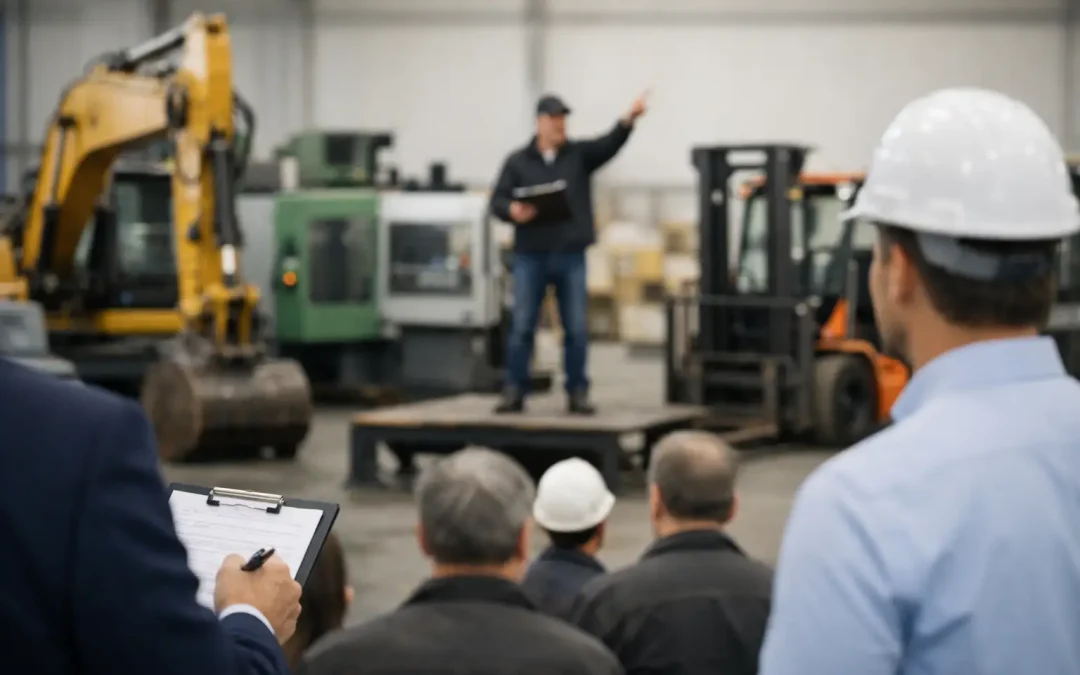
When a plant is consolidating, a shop needs to free up cash, or production capacity has to come online fast, the wrong sales channel creates delays you can feel on the floor. An industrial equipment auction company can solve that problem, but only if it does more than post assets online and wait for bids. For manufacturers, the real value is speed, market reach, accurate representation, and support that keeps the transaction moving.
What an industrial equipment auction company actually does
At a basic level, an industrial equipment auction company markets and sells used machinery to the highest bidder. In practice, the job is much broader. It includes asset evaluation, lotting strategy, photography, equipment descriptions, buyer outreach, bidding management, payment coordination, and often removal planning.
That matters because industrial assets are not casual purchases. A vertical machining center, press brake, fiber laser, multi-axis lathe, or packaging line brings real capital risk. Buyers need confidence that the equipment is represented clearly. Sellers need confidence that the process will attract serious bidders and maximize recovery without dragging on for months.
The best auction partners also understand where auction fits within a larger equipment strategy. Not every machine should go to auction. Some assets perform better through direct sale or consignment, especially when the equipment is in high demand, lightly used, or tied to a specific buyer market. A strong partner helps you choose the right path instead of forcing every asset into the same process.
When auction makes sense for industrial sellers
Auction is usually the strongest fit when timing matters more than holding out for one ideal buyer. Plant closures, facility consolidations, excess inventory reduction, lease returns, and end-of-line production changes all create situations where speed has real financial value.
In those cases, a deadline-driven sale creates urgency and concentrates buyer attention. That urgency can produce competitive bidding, especially on recognizable brands and widely used categories like CNC machining centers, lathes, fabrication equipment, air compressors, support equipment, and material handling assets.
There is a trade-off. Auction can move assets quickly, but final pricing depends on bidder demand on a defined timeline. If a machine has a narrow buyer pool or needs extensive testing, a private sale may deliver a better result. That is why a credible auction company should be candid about expected outcomes instead of promising top dollar on every piece of equipment.
For many manufacturers, the right answer is a hybrid approach. Premium machines may be marketed directly while secondary assets, tooling, and plant support equipment go to auction. That blended strategy often improves total recovery and keeps the liquidation process efficient.
What buyers should expect from an industrial equipment auction company
Buyers are not just looking for a low price. They are looking for usable information, responsive communication, and a transaction they can trust. A reputable industrial equipment auction company should provide enough detail for buyers to make fast, informed decisions without chasing basic facts.
That starts with listing quality. Model numbers, specifications, serial numbers when available, known accessories, control types, capacities, and machine condition should be presented clearly. Photos should show the actual asset, not generic catalog imagery. If inspection windows are available, they should be easy to understand. If rigging or loading requirements are unusual, that should be disclosed early.
Serious buyers also care about process discipline. They want clear terms, transparent bidding, defined timelines for invoicing and removal, and a team that responds quickly when questions affect a purchasing decision. In industrial transactions, delays cost money. If a buyer has to wait days for a freight dimension, power requirement, or payment clarification, that machine may no longer solve the production problem it was meant to fix.
The difference between a listing platform and a real partner
This is where many sellers and buyers get burned. A basic online marketplace can publish listings, but that is not the same as running a successful industrial auction. The difference is in execution.
A real partner brings market knowledge by category. It understands that a late-model fiber laser with strong service history should be marketed differently than older fabrication support equipment. It knows how buyers search for a horizontal machining center versus a press brake. It knows which assets need stronger spec work and which assets benefit from targeted outreach to known users, dealers, and exporters.
It also manages the details that affect outcomes. Poor lot structure can suppress bids. Weak photos can reduce buyer confidence. Vague descriptions create hesitation. Slow post-sale coordination frustrates buyers and reflects poorly on the seller. In a plant liquidation or surplus event, those details are not minor. They directly affect recovery, timeline, and operational disruption.
How sellers should evaluate an auction company
If you are choosing a partner, start with reach and buyer depth. National exposure matters, especially for equipment categories that attract buyers across multiple regions. A company with a broad existing buyer base can create more competition than one relying only on passive traffic.
Next, look at category experience. Industrial machinery is not one market. CNC equipment, chip-making assets, fabrication machinery, process equipment, and packaging lines each have different buyer behavior. You want a team that understands your equipment mix and can position it correctly.
Responsiveness is another major factor. Asset sales often happen under pressure. Maybe a facility has a hard shutdown date. Maybe management wants idle assets off the books this quarter. Maybe a replacement machine is arriving and floor space is tight. In those situations, delays in valuation, marketing launch, or sale administration become expensive.
You should also ask how the company handles more than the sale itself. Can it support appraisals or equipment identification? Can it recommend whether certain machines should be sold outright instead of auctioned? Can it help coordinate logistics after the sale? A partner that can manage both auction and resale options gives you more control over the result.
Why transparency matters on both sides
Industrial buyers and sellers do not need sales language. They need facts. Transparency is what keeps transactions moving and protects long-term trust.
For sellers, that means realistic pricing guidance, honest expectations about buyer demand, and a clear fee structure. For buyers, it means accurate descriptions, visible terms, and prompt communication when something changes. If an asset is powered down and cannot be tested, say so. If removal must happen within a narrow window, make it clear before bidding starts.
This straightforward approach may seem basic, but it is what separates dependable auction companies from transactional ones. In manufacturing, reputations are built on whether people do what they said they would do. A fast sale is good. A fast sale with no surprises is better.
The value of a hybrid dealer and auction model
For many manufacturers, the strongest option is not a company that only auctions equipment. It is a partner that can buy, sell, source, and liquidate machinery through multiple channels. That model gives sellers better flexibility and gives buyers access to more inventory beyond timed auction events.
If an auction is not the right fit for a particular machine, a dealer-backed company can often pursue a direct sale or consignment strategy. If a buyer misses an auction but still needs a vertical machining center, lathe, or press brake quickly, inventory access matters. That combination reduces friction on both sides of the market.
It also improves decision-making. Instead of pushing every situation into one format, the company can match the channel to the asset, timeline, and market demand. For manufacturers managing capital carefully, that flexibility is a real advantage.
Revelation Machinery is one example of this approach, combining nationwide reach, online auction capability, and direct equipment sales for manufacturers that need speed without losing visibility into the process.
What the right partner helps you avoid
A capable auction company does more than sell machines. It helps you avoid common failure points: under-marketed assets, weak bidder turnout, vague listings, slow answers, missed timelines, and post-sale confusion around payment, rigging, or removal.
For sellers, that means fewer surprises and a clearer path from surplus identification to final disposition. For buyers, it means less time sorting through poor information and more confidence placing a bid on equipment that can support production.
That is especially important in used machinery, where every transaction sits at the intersection of budget, uptime, and timing. Price matters, but so does confidence. A machine that arrives as expected and gets installed on schedule is worth more than a cheap purchase wrapped in uncertainty.
The right industrial equipment auction company should make the process feel faster, clearer, and more controlled – because in a busy shop or a changing plant environment, that is what good service looks like.