
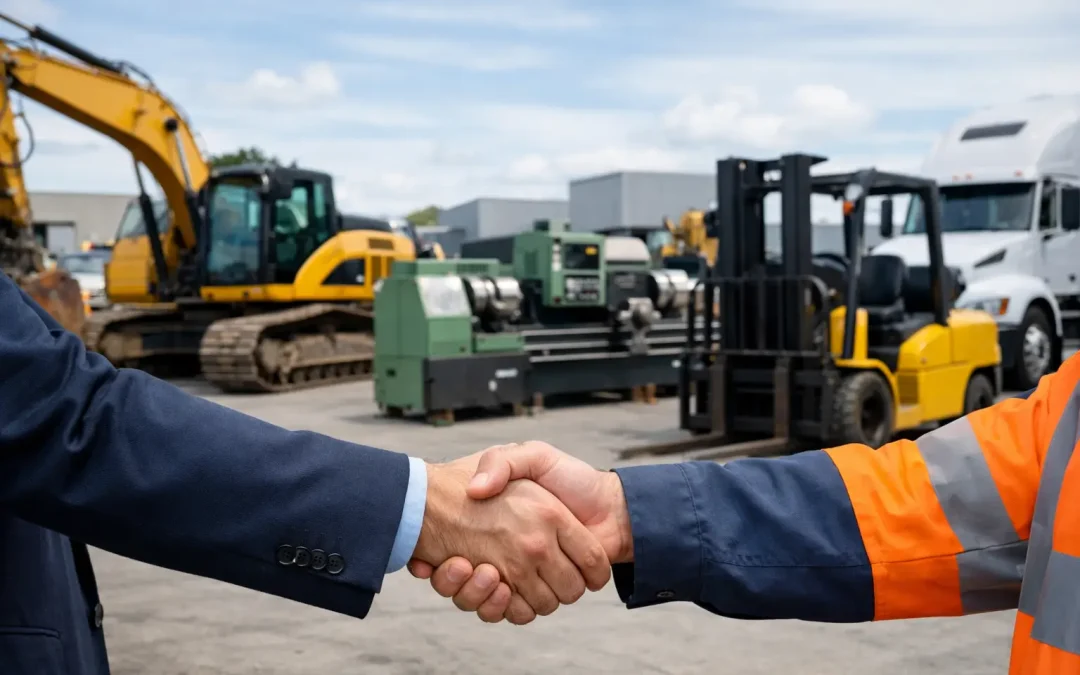
When a machine stops fitting your production plan, every week it sits on the floor costs you twice – once in tied-up capital and again in lost space, power, and attention. That is where industrial equipment consignment services make a real difference. Instead of waiting on scattered buyer inquiries or accepting a rushed low offer, manufacturers can move surplus equipment through a structured sales process built around market pricing, qualified demand, and operational follow-through.
For many shops and plants, consignment is the middle ground that makes the most sense. A direct purchase offers speed, but it may not always maximize return. An auction can be the right fit for a closure, a full liquidation, or a hard deadline, but it is not the only option. Consignment gives sellers a disciplined resale channel without forcing them to manage photography, listings, buyer screening, negotiation, rigging coordination, and payment collection on their own.
How industrial equipment consignment services work
At a practical level, industrial equipment consignment services allow an owner to place machinery with an experienced dealer or resale partner that markets and sells the asset on the owner’s behalf. The equipment may remain in place at your facility or move to a dealer’s location, depending on the machine, the market, timing, and logistics.
The process usually starts with an evaluation of the asset. That includes the make, model, age, specifications, condition, maintenance history, controls, tooling, and overall market demand. A newer vertical machining center from a recognized builder will move differently than an older press brake with limited documentation. The right consignment partner does not guess at value. They assess current demand, comparable transactions, buyer segments, and the likely path to sale.
From there, the asset is prepared for market. That means accurate descriptions, strong photos, and clear communication around availability, inspection terms, and loading requirements. Serious buyers want facts. They want to know if the machine is under power, what options are included, and whether removal is straightforward. Good presentation is not cosmetic. It directly affects inquiry quality and sale price.
Once the equipment is listed, the dealer handles outreach, negotiation, and buyer management. This is where reach matters. A nationwide buyer network can expose a machine to far more qualified prospects than a local listing strategy. It also matters how quickly inquiries are answered. In industrial resale, delays lose deals.
Why manufacturers choose consignment over selling alone
Selling machinery internally sounds manageable until the process starts consuming production and management time. Operations leaders already have enough on their plate with throughput, labor, maintenance, and scheduling. Adding resale work creates friction in places that do not generate operating value.
Consignment reduces that burden. Instead of assigning plant staff to field speculative calls, arrange inspections, and negotiate with buyers who may never wire funds, you hand those tasks to a team that does this every day. That saves time, but more importantly, it reduces avoidable mistakes.
Pricing is one of the biggest examples. Many sellers either anchor too high and miss the market or price too low and leave money behind. A qualified resale partner can usually narrow that gap by understanding what specific machines are bringing in the current market, not what someone hopes they are worth. The result is often a better balance between speed and return.
There is also a credibility factor. Buyers are more comfortable engaging when a known dealer is involved, especially on higher-value CNC, fabrication, processing, and packaging equipment. They expect clearer documentation, better communication, and a more organized closing process. That trust can expand the buyer pool and shorten time to sale.
What makes industrial equipment consignment services effective
Not all consignment programs perform the same way. The difference usually comes down to three factors: valuation discipline, buyer access, and execution speed.
Valuation discipline matters because the market for used machinery is specific, not theoretical. A five-axis machine, a fiber laser, and a conventional lathe all have different demand profiles. So do machines with obsolete controls, missing tooling, or uncertain service history. Strong consignment support starts with realistic pricing guidance and a strategy built around the asset’s actual position in the market.
Buyer access matters because exposure is not the same as demand. Listing a machine online is easy. Getting it in front of active buyers who can evaluate, fund, and remove it is the hard part. A dealer with an established national audience, repeat buyers, and category expertise can create more qualified opportunities than a general marketplace approach.
Execution speed matters because idle assets lose leverage over time. Buyers read stale listings as overpriced, problematic, or already spoken for. Fast response times, updated listing content, coordinated inspections, and clean transaction management keep momentum moving in the right direction.
When consignment is the right fit
Consignment works especially well when the equipment has clear resale value but the seller is not under an immediate liquidation deadline. That often includes surplus from capacity upgrades, model changes, line reconfigurations, or facility consolidations. If the machine is in working condition, from a recognized builder, and in an active category, consignment can produce a strong outcome.
It is also a good fit for companies that want professional market exposure without committing to an auction format. Some sellers prefer a negotiated sale because it gives more control over pricing, timing, and buyer qualification. In those cases, consignment offers flexibility.
That said, it depends on the situation. If a plant is closing on a fixed timeline and dozens or hundreds of assets must move at once, auction or full liquidation support may be the better path. If the equipment is highly specialized or in poor condition, a direct purchase may be more practical. The right approach should match the urgency, asset mix, and financial goals.
What sellers should prepare before consigning equipment
The smoother the handoff, the better the sales process usually goes. Sellers do not need a polished showroom presentation, but they should gather the information buyers use to make decisions. That includes serial numbers, specifications, maintenance records, control details, tooling lists, and any known issues.
If the machine can be shown under power, that helps. If it cannot, clear documentation becomes even more important. Buyers want to reduce uncertainty, and uncertainty usually shows up as a lower offer.
It also helps to be realistic about timing. Even in a strong market, not every machine sells immediately. The goal is not just to list the equipment. The goal is to position it properly, target the right buyers, and close the transaction without creating added disruption inside your operation.
Choosing a partner for industrial equipment consignment services
A consignment provider should do more than post a listing and wait. You want a partner that can price accurately, market aggressively, respond quickly, and manage the sale all the way through payment and removal. That includes answering technical questions, coordinating inspections, and keeping communication clear on both sides.
Category depth matters here. A company that understands CNC machining, fabrication, and other industrial asset classes will be better positioned to speak the buyer’s language and defend value during negotiation. Service matters just as much. If calls sit unanswered or follow-up slows down, opportunities disappear.
This is where an experienced national dealer can create real value. Revelation Machinery, for example, combines broad buyer reach with hands-on support for manufacturers that need to sell surplus equipment efficiently. That kind of model is valuable when timing matters and internal teams cannot afford a drawn-out process.
Transparency should also be part of the decision. Sellers should understand the pricing strategy, fee structure, expected timeline, and whether equipment will stay in place or move. A good partner sets expectations early and communicates honestly if the market shifts.
The real value of consignment
The strongest argument for consignment is not just that it helps sell machinery. It is that it helps manufacturers recover capital without pulling focus away from production. When handled well, consignment turns an idle asset into a managed sales opportunity with better pricing discipline, stronger market reach, and less internal friction.
That matters whether you are clearing one surplus machine or repositioning multiple assets across locations. The right sales channel can protect value, reduce delay, and keep your team focused on running the business. If equipment no longer fits your operation, the next step should be practical, fast, and backed by a partner that knows how industrial transactions really work.