
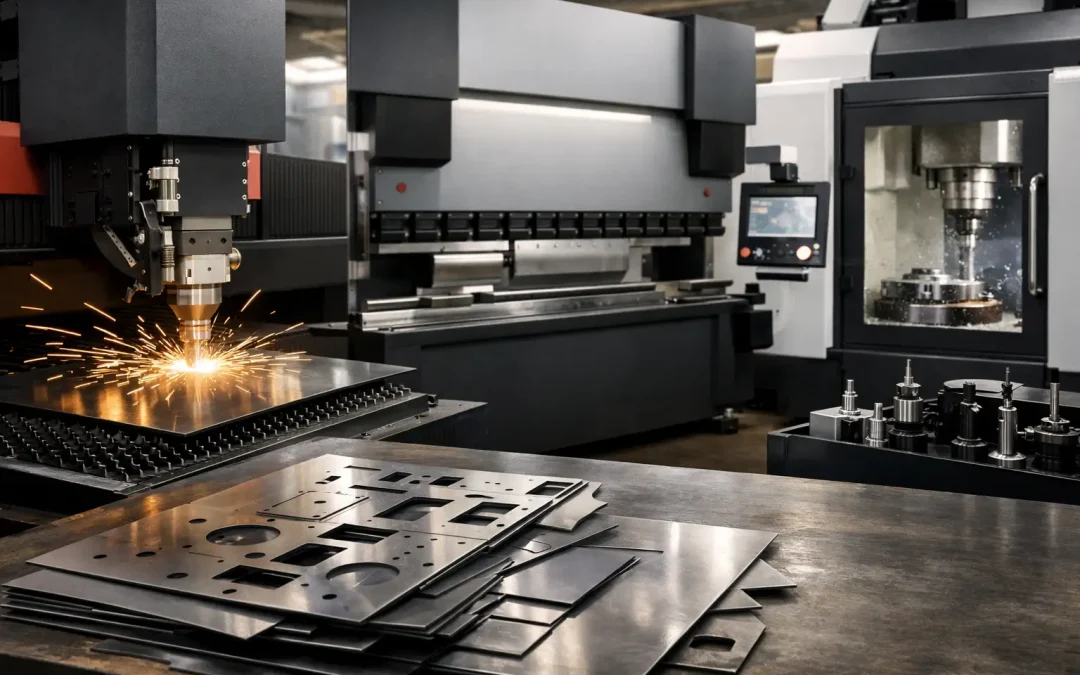
A missed bend tolerance, an overloaded laser schedule, or a shear that cannot keep pace can turn a profitable job into a delivery problem fast. The top fabrication machines for shops are not simply the newest or largest machines available. They are the machines that match your material mix, part geometry, labor plan, throughput target, and available capital – while giving your operation dependable capacity when orders change.
For most shops, the right equipment plan starts with a clear look at where material flow slows down. A high-output cutting department does little good if forming is the bottleneck. A large press brake may sit underused if most jobs are simple brackets that could move faster through an ironworker or smaller brake. The goal is to buy capacity that earns its floor space.
Top Fabrication Machines for Shops by Workflow
A productive fabrication department usually follows a straightforward path: material arrives, is cut to size, is formed or shaped, and moves to welding, machining, finishing, or assembly. The equipment priorities will differ by shop, but several machine categories consistently deliver value across general fabrication, structural work, enclosure production, and contract manufacturing.
Press brakes: the foundation of precision forming
Press brakes are central to any shop producing formed sheet metal, brackets, panels, housings, channels, and structural components. The right brake depends on tonnage, bed length, daylight, backgauge capability, tooling, and control features. Those specifications should be tied to the parts you quote most often, not only the largest part you may make once a year.
A CNC hydraulic press brake is often the right investment for repeat work, tighter tolerances, and jobs with multiple bends. Programmable backgauges and modern controls reduce setup time and help less experienced operators produce consistent parts. For shops handling lighter work or straightforward bends, a smaller conventional brake can be a practical, lower-cost addition.
Used press brakes can provide substantial value when the machine has been inspected carefully and the control, hydraulic system, tooling compatibility, and service history fit the shop’s needs. A well-maintained late-model brake may deliver the capacity required without tying up capital in a new-equipment purchase.
Fiber lasers: speed where cutting drives the schedule
Fiber laser cutters have changed how many shops approach sheet and plate processing. They offer fast cutting speeds, strong accuracy, and efficient processing for a wide range of steel, stainless, and aluminum applications. For shops with steady volume and a mix of nested parts, a fiber laser can consolidate work that once required multiple cutting operations.
However, laser selection is not just about wattage. Bed size, automation, material thickness, assist gas requirements, nesting software, loading workflow, and maintenance support all affect real output. A high-power laser can be a poor fit if the shop mainly cuts thin gauge material in low volumes or lacks the material-handling process to keep it fed.
For many growing operations, a pre-owned fiber laser offers a more accessible path to in-house cutting. The key is confirming operating condition, available service support, resonator hours where applicable, and whether the system includes the accessories needed to run production from day one.
Shears: fast, economical straight cuts
A hydraulic shear remains one of the most efficient machines in a fabrication shop when the work calls for straight cuts from sheet or plate. Shears are typically less expensive to purchase and operate than laser systems, and they can process material quickly with limited programming.
They are especially useful for shops cutting blanks before forming, preparing plate for weldments, or supporting short-run work where laser programming and nesting time do not make economic sense. The trade-off is flexibility. A shear cannot produce profiles, holes, slots, or complex contours, so it works best as part of a balanced equipment lineup rather than a replacement for CNC cutting.
Ironworkers: practical capacity for structural and job-shop work
Ironworkers combine punching, shearing, notching, and other operations in one compact machine. They are a strong fit for structural fabricators, maintenance departments, trailer builders, and job shops that routinely process angle, flat bar, channel, and plate.
Their value comes from versatility and fast setup. Rather than moving a simple hole pattern or notch through several machines, an operator can complete the work at one station. For lower-volume and varied work, that time savings matters. Buyers should evaluate available stations, punch capacity, throat depth, tooling availability, and safety features before selecting a model.
Plate rolls and angle rolls: essential for curved work
Shops building tanks, cones, ductwork, cylinders, handrails, and curved structural components need rolling capacity that matches their work. Plate rolls form sheet and plate into cylindrical or conical shapes, while angle rolls are designed for profiles such as angle, tube, pipe, and bar.
The main decision is not simply roll length. Material thickness, yield strength, required diameter, pre-bending capability, and part repeatability determine whether a machine will perform as expected. A three-roll machine may be sufficient for simpler work, while a four-roll configuration can improve control and reduce handling for production runs.
Bandsaws and cold saws: protect downstream productivity
Cutoff equipment is easy to overlook when budgeting for a new laser or brake, yet inaccurate or slow stock preparation creates problems throughout the shop. Horizontal bandsaws are dependable for cutting bar, tube, pipe, and structural shapes. Cold saws provide clean, precise cuts for smaller stock and repeat production.
The best choice depends on material type, volume, finish requirements, and the range of profiles being processed. Automatic feed systems may be worthwhile when operators spend significant time measuring and cutting repetitive lengths. If a skilled welder is regularly tied up at a manual saw, the machine has already become a labor constraint.
How to Choose the Right Fabrication Equipment
The right purchase starts with production data, not a catalog specification. Review the jobs that generate the most revenue, the jobs that create the most delays, and the work currently sent to outside vendors. That analysis often points to a clearer priority than a general wish list.
Before committing capital, shop owners and operations managers should answer a few practical questions:
- Which operation is limiting throughput or extending lead times?
- What material types, thicknesses, and part sizes account for most of the workload?
- Is the machine needed for repeat production, varied job-shop work, or both?
- What utilities, floor space, rigging access, and operator training will the machine require?
- Can the current team maintain, program, and keep the machine supplied with material?
A machine’s purchase price is only one part of the decision. Freight, rigging, installation, tooling, electrical work, software, preventive maintenance, and operator training should be considered up front. So should the cost of downtime. A bargain machine that lacks parts availability or service options can become expensive when a key job is waiting.
Used Machines Can Stretch Capital Further
Used fabrication machinery gives shops a way to add meaningful capacity while preserving cash for materials, labor, and growth. It can also make it possible to move into a higher-capability machine category than a new-equipment budget would allow. A quality used CNC press brake, laser, shear, or ironworker from a recognized manufacturer can remain productive for years when it has been maintained properly.
Condition and fit matter more than age alone. Ask for clear machine specifications, available documentation, operating history, tooling included, known repairs, and inspection details. For CNC equipment, verify controls, drives, hydraulics, safety systems, and software requirements. For laser systems, confirm that installation requirements and ongoing service support are realistic for your location and team.
Revelation Machinery helps manufacturers source used equipment with the speed and transparency needed to keep projects moving. Whether a shop needs one machine to relieve a bottleneck or is equipping an entire department, experienced guidance can reduce the risk between identifying a need and putting equipment into production.
Build Capacity in the Order Work Actually Moves
The strongest equipment strategy is rarely about owning every machine category. It is about creating a reliable flow from raw material to finished part. A shop may get more immediate return from a press brake that eliminates a forming backlog than from a laser that adds cutting capacity it cannot yet use. Another operation may find that bringing basic cutoff work in-house frees outside processing costs and shortens lead times immediately.
Choose machinery around the work that is already proving demand, leave room for the next practical step in your process, and insist on equipment that your team can support. The right machine should not just look capable on the shop floor. It should help your operation quote with confidence, deliver on time, and take on the next good job without creating a new bottleneck.