
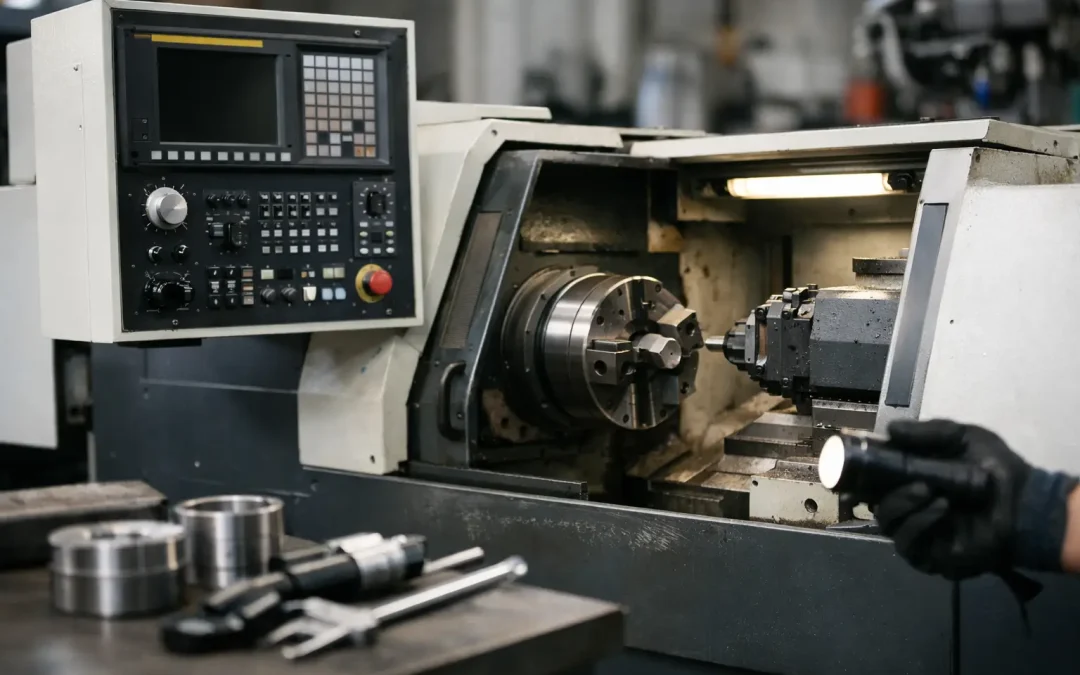
A used cnc lathe review should start where most buying mistakes happen – not with the control, spindle speed, or brand badge, but with the job on your floor. If the machine cannot hold tolerance on your part mix, fit your material flow, and support your throughput goals, a low price does not make it a good buy. For shops trying to add capacity without tying up unnecessary capital, the right used lathe can be a strong move. The wrong one can create downtime, scrap, and expensive follow-up repairs.
That is why a serious review process needs to go beyond surface condition. Paint, sheet metal, and a clean enclosure matter far less than wear, maintenance history, available tooling, and how the machine was actually used. A lathe that ran light aluminum work in a controlled environment is a very different asset from one that spent years in heavy interrupted cuts with inconsistent maintenance.
What a used CNC lathe review should actually cover
A practical review is not just a checklist of components. It is an assessment of remaining value and operational risk. Buyers should be looking at machine condition, serviceability, application fit, and total acquisition cost together.
Start with the fundamentals. Age matters, but usage matters more. A 15-year-old turning center with documented maintenance, clean way surfaces, and stable repeatability may be a safer purchase than a newer machine with crash history or poor upkeep. Control generation also matters because it affects training, replacement parts, and program compatibility. Older controls are not always a deal breaker, but they can slow integration if your shop runs on newer standards.
Machine configuration is just as important. A two-axis lathe, a live-tool lathe, and a Y-axis multi-tasking platform serve very different production needs. Buyers sometimes overreach and pay for capability they will not use. Others do the opposite and buy too little machine, then hit a wall when part complexity increases. The best review connects the machine directly to current jobs and likely future demand.
Key areas to inspect before you buy
The spindle should get close attention because it is one of the highest-risk and highest-cost areas on any used lathe. Listen for bearing noise, look for vibration under load, and verify thermal stability if possible. Good spindle hours alone do not tell the whole story. A machine with moderate hours but repeated abuse can be a worse bet than one with higher hours and disciplined operation.
Turret condition is another major factor. Indexing should be consistent and accurate, and there should be no signs of slop, misalignment, or unreliable clamping. If the lathe includes live tooling, test that system separately. Problems there can turn an apparently well-priced machine into a project.
Way surfaces, ballscrews, and backlash need careful evaluation. Excess backlash or axis wear will show up quickly in finish quality and dimensional repeatability. If the machine can be powered and tested, review actual movement, not just static claims. A machine that looks fine at rest can reveal issues during axis travel, rapid moves, and repeated position checks.
The chuck, hydraulic unit, tailstock, chip conveyor, coolant system, and lubrication system also deserve attention. None of these items is glamorous, but all of them affect uptime. Deferred maintenance often shows up first in these support systems. If several small systems have been neglected, that is usually a sign the machine was not managed carefully overall.
Used CNC lathe review by machine type
Not every used CNC lathe should be evaluated the same way. Horizontal turning centers used for general job shop work are usually judged on repeatability, ease of setup, and broad application range. They can offer the best balance of affordability and utility for many small and mid-sized manufacturers.
Live-tool and Y-axis lathes need a deeper review because their value comes from complexity. Sub-spindle synchronization, live-tool performance, C-axis accuracy, and control functionality are all critical. These machines can reduce handling and secondary operations, but only if every integrated system is working as intended. A discount on a more advanced machine is not meaningful if one key function is unreliable.
Swiss-type lathes are a separate category altogether. Guide bushing condition, bar feeder compatibility, and the machine’s history in long-run production matter heavily. These machines can be extremely productive, but they are less forgiving when wear or setup issues are present.
For larger chuckers and heavy-duty turning centers, the review should emphasize spindle torque, machine rigidity, and bed condition. These assets often worked on demanding materials and larger parts, so structural wear becomes more important than cosmetics.
Brand, control, and parts support matter more than many buyers expect
A used machine is only as useful as your ability to keep it running. That makes OEM reputation, control familiarity, and replacement part availability central to any buying decision. A lower-priced machine from an obscure builder can become expensive if service is slow or components are hard to source.
Controls from major platforms are often easier to support in the field because programmers, operators, and service technicians already know them. That reduces onboarding friction. It also lowers the risk of long delays when troubleshooting is needed. Shops with limited maintenance bandwidth should weigh this heavily.
Builder reputation matters for another reason: documentation. Manuals, electrical prints, parameter backups, and maintenance records add real value. They shorten startup time and make service more predictable. In a used cnc lathe review, missing documentation should be treated as a cost factor, not a minor inconvenience.
Price is only one part of the deal
Many buyers focus first on asking price, but total cost is what affects return on investment. Freight, rigging, installation, electrical requirements, tooling, bar feeders, chip handling, and any needed repairs all change the real number. So does lead time. A machine that is available now may have stronger value than a cheaper option that leaves you waiting while production pressure builds.
There is also the cost of mismatch. If a machine is too slow, too limited, or too worn to meet your schedule, the financial impact will show up in labor inefficiency, missed deliveries, and avoidable rework. A disciplined buying process keeps the conversation centered on output, not just purchase price.
That is where a trusted equipment partner can make a difference. A responsive dealer with broad access to inventory and clear machine information can help buyers compare options quickly, identify trade-offs, and avoid overbuying or underbuying. For many manufacturers, speed and confidence are just as important as headline pricing.
Questions worth asking during a used CNC lathe review
Ask how the machine was used, what materials it cut, and whether it came from a production environment or lighter prototype work. Ask about known repairs, crash history, and whether the machine can be powered for inspection. Ask what accessories are included because holders, chucks, tailstocks, bar feeders, and tool presetters can materially change value.
It also helps to ask what will be required to put the machine into service at your facility. Power, footprint, foundation needs, and operator familiarity all matter. A machine that looks right on paper may still create friction if your team is not prepared to support it.
For first-time buyers, this is where experienced guidance matters most. The right seller should be able to explain not just what the machine is, but whether it is a good fit for your workload, timeline, and budget.
When a used lathe is the right move
A used CNC lathe is often the right choice when you need capacity quickly, want to preserve capital, or are filling a proven production need with known requirements. It is especially attractive when the machine comes from a reputable builder, has documented care, and aligns closely with your part mix.
It may be the wrong move if your application requires highly specialized capabilities, if your tolerance demands leave no room for condition risk, or if support for the machine is uncertain. In those cases, the lower purchase price may not offset the operational exposure.
For most manufacturers, the best buying decision sits in the middle ground. Look for a machine with the right configuration, a supportable control, verifiable condition, and a realistic path to installation. If you can check those boxes, a used lathe can deliver years of productive service without the wait and capital burden of buying new.
A good machine deal should do more than look attractive on a quote. It should make your operation more capable, more efficient, and easier to plan around once it hits the floor.