
Every hour a machine sits idle costs money, and every rushed purchase can cost even more. When you are evaluating used cnc machines for sale, the goal is not just to find a lower price. The goal is to secure dependable production capacity, protect capital, and avoid surprises after the machine hits your floor.
For many manufacturers, used equipment is the fastest path to added capacity. Lead times on new machines can stretch for months, sometimes longer depending on the builder and configuration. A quality pre-owned CNC can shorten that timeline dramatically, but only if the buying process is disciplined. Good used machinery creates value. Poorly vetted machinery creates downtime, repair costs, and scheduling problems that ripple through the plant.
Why used cnc machines for sale attract serious buyers
The appeal is straightforward. A used CNC machine can often deliver the capability you need at a meaningfully lower acquisition cost than a new model. That matters whether you are a job shop adding a second vertical machining center, a fabrication operation expanding throughput, or a larger manufacturer replacing equipment during a consolidation.
Cost, however, is only part of the equation. Availability matters just as much. If a customer contract is already in hand or a bottleneck is slowing output, waiting on a factory build may not be realistic. In those situations, a well-selected used machine can help restore capacity quickly and preserve operational continuity.
There is also a practical advantage in buying proven platforms. Many shops prefer controls, spindle designs, and machine architectures their operators and maintenance teams already know. Familiarity reduces training friction and helps teams get productive faster.
What separates a strong machine from a risky one
Not all used CNC equipment should be valued the same way, even when two machines look similar on paper. Hours matter, but they do not tell the whole story. A machine with higher hours in a clean aerospace environment may be a better buy than a lower-hour machine that ran hard in a dirty, poorly maintained shop.
Maintenance history is one of the strongest indicators of value. Service records, repair documentation, and evidence of preventive maintenance show how the asset was treated. If records are thin or unavailable, that does not automatically make the machine a bad purchase, but it should affect how you assess risk and price.
Builder reputation and model support also matter. Machines from recognized OEMs with strong parts availability and service support typically hold value better. A lower upfront price on an obscure or unsupported model can become expensive if replacement boards, drives, or mechanical components are difficult to source.
The control is another major factor. Many buyers focus on travels, spindle speed, and tooling capacity first, which is understandable. But the control can influence operator adoption, programming compatibility, service options, and future resale value. If your shop is standardized around specific control families, staying close to that standard often makes sense.
How to inspect used CNC machines for sale
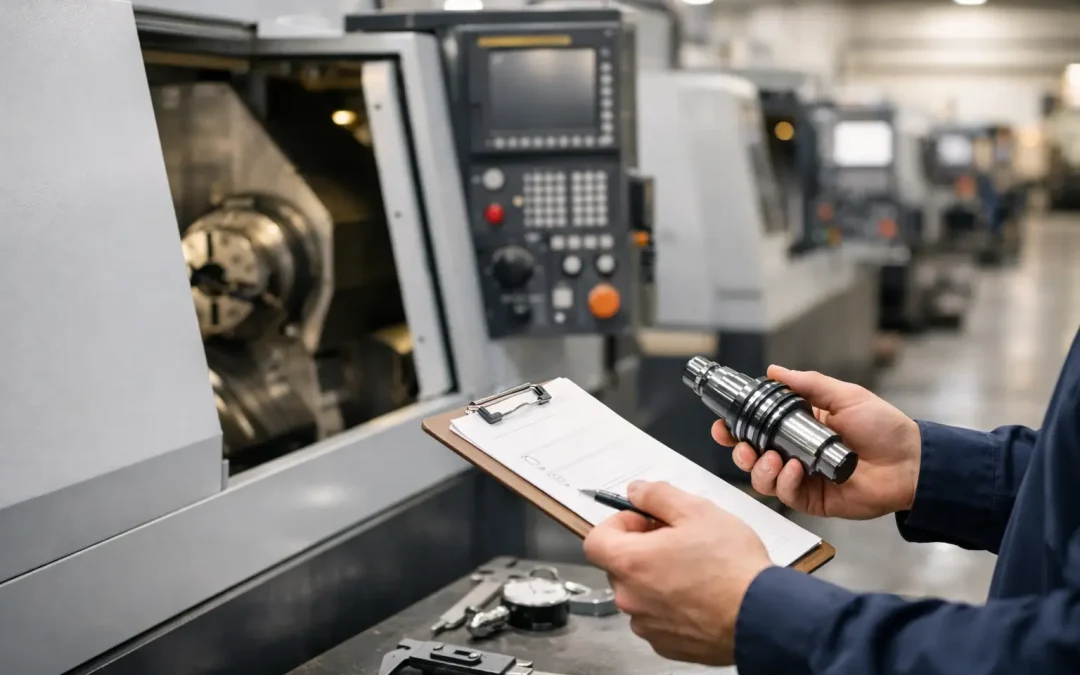
A serious review should go beyond photos and a spec sheet. Condition needs to be verified through documentation, inspection, and when possible, powered demonstration.
Start with the basics. Confirm model number, serial number, year, options, travels, spindle taper, tool changer capacity, control type, and any included accessories. Then compare those details against what your process actually requires. Shops sometimes overbuy features they do not need or miss key options such as through-spindle coolant, chip management, probing, or 4th-axis readiness.
From there, move into machine condition. Look at way covers, lubrication systems, electrical cabinets, spindle condition, backlash indicators, coolant system cleanliness, and signs of crash damage or poor repair work. Cosmetic wear is expected. Structural or mechanical red flags are another story.
If the machine can be powered, watch it run. Listen for abnormal spindle noise, verify axis movement, test tool changes, and review alarm history if available. Ideally, inspect under power with someone who understands both machine condition and application fit. A machine that powers on is not necessarily production-ready, and a machine that looks clean is not necessarily accurate.
Price is important, but total value is what counts
Buyers often ask what a used CNC machine should cost. The honest answer is that it depends on age, brand, model, options, condition, market demand, and how quickly the machine is available. Two similar machines may command different pricing because one includes desirable tooling, has cleaner maintenance records, or comes from a more controlled operating environment.
That is why price should be evaluated against total cost to place the machine into service. Freight, rigging, loading, unloading, installation, startup support, tooling, software compatibility, phase conversion if needed, and any immediate repairs should be considered before the purchase decision is final.
A cheaper machine can easily become the more expensive option once hidden costs are added. On the other hand, a higher-priced machine from a trusted source with verified condition may deliver stronger long-term value because it reduces risk and gets into production faster.
Dealer inventory vs. auction purchases
Buyers looking at used cnc machines for sale usually encounter two main paths: dealer inventory and auction listings. Each has advantages, and the right fit depends on urgency, budget, and risk tolerance.
Dealer inventory tends to be the better route when speed, support, and transaction clarity are priorities. A reputable dealer can help verify specifications, discuss application fit, coordinate inspection details, and move quickly from quote to shipping. That support is especially valuable for first-time used equipment buyers or operations that cannot afford a drawn-out process.
Auctions can create pricing opportunities, particularly during plant closures, surplus events, or broad asset liquidations. But auctions also require discipline. Equipment is often sold as-is, where-is, and buyers need to move quickly on due diligence, payment, and removal. For experienced purchasers with a clear understanding of the asset and removal costs, auctions can be effective. For others, the lower bid price may not offset the added risk.
What sellers should know about marketability
If you are on the selling side, understanding what buyers look for can help position your machine correctly. Clean presentation, complete specifications, maintenance records, and realistic pricing all improve response time. So does transparency about known issues.
Machines tied to major OEM brands, common controls, and versatile applications usually attract broader interest. Older or specialized equipment can still sell, but the path may be different. In some cases, direct resale makes sense. In others, consignment or auction may be the better route to move assets efficiently and capture market demand.
This is where a partner with national reach and active industrial buyers can make a material difference. Revelation Machinery works with manufacturers across the US to buy, sell, source, and liquidate equipment with speed and confidence, helping both sides of the transaction reduce friction.
Questions buyers should settle before making an offer
Before you move forward, get clear on a few operational realities. Will this machine fit available power, floor space, and material flow? Does your team have the programming and maintenance capability to support it? Are replacement parts and service still accessible? Can the machine hold the tolerances your customers require, not just in theory, but in day-to-day production?
It is also worth asking how quickly the machine needs to be producing parts. If timing is critical, prioritize sellers or dealers who can provide accurate information fast and support logistics without delays. The best equipment purchase is not always the one with the absolute lowest number attached to it. Often, it is the one that gets installed, running, and earning revenue with the least disruption.
A disciplined buying process protects uptime
Used CNC buying works best when it is approached like any other capital project. Define the process need first, narrow the machine class second, verify condition third, and only then compare pricing. That order matters. When teams start with price alone, they often waste time reviewing machines that do not fit the work or carry too much hidden risk.
A disciplined process also keeps everyone aligned internally. Operations, maintenance, finance, and ownership may value different aspects of the purchase. A clear checklist around application fit, condition, support, logistics, and total cost helps move the decision forward without surprises late in the process.
The used market moves quickly, especially for well-known CNC models in good condition. When the right machine becomes available, buyers need enough information to act with confidence. That means working with sources that are responsive, transparent, and able to support the transaction from inspection through delivery.
The right used CNC machine should do more than save money upfront. It should give your operation room to produce, quote aggressively, and keep jobs moving without adding unnecessary risk.