
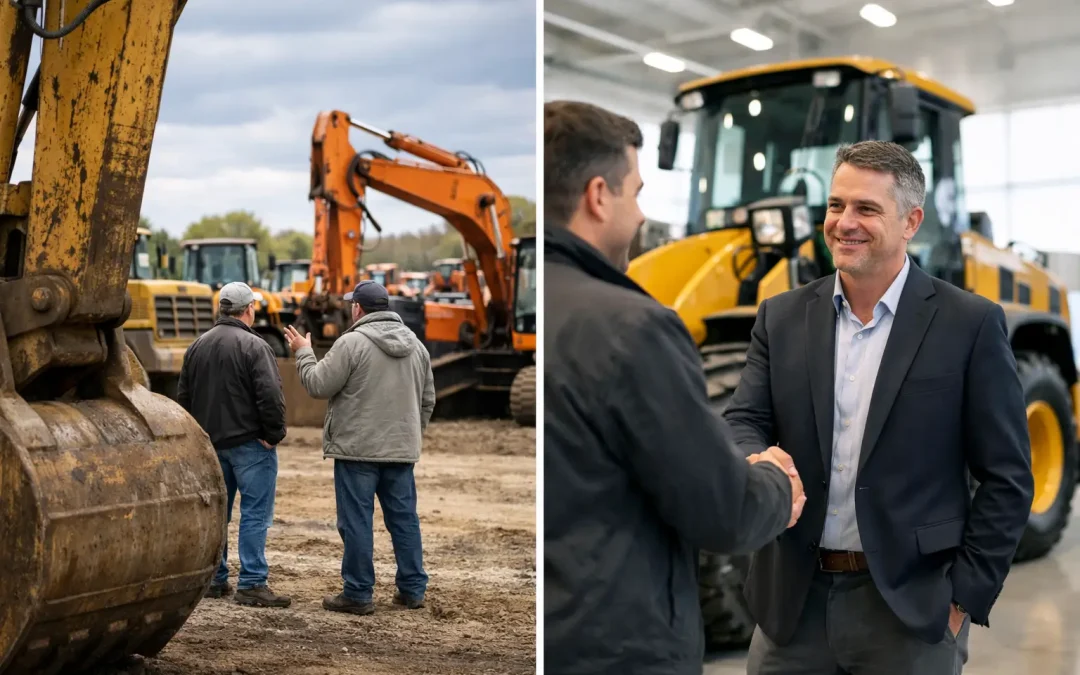
A late production change, a failed spindle, or a new contract can force an equipment decision faster than most capital plans allow. That is where the used machinery auction vs dealer question becomes practical, not theoretical. The right buying channel affects lead time, price, inspection options, risk exposure, financing flexibility, and how quickly your team gets back to making parts.
For manufacturers, fabricators, processors, and packaging operations, there is no single best answer. Auctions can create strong buying opportunities. Dealers can reduce friction and uncertainty. The better option depends on what matters most in the moment – lowest possible purchase price, fastest deployment, technical confidence, or support from quote through delivery.
Used machinery auction vs dealer: the real difference
At a high level, an auction is a competitive marketplace with a fixed selling window. Equipment is offered as-is, bidders compete in real time or over a scheduled period, and the final sale price is set by demand on that day. If you win, the transaction moves quickly. If you lose, you move on.
A dealer sale is different. The pricing is set or negotiated directly, the buying process is usually more consultative, and there is often more room for inspection, documentation, logistics support, and post-sale coordination. You are not just buying a machine. You are buying a process designed to reduce surprises.
That distinction matters because used equipment transactions are rarely simple. A CNC lathe, press brake, packaging line, air compressor, or process vessel can carry hidden variables – tooling, controls, electrical requirements, rigging constraints, maintenance history, lead time for freight, and installation complexity. The buying channel determines how much help you get managing those variables.
When an auction makes the most sense
Auctions are often the right fit when price sensitivity is high and your team is comfortable evaluating equipment with limited hand-holding. Plant closures, surplus liquidations, and turnover events can put quality assets into the market quickly, sometimes at attractive pricing relative to replacement cost.
If you have in-house technical expertise, auctions can be especially effective. A buyer who knows the exact control generation, spindle taper, horsepower requirements, or line layout constraints can act decisively. That buyer is less dependent on a long consultative process and more focused on identifying value before the bidding window closes.
Auctions also work well when your timeline is flexible. You may find the right machine at the right price, but you may also be outbid. If production is not on the line and you can wait for the next event, the auction channel can reward patience.
There is another advantage that experienced buyers appreciate: breadth. Auctions often present multiple assets at once from a single plant or liquidation. That can help if you are sourcing several machines, backup units, spare parts support equipment, or a full line of complementary assets.
The trade-offs with auctions
The lower entry price is not the whole story. Most auction equipment is sold as-is, where-is. Inspection opportunities can be limited, especially in online formats or shutdown facilities. Documentation may vary. Service records may be incomplete. Removal deadlines can be tight.
That means your true acquisition cost includes more than the hammer price. Buyer premiums, taxes, rigging, loading, transportation, electrical work, startup, and any deferred maintenance should all be part of the calculation. A machine bought cheaply can become expensive if it arrives with unresolved issues or if removal logistics disrupt your schedule.
There is also the emotional side of bidding. Competitive environments can push buyers past their target number. In industrial settings, that mistake is not minor. Overbidding on a used machining center or packaging line can erase the margin you expected to gain by buying pre-owned in the first place.
When buying from a dealer is the better move
A dealer is often the better path when uptime, predictability, and support matter more than chasing the absolute lowest number. If you need equipment sourced quickly, matched to a specific application, and moved through the transaction with fewer unknowns, a dealer can save time at every stage.
This is particularly true for first-time used equipment buyers or teams expanding into unfamiliar machinery categories. A fabrication shop adding CNC capacity, a processor replacing a failed line component, or a packaging operation scaling output may not have time to monitor auctions and evaluate every listing independently. A dealer can narrow options, verify fit, and help keep the process moving.
Dealers also add value when the machine itself is only part of the decision. Financing, trade-ins, resale of outgoing assets, freight coordination, and timing around installation all matter. In those cases, the equipment purchase sits inside a larger operational project. A dealer can help manage that project instead of simply facilitating a sale.
For sellers, the same logic applies in reverse. If your plant is consolidating or you need to convert underutilized assets into working capital, a dealer can offer direct purchase, consignment, or auction recommendations based on asset type, urgency, and market demand. That flexibility matters when you are balancing recovery value against speed.
Why many industrial buyers prefer dealer support
A strong dealer relationship reduces decision risk. You can ask direct questions about machine condition, request additional information, compare similar models, and often get help identifying alternatives if your first choice sells. That is a major advantage when lead time matters.
There is also a practical benefit to market knowledge. An experienced dealer sees pricing trends across brands, categories, and regions. That perspective helps buyers avoid overpaying for a popular machine or underestimating the availability of a better-fit alternative.
In a fast-moving market, service can be the difference between a delayed project and a completed one. Revelation Machinery, for example, operates with the reach of a national dealer and auction company while still supporting buyers and sellers with responsive account management. That hybrid model matters when equipment needs are urgent and transaction details cannot be left to chance.
Price is only one part of the used machinery auction vs dealer decision
Most buyers start with price, and that makes sense. Capital efficiency matters. But purchase price alone is a poor way to choose between an auction and a dealer.
What matters more is total cost and total risk. An auction may produce a lower initial number, but if the machine requires major cleanup, missing components, delayed transport, or unexpected repair work, the savings disappear quickly. A dealer-priced machine may look higher at first glance, yet deliver better value if it is accurately represented, easier to inspect, faster to ship, and simpler to put into service.
For production environments, downtime cost should be part of the math. If a dealer can help you secure a replacement machine quickly and keep your job schedule intact, that support may be worth far more than the discount available at auction.
Questions to ask before you choose
The best buying decisions usually come from operational clarity. Start by asking how critical the machine is to current production. If the answer is immediate and essential, dealer support often provides a safer path.
Then ask how much technical risk your team can absorb. If you have maintenance depth, inspection capability, and room in the schedule for some uncertainty, auctions may be worth pursuing. If not, a dealer can reduce the burden.
It also helps to consider whether you need one machine or a broader solution. If financing, trade-in, liquidation, freight, or replacement planning are involved, a dealer transaction usually aligns better with the real scope of the need.
Finally, be honest about speed. Auction opportunities can appear fast, but they do not always line up with your production window. A dealer can often source, present, and move equipment on your timetable instead of the market’s timetable.
The right channel depends on the job
Used machinery auctions reward buyers who are prepared, disciplined, and comfortable with some uncertainty. Dealers serve buyers who need clarity, speed, and support with fewer operational surprises. Both channels have a place in industrial purchasing, and many sophisticated companies use both depending on the asset and the timeline.
The smartest approach is not choosing one side on principle. It is choosing the path that protects your budget, supports your production goals, and gets the right machine on your floor with confidence. When the stakes are high, the best deal is the one that works when the truck arrives.