
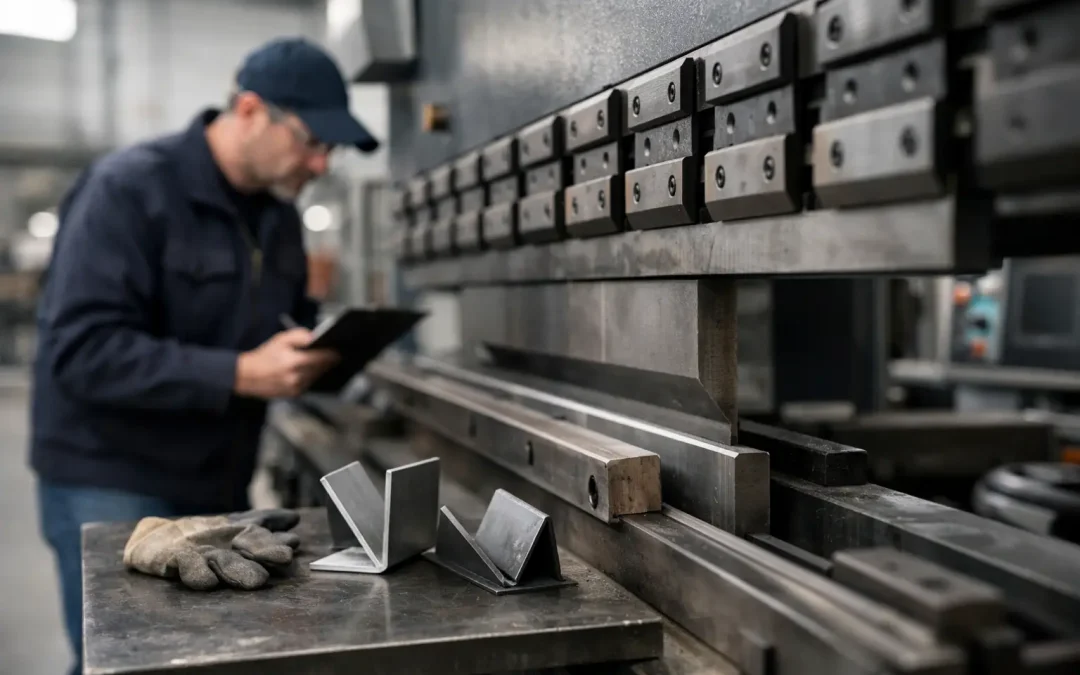
A used press brake review starts where most buying mistakes happen – on the shop floor, not in the listing. A machine can look clean, carry a respected name, and still be the wrong fit for your material mix, tooling needs, operator skill level, or production pace. For fabrication shops and plant managers, the real question is not whether a used press brake is cheaper than new. It is whether it will deliver dependable bending capacity without creating downtime, scrap, or expensive retrofits after it arrives.
That is why a serious review of any used press brake has to balance price against risk, capability, and support. The best purchase is rarely the lowest-priced machine. It is the one that fits the work, has a clear condition profile, and can be put into production with minimal friction.
What a used press brake review should actually cover
Too many buyers evaluate a used press brake by brand badge, tonnage, and bed length alone. Those are important starting points, but they do not tell you enough about day-to-day performance. A proper review should look at the machine as a production asset, not just an equipment line item.
Start with the machine’s application fit. A 175-ton brake with a 10-foot bed may sound versatile, but if your shop regularly runs thicker plate, deep boxes, or parts requiring repeatable precision across multiple setups, that specification alone may not be enough. On the other hand, a larger machine than you need can increase energy use, floor space demands, and tooling costs without improving throughput.
Control type matters just as much. Older mechanical or basic hydraulic units can still be productive in the right shop, especially for straightforward work and experienced operators. But if your team relies on quicker setups, programmable backgauges, or tighter repeatability across a range of parts, a newer CNC control may justify a higher acquisition cost. In used equipment, there is always a trade-off. Simpler machines can be easier to maintain. More advanced controls can increase productivity, but replacement parts and software support should be reviewed carefully.
Key factors in a used press brake review
The first factor is structural condition. Ram accuracy, bed condition, frame integrity, and overall wear pattern tell you more than fresh paint ever will. If a press brake has seen heavy use, look for signs of deflection issues, uneven wear, or poor maintenance practices. Even a well-known make can become a costly project if the core structure is compromised.
Hydraulics are another major checkpoint. Leaks, noisy pumps, inconsistent ram movement, or sluggish response under load can point to repairs that add up quickly. A machine may still cycle during inspection and yet show symptoms of future trouble. That does not always mean you should walk away. It means the pricing and expectations need to match the condition.
The backgauge deserves close attention because it has a direct impact on productivity. On many used press brakes, the backgauge is where age shows up first in the form of backlash, positioning inconsistency, or outdated controls. If your parts require repeatability across multiple bends, this is not a minor detail. A strong frame with a weak backgauge can still slow production and increase operator adjustments.
Tooling compatibility is often underestimated. Buyers focus on the machine and only later realize the included tooling is limited, worn, or not suited to the parts they actually run. Before buying, confirm whether the brake uses common tooling styles, whether clamps are modern enough for your workflow, and what additional tooling investment is likely. The machine price alone does not represent the full cost of getting into production.
Electrical condition and control support also matter. A discontinued CNC control is not automatically a deal breaker, but it should trigger questions about service availability, replacement options, and operator familiarity. A lower-cost used press brake can become more expensive if troubleshooting support is limited or if your team needs extensive training just to run routine jobs.
Evaluating value, not just asking price
A strong used press brake review always comes back to value. Value is not simply the gap between used and new pricing. It is the relationship between purchase price, remaining useful life, expected uptime, and production fit.
For many shops, buying used makes excellent financial sense. It can preserve capital, speed up expansion, and allow access to better brands or larger capacities than a new-equipment budget would allow. That is especially true when lead times on new fabrication equipment are long and production demand cannot wait.
Still, there are cases where the cheaper machine is the wrong move. If a brake needs immediate hydraulic work, control updates, freight coordination, rigging, and new tooling, the all-in cost can climb fast. A more expensive machine with cleaner maintenance history, stronger controls, and better documentation may be the better business decision.
This is where experienced equipment sourcing becomes valuable. A buyer needs more than a spec sheet. They need a realistic picture of condition, market pricing, and what it will take to install the machine and put it to work.
Brand, age, and configuration – what matters most
Buyers often ask whether brand reputation should drive the decision. Brand matters, but not in isolation. A respected manufacturer generally improves resale value, parts availability, and confidence in build quality. That said, a poorly maintained premium-brand machine can be a worse buy than a properly kept unit from a less prominent name.
Age also needs context. An older press brake with documented maintenance, solid hydraulics, and straightforward controls may outperform a newer machine that was pushed hard and serviced inconsistently. Configuration is often the deciding factor. Bed length, tonnage, throat depth, daylight, stroke, crowning, and backgauge axes all influence whether the machine matches your parts and workflow.
If your operation handles varied production with frequent changeovers, setup efficiency should carry a lot of weight in your review. If you run longer batches of repeat parts, simplicity and reliability may matter more than advanced features. The right answer depends on the work.
When a used press brake is a strong buy
A used press brake is usually a strong buy when your shop needs capacity fast, your parts fall well within the machine’s proven operating range, and the machine’s condition has been evaluated with enough transparency to reduce surprises. It also makes sense when you can gain access to a better class of machine than you could justify buying new.
This approach is especially effective for growing fabrication businesses that need to add bending capability without tying up too much capital. It also works well for larger manufacturers replacing retired equipment, supporting overflow production, or standardizing around known machine types across multiple facilities.
The key is discipline. If the machine fits the work, the condition aligns with the price, and the path to installation is clear, used equipment can be a highly efficient purchase.
When to be cautious in a used press brake review
Caution is warranted when the machine’s service history is unclear, the control platform is difficult to support, or the brake is being stretched beyond the type of work it was designed to handle. Buyers should also slow down if key details are vague, including whether the machine has been tested under power, what tooling is included, or whether any known issues affect accuracy and repeatability.
Another common risk is buying based on immediate availability alone. Speed matters in manufacturing, but urgency can lead to expensive compromises. A fast purchase only helps if the machine arrives, installs properly, and performs to expectation.
That is why transparency matters so much in the used market. Buyers need honest condition reporting, responsive communication, and support around logistics, payment, and timing. The transaction should move quickly, but not blindly.
Final buying perspective
The best used press brake review is the one that treats the machine like a production decision, not a bargain hunt. Look past cosmetics, ask hard questions about controls and condition, and measure the machine against your real parts, operators, and throughput goals. When the evaluation is done right, a used press brake can be one of the smartest capital purchases on the floor. If you are buying with urgency, buy with clarity too – that is what protects uptime.