
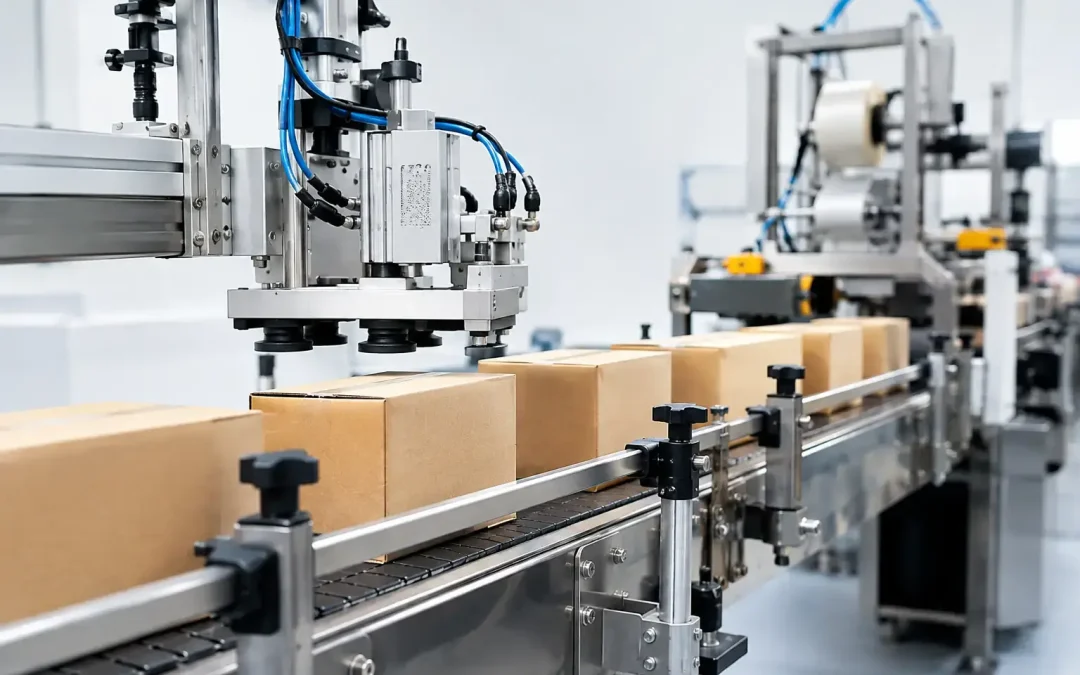
A packaging line rarely loses output because every machine is wrong. More often, one poorly matched conveyor, unreliable capper, slow inspection station, or unsupported control system limits the entire operation. The best packaging line components are the ones that fit your product, package, target rate, labor plan, and maintenance capacity – not simply the fastest machines on a specification sheet.
For plant managers and equipment buyers, the objective is straightforward: build a line that produces consistently, handles changeovers without excessive downtime, and can be serviced without putting production at risk. That requires looking beyond individual machine price and considering how every component performs as part of a connected system.
Start With the Packaging Line Bottleneck
Before sourcing equipment, identify the rate that actually matters. A filler rated for 200 containers per minute does not create a 200-unit-per-minute line if the labeler runs at 160, the case packer runs at 140, or operators cannot keep the infeed supplied. Rated speed, sustained speed, and usable output are different measurements.
Start with the product and package details: container dimensions, material, fill volume, viscosity or flow characteristics, closure type, label format, case configuration, and pallet pattern. Then define the required production rate by SKU, not just the highest-volume product. A line that performs well on one bottle size but requires four hours to convert for another may not support the production schedule.
Accumulation is also part of the rate calculation. Short stops happen at filling, labeling, coding, inspection, and downstream packing. Properly sized accumulation between critical stations lets adjacent equipment continue operating through minor interruptions. Too little accumulation causes a small stoppage to stop the whole line. Too much can raise cost, consume floor space, and create product handling issues.
Best Packaging Line Components by Function
A dependable line is built around compatible functions. The right configuration depends on whether you package liquids, powders, foods, chemicals, pharmaceuticals, consumer goods, or industrial products, but these core areas deserve careful review.
Infeed, Conveying, and Product Handling
Conveyors do more than move containers from one machine to another. They establish spacing, orientation, transfer stability, and the buffer needed to protect line output. Select conveyor width, belt style, guide rails, transfers, and drive controls for the container you run most often as well as the containers you expect to add.
For unstable, lightweight, tapered, or unusually shaped packages, side-grip conveyors, timing screws, star wheels, or specialized guides may be necessary. A basic conveyor may cost less up front, but frequent jams, scuffing, and manual intervention quickly reduce its value. Confirm that conveyor speeds can be controlled and synchronized with upstream and downstream equipment.
Filling or Product Dosing Equipment
The filler is often the most product-specific machine on the line. Gravity, piston, pump, net-weight, auger, volumetric cup, and multihead weighing systems all serve different applications. The correct choice depends on product characteristics and fill accuracy requirements.
A thin, free-flowing liquid may run efficiently on a gravity or overflow filler. A viscous product may require piston or positive-displacement pumping. Powders and granular products often call for auger or weighing technology. Do not evaluate a filler by speed alone. Ask about repeatable fill accuracy, cleanability, product-contact materials, available spare parts, and whether the machine can accommodate expected container and fill-volume changes.
Capping, Sealing, and Container Closure
A reliable closure station protects product quality, shelf life, and customer confidence. Depending on the package, this may include spindle cappers, chuck cappers, induction sealers, heat sealers, shrink-band applicators, or vacuum sealing equipment.
Closure performance depends heavily on cap or lid feeding. A capper can be mechanically sound yet become the line bottleneck if the feeder is inconsistent or difficult to adjust. Review torque control, cap orientation, reject handling, and the condition of chutes, disks, belts, and wear components. If your operation runs several closure sizes, consider the time and tooling required for each changeover.
Labeling, Coding, and Serialization
Labeling and coding equipment carries a high risk of costly rework. Labels must be placed accurately, barcodes must scan, and lot, date, or traceability information must remain legible throughout distribution. Pressure-sensitive labelers, shrink-sleeve applicators, print-and-apply systems, inkjet coders, and laser marking systems each have different requirements for speed, substrate, and environmental conditions.
When evaluating used equipment, inspect the condition of label heads, peel plates, sensors, print engines, and web-handling components. Ask whether software, controllers, documentation, and change parts are included. Older coding systems can be useful, but an unsupported printer or obsolete interface can introduce avoidable operating risk.
Inspection and Rejection Systems
Inspection equipment prevents errors from moving downstream. Common systems include checkweighers, metal detectors, vision systems, leak testers, fill-level inspection, and cap-presence detection. The appropriate level of inspection depends on product risk, customer requirements, industry regulations, and the cost of a quality escape.
A reject device is as important as the inspection unit itself. It must remove nonconforming product reliably at the operating speed without damaging good packages or causing backups. Verify the reject confirmation method, reject-bin capacity, and available line space. For regulated products, consider the reporting and recordkeeping capabilities required by your quality program.
Secondary Packaging and Palletizing
Once primary packages are complete, case packers, tray formers, case sealers, shrink wrappers, stretch wrappers, palletizers, and pallet conveyors prepare them for shipment. This area is commonly underestimated during a line expansion. A high-speed primary line can overwhelm manual packing or an undersized case-packing operation within minutes.
Automation can improve consistency and reduce labor pressure, but it should match the production profile. A fully automated palletizing cell may be justified for stable, high-volume case patterns. A lower-volume operation with frequent product changes may benefit from flexible semi-automatic equipment or a simpler palletizing arrangement. The right answer depends on labor availability, throughput, floor space, and the value of reduced manual handling.
Evaluate Compatibility Before You Buy
When purchasing individual components, integration is where the real work begins. Mechanical fit is only one concern. Equipment must communicate, transfer product cleanly, operate at compatible speeds, and allow safe access for operators and maintenance personnel.
Request machine dimensions, electrical requirements, air consumption, control voltage, manuals, wiring diagrams, and available change parts before making a commitment. Confirm whether the equipment uses common control platforms and whether qualified technicians can support the drives, PLCs, HMIs, sensors, and safety circuits. A low-cost machine with obsolete controls may require an expensive retrofit before it can run reliably.
For used packaging equipment, condition assessment should focus on more than cosmetic appearance. Review wear points, gearboxes, belts, chains, bearings, pneumatic components, electrical cabinets, guarding, and product-contact surfaces. If possible, inspect the machine under power or review documented operating history. Missing tooling and unavailable OEM parts can affect the true cost more than the purchase price.
Build for Changeovers and Service Access
The best packaging line components make planned changeovers predictable. Tool-less adjustments, indexed scales, stored recipes, color-coded change parts, and accessible guides can shorten setup time and reduce operator error. These features matter most when a line runs multiple SKUs, bottle sizes, label designs, or case formats.
Maintenance access deserves the same attention. Operators and technicians need room to clean, inspect, adjust, and replace common wear components without dismantling half the line. Tight layouts may save floor space, but they can increase recovery time after a jam or mechanical failure. Leave practical access around control panels, drives, guarding, and transfer points.
It also pays to standardize where possible. Common motors, sensors, pneumatic fittings, belts, and controls can reduce spare-parts inventory and simplify troubleshooting. Standardization should not override product needs, but it can make a growing operation easier to maintain.
Source Equipment With the Full Project in Mind
A packaging line purchase is not complete when the equipment is loaded onto a truck. Freight, rigging, installation, electrical work, compressed air, guarding, controls integration, commissioning, and operator training all affect the final project cost and startup timeline. Budget for these items early.
Working with an experienced equipment partner can help buyers locate compatible used machinery, compare available brands and configurations, and move quickly when production capacity is urgent. Revelation Machinery supports manufacturers with used industrial equipment sourcing, transparent buying options, and responsive support for equipment transactions that cannot wait.
The most productive next step is to document your product, package formats, required rate, layout limits, utilities, and changeover needs before you request quotes. With that information in hand, you can evaluate packaging equipment on the measure that matters most: dependable output shift after shift.