
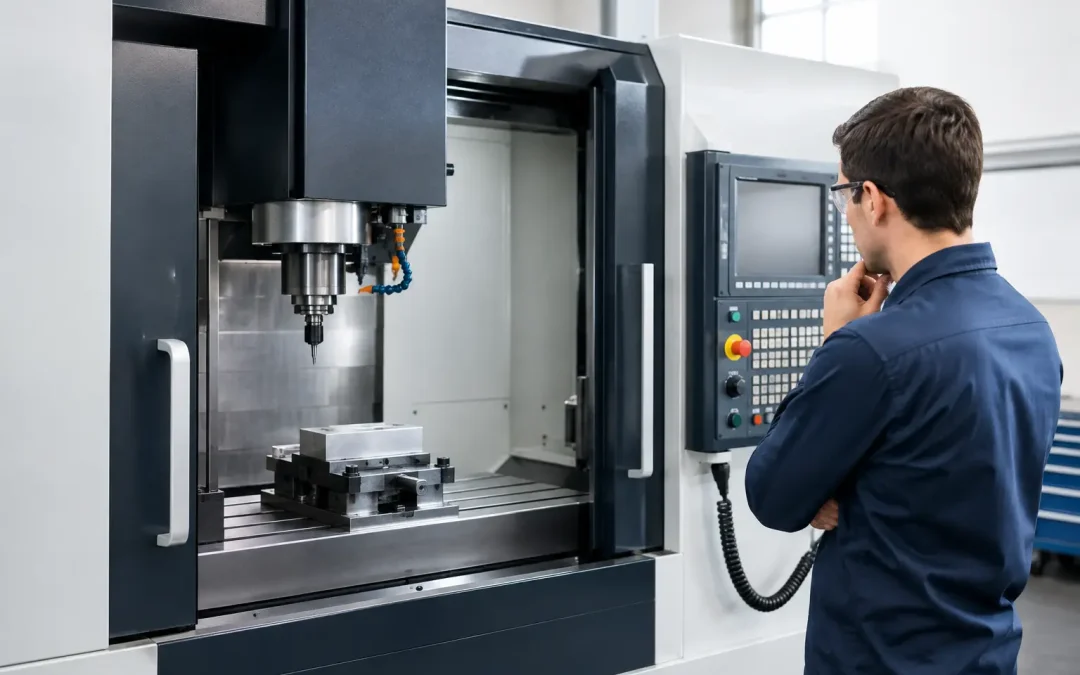
A vertical machining center can add capacity quickly, but the wrong machine can create a bottleneck just as fast. This vertical machining center buyer guide is built for manufacturers that need to make a sound used-equipment decision without sacrificing uptime, part quality, or working capital.
The best VMC is not necessarily the newest, largest, or lowest-priced unit available. It is the machine that fits the parts you run, the work your team can support, and the production schedule you need to protect. Start with those operating realities, then evaluate the machine, the seller, and the total cost to put it into service.
Start With the Part, Not the Machine
A used VMC should be selected around your actual work envelope and process requirements. Gather a representative mix of current and expected parts before reviewing listings. Record overall part dimensions, material, fixture height, weight, tolerance requirements, cycle-time targets, and the number of tools needed for a typical setup.
Travel is the first obvious filter. X, Y, and Z travel must accommodate the part, workholding, tooling clearance, and a reasonable setup margin. A table that technically fits the part may still be impractical if the operator cannot load it safely or if the spindle cannot reach critical features without interference.
Table load capacity matters just as much. A large steel fixture, tombstone, or multiple-part setup can exceed a VMC’s intended working load even when the part itself is relatively light. Check both the maximum table load and how that load is distributed. Overloading or consistently running near the limit can affect accuracy and accelerate wear.
Also consider whether a standard three-axis machine is truly sufficient. A fourth-axis rotary can improve access and reduce setups for many prismatic parts. A five-axis VMC may be justified for complex geometry, but it brings a higher purchase price, more demanding programming, and additional maintenance considerations. If most of your work is simple plate, block, or fixture machining, a dependable three-axis VMC may provide the strongest return.
Match Spindle Performance to Your Materials
Spindle speed, horsepower, torque, and taper should support the materials and cutting strategies your shop uses most often. High spindle speed is valuable for aluminum, smaller tools, finish work, and certain mold applications. It is not automatically better for heavy steel or stainless machining, where low-end torque, rigidity, and stable cutting conditions may matter more.
CAT 40 and BT 40 machines are common choices for general-purpose production work. CAT 50 platforms typically suit larger tools, heavier cuts, and demanding material removal, though they may be more machine than a small job shop needs. HSK systems can offer performance advantages in specific applications, but toolholder availability and existing shop standards should influence the decision.
Ask about spindle hours, rebuild history, alarm history, and any reported vibration or finish issues. A spindle can sound acceptable at idle and still show problems under load. During an inspection, listen for unusual noise during acceleration and deceleration, review test-cut results when available, and look closely at the surface finish produced by the machine.
Spindle cooling and through-spindle coolant may also be production requirements rather than optional features. Through-spindle coolant can improve chip evacuation and tool life in deep holes, especially in aluminum, stainless, and alloy steel. If your current jobs depend on it, retrofitting it later may not be practical or economical.
Evaluate Control, Tooling, and Shop Compatibility
A capable machine loses value if your programmers, operators, and maintenance team cannot support it efficiently. Controls from major manufacturers such as Fanuc, Haas, Mazak, Okuma, Siemens, and Heidenhain each have strengths, but familiarity can reduce training time and setup risk.
Before committing, confirm that the control has the functions your work requires. This may include high-speed machining, rigid tapping, probing, work offsets, tool-life management, look-ahead capability, memory capacity, and networking. Older controls can remain productive, but unsupported hardware, obsolete drives, or difficult-to-source boards can increase downtime exposure.
Tool capacity deserves more attention than it often receives. A 20-tool carousel may work for straightforward jobs, while a 30- or 40-tool magazine can reduce changeovers when parts require multiple drills, taps, end mills, probes, and finishing tools. Consider the physical tool diameter restrictions too. Large tools can occupy adjacent pockets and reduce usable capacity.
Workholding should be included in the buying conversation early. Determine whether the machine comes with vises, a fourth axis, pallet fixtures, probing, toolholders, chip conveyor, mist collection, and coolant equipment. These items can add meaningful value, but only if they are compatible with your work and in serviceable condition.
Inspect Used VMC Condition Beyond the Spec Sheet
Specifications describe what a machine was designed to do. Inspection helps show what it can do now. A thorough review should cover machine condition, operating history, available documentation, and the environment where the VMC has been running.
Pay close attention to backlash, positioning accuracy, repeatability, way-cover condition, lubrication, chip management, hydraulic systems, and coolant leaks. Look for crash damage around the spindle nose, toolchanger, table, and enclosure. Cosmetic wear is normal on a working machine. Evidence of repeated collisions, neglected maintenance, or unresolved alarms deserves a closer review.
Request documentation whenever possible, including maintenance records, service reports, parameter backups, manuals, and records of spindle or ball screw work. A well-maintained older VMC may be a better production investment than a newer machine with unclear history.
If the machine can be powered and demonstrated, use the opportunity well. Watch a warm-up cycle, tool changes, axis movements, and spindle operation across its speed range. Ask to see it run a representative program or perform a test cut. Verify that the machine returns to position consistently and that alarms clear normally. When a machine cannot be inspected under power, factor that uncertainty into the purchase decision and budget.
Budget for the Machine in Place, Not the Purchase Price
The purchase price is only one part of the investment. A used VMC may need rigging, loading, freight, unloading, installation, electrical work, air connections, coolant, tooling, workholding, software updates, and operator training before it produces its first part.
Freight planning is especially important. Confirm machine weight, overall dimensions, loading requirements, rigging points, foundation requirements, door access, ceiling clearance, dock capability, and available electrical service. A machine that appears attractively priced can become expensive if transport and installation are not planned correctly.
Keep a contingency budget for initial service and consumables. Depending on the machine’s age and condition, that may include batteries, filters, lubrication, belts, way wipers, coolant-system cleaning, or replacement tooling. This is not a reason to avoid used machinery. It is a reason to evaluate the complete cost of ownership with clear eyes.
Compare Seller Support and Transaction Clarity
For many shops, the buying process matters nearly as much as the equipment itself. A professional equipment partner should provide accurate specifications, clear condition information, responsive answers, and coordination support from quote through delivery.
Ask direct questions before you buy:
- Is the machine currently under power, and can it be inspected?
- What accessories, tooling, and documentation are included?
- Is the condition information based on firsthand inspection or a third-party listing?
- Who will coordinate loading, rigging, freight, and delivery timing?
- What is the payment process, and are there any buyer premiums or removal deadlines?
These questions are particularly critical with online auctions, where sale terms, removal windows, and equipment condition can vary. Auctions can provide access to well-priced machinery and plant-closure assets, but buyers need a disciplined process. Set a maximum all-in cost before bidding, including fees, transport, and anticipated service work.
Revelation Machinery helps manufacturers source used equipment with the speed and practical support needed to keep projects moving. Whether you are replacing a failed VMC, expanding capacity, or evaluating surplus equipment from a facility closure, clear information and responsive coordination reduce unnecessary risk.
Make the Decision Around Production Confidence
A vertical machining center should earn its floor space through dependable output, not just an attractive price tag. When the travels, spindle, control, condition, accessories, and logistics align with your actual production needs, a used VMC can deliver substantial value without tying up capital needed elsewhere in the operation.
Before approving the purchase, picture the machine on your floor running a real job with your fixture, your tools, and your operators. If the answer is clear, the next step is not more guesswork. It is moving forward with the inspection, transaction details, and delivery plan needed to put productive capacity to work.