
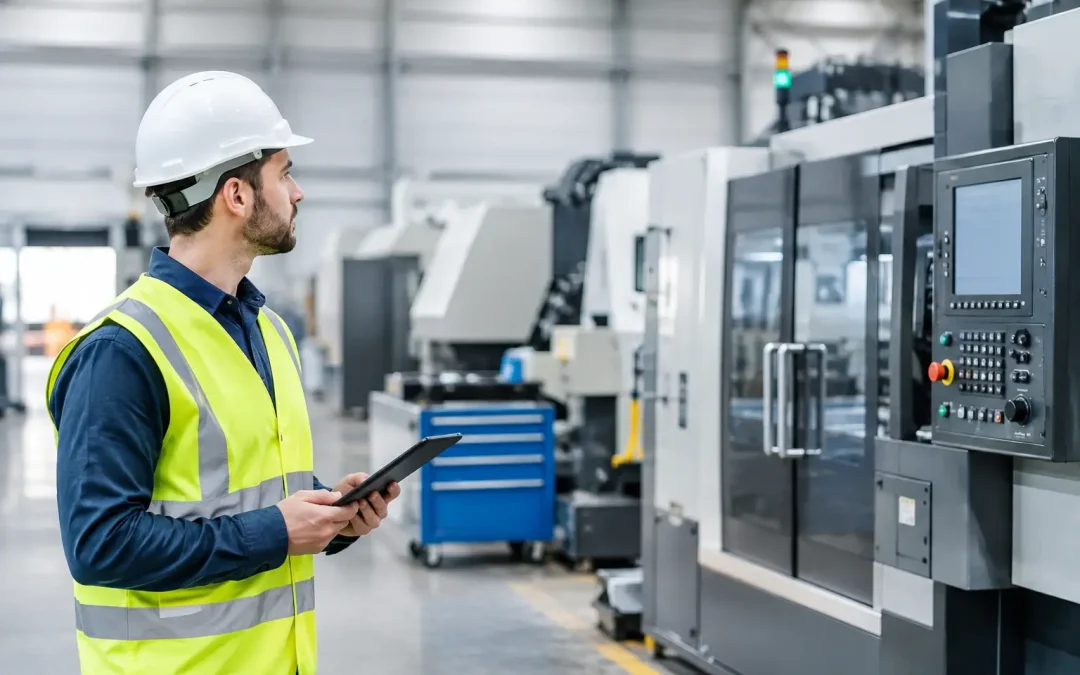
A plant closure, capacity reduction, or production-line change can put valuable machinery on the market quickly. For a manufacturer ready to add capability without tying up capital in new equipment, the opportunity is real. But to buy surplus factory equipment successfully, the purchase decision has to go beyond an attractive asking price or auction bid.
The machine’s condition, available documentation, tooling, controls, removal requirements, and total landed cost all affect whether it becomes a productive asset or an expensive delay. A disciplined buying process protects uptime, keeps projects on schedule, and gives your team a clear basis for comparing equipment options.
Start With the Production Requirement
Surplus equipment should solve a defined operational need. Before reviewing listings, identify the part families, material types, tolerances, throughput targets, and footprint limits the machine must support. For CNC equipment, that may mean confirming travels, spindle speed, table capacity, control generation, axis configuration, and automation compatibility. For fabrication equipment, it may mean tonnage, bed length, laser wattage, material thickness, or backgauge capability.
This step prevents a common mistake: buying a machine because it is available rather than because it fits the work. A lower-cost vertical machining center is not a bargain if it lacks the fourth-axis capability your next contract requires. A press brake with adequate tonnage may still be the wrong fit if its bed length, tooling, or control cannot support your typical bends.
Also consider the work surrounding the machine. Confirm electrical requirements, air supply, coolant management, chip handling, foundation needs, and available floor space. If the equipment will replace an existing asset, plan for the overlap required to remove, install, commission, and qualify the replacement without disrupting customer commitments.
Understand Why the Equipment Is Surplus
Surplus does not automatically mean worn out. Equipment reaches the secondary market for many reasons: a facility consolidates, a company changes products, a plant closes, a lease expires, or a manufacturer standardizes on another platform. In many cases, a capable machine is sold simply because it no longer fits the owner’s operating plan.
The reason for sale still matters. Equipment removed from a clean, well-managed production environment may have a stronger maintenance history than machinery that sat idle outdoors or was disconnected years ago. Ask how long the asset has been out of service, whether it was under power recently, and whether the seller can provide maintenance records, manuals, programming backups, or inspection reports.
A knowledgeable dealer can help distinguish between equipment that is ready for a new shop and equipment that needs a rebuild, retrofit, or more extensive evaluation. That transparency is especially valuable when comparing direct-purchase inventory with machinery offered through an online auction.
Inspect Condition Before You Commit
An inspection is one of the best tools a buyer has. When possible, see the machine under power and observe it performing a relevant cycle. For a CNC machine, review control screens, alarm history when available, spindle operation, axis movement, lubrication systems, hydraulic functions, and toolchanger performance. Look for signs of crashes, leaks, unusual vibration, excessive backlash, damaged way covers, or incomplete guarding.
For fabrication machinery, inspect the ram, bed, tooling interface, backgauge, hydraulic system, safety systems, and control functions. On a fiber laser, ask about source hours, chiller condition, optics, assist-gas setup, automation components, and available service history. A machine can look clean and still require significant work before it produces sellable parts.
If an in-person inspection is not practical, request detailed photographs, videos, serial numbers, specifications, and any known-condition information. Remote review is not identical to standing beside the machine, but clear documentation gives your maintenance team and outside service providers a more reliable basis for evaluating risk.
What “As-Is, Where-Is” Means
Many surplus assets are sold as-is, where-is. That means the buyer is generally responsible for confirming condition, arranging payment, removing the equipment, and accepting the asset without a warranty. It does not mean a buyer should proceed without questions. It means the buyer needs to perform appropriate due diligence before bidding or signing a purchase order.
Ask whether the machine is complete, what accessories are included, and whether any tooling, transformers, manuals, chip conveyors, bar feeders, or loaders shown in photos are part of the sale. Small omissions can become substantial costs once the machine reaches your facility.
Calculate the Landed Cost, Not Just the Purchase Price
The acquisition price is only one line in the budget. To buy surplus factory equipment with confidence, calculate the fully landed cost before making an offer or placing an auction bid. This is particularly important when a machine is large, specialized, or located across the country.
Your budget should account for the following distinct costs:
- Purchase price or winning bid, plus any buyer’s premium and applicable taxes
- Rigging, disconnection, loading, skidding, and packaging
- Freight, permits, insurance, and delivery scheduling
- Installation, electrical hookup, leveling, startup, and operator training
- Repairs, replacement parts, tooling, software, or control updates
A lower bid can lose its advantage quickly if it requires unusually difficult removal or costly restoration. On the other hand, an older machine from a recognized manufacturer with readily available parts and service may deliver excellent value even if its purchase price is higher than a lesser-known alternative.
Get removal quotes early, especially for heavy machinery, equipment on elevated floors, or assets with tight loading access. Confirm the removal window before purchasing. In liquidation situations, deadlines can be firm, and missed dates can lead to storage charges or a forfeited asset.
Match the Buying Channel to the Urgency
Direct-sale inventory and auctions each serve a different purpose. Direct purchase is often the better path when you need a machine quickly, want clearer commercial terms, or need support locating a specific configuration. It can also make planning easier because the price, availability, and removal process are established before the transaction closes.
Auctions can create exceptional value when your team has flexibility on model, timing, and condition. They are often a strong option for purchasing supporting equipment, shop tools, material-handling assets, or machinery from a facility closure. The trade-off is that bidding can move quickly, inspections may be limited, and the buyer must understand all terms before participating.
Set a maximum all-in number before the auction starts. Do not let competitive bidding replace the financial discipline that justified the purchase in the first place. A fast decision is useful only when it is backed by clear operational and cost assumptions.
Verify Serviceability and Parts Support
A machine’s age matters less than its ability to remain productive. Before buying, confirm whether replacement parts, manuals, technical support, and experienced service technicians are available. Controls are especially important. An older but common control platform may be easier to support than a newer proprietary system with limited local expertise.
Ask your maintenance team or service provider about likely wear items and realistic repair costs. For some equipment, a planned retrofit can be a smart investment. For others, outdated electronics or unavailable components can create unacceptable downtime exposure.
This is also where brand reputation matters. Recognized machinery builders often retain resale value and have deeper ecosystems for parts, tooling, and service. That does not make every name-brand machine the right purchase, but it improves the odds that your investment will stay supportable over its working life.
Plan the Move Before Finalizing the Deal
Industrial equipment changes hands only when it is safely removed, transported, installed, and placed back into production. Assign responsibility for each stage before purchase. Your internal point of contact should coordinate with the seller, rigger, carrier, facilities team, electrician, and machine installer so no critical requirement is missed.
Document dimensions, weight, center of gravity, lifting points, and utility requirements. Confirm dock access, door clearances, crane needs, and route restrictions at both locations. Photograph the machine before removal and verify included components against the purchase documentation during loading.
Once the equipment arrives, avoid rushing directly into production. Allow time for installation, alignment, electrical testing, lubrication checks, safety verification, and first-part inspection. A controlled startup is far less costly than discovering a problem after a customer order is already running.
Buy With a Partner Who Can Respond
The surplus market rewards buyers who can act quickly, but speed should not come at the expense of visibility. Work with an equipment partner that can provide accurate specifications, direct answers, clear transaction terms, and practical help with inspections, logistics, and sourcing alternatives.
Revelation Machinery helps manufacturers buy and sell equipment with confidence through nationwide inventory, online auctions, and responsive support for used CNC, fabrication, and industrial assets. Whether you are expanding capacity, replacing a failed machine, or equipping a new production cell, the right guidance can reduce friction from quote through delivery.
The best surplus purchase is not necessarily the lowest-priced machine on the market. It is the machine that arrives complete, fits the application, can be supported, and starts producing value on your floor when your operation needs it.