
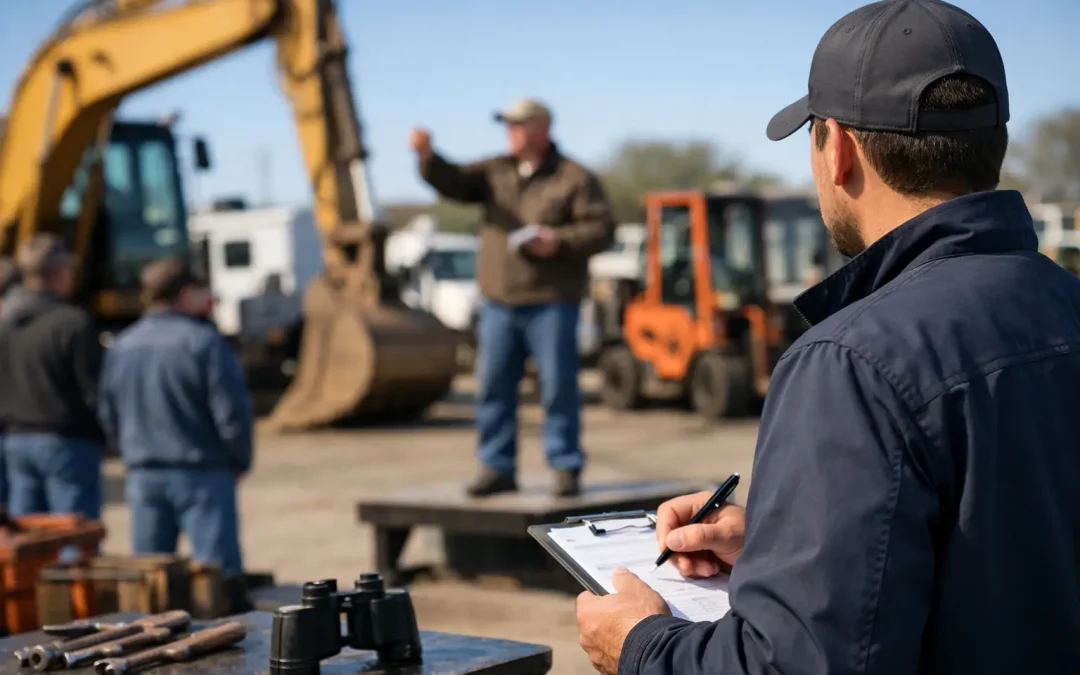
A production bottleneck does not wait for a new machine lead time. When a plant closure, capacity reduction, or surplus sale puts the right CNC, press brake, laser, or support equipment on the market, an auction can be a fast path to added capability. The best surplus equipment auction tips start with one rule: bid on the machine’s total operational value, not the number currently showing on the bid screen.
Auction purchases can create meaningful capital savings, especially for buyers who know exactly what their operation needs. They can also create expensive problems when inspection, rigging, controls, tooling, electrical requirements, and downtime are treated as afterthoughts. A disciplined process keeps the opportunity moving in the right direction.
Start With the Production Requirement
Before reviewing auction catalogs, define the work the equipment must perform. For a vertical machining center, that may include table size, travel, spindle taper, spindle speed, tool capacity, control platform, probing needs, and required tolerances. For a press brake, focus on tonnage, bed length, backgauge configuration, tooling compatibility, and the material mix your shop actually runs.
This step sounds basic, but it prevents a common auction mistake: purchasing a machine because the price appears attractive, then discovering it cannot run the current job mix efficiently. A 10-year-old machine from a recognized manufacturer may be a strong investment if parts, service knowledge, and programming support are available. A newer machine with an uncommon control or an unsupported configuration may carry more risk than the initial price suggests.
Write down the must-have specifications separately from the nice-to-have features. If the machine misses a must-have requirement, move on. Auctions reward speed and discipline, not compromise under pressure.
Review the Auction Catalog Like a Buyer, Not a Browser
A catalog description is a starting point, not a condition report. Read every available detail, including the manufacturer, model, serial number, year, control, listed accessories, lot location, removal dates, and payment terms. Photos can reveal valuable information, but they can also hide issues that only become apparent in person or during a live demonstration.
Pay particular attention to what is included with the lot. A machining center may be sold with a chip conveyor but without toolholders, a transformer, a coolant system, or manuals. A laser may require assist-gas equipment, chiller support, extraction components, or software that are not included. A press brake may be listed without the punches and dies needed to put it into production.
For equipment with controls, ask whether the machine powers on, whether it can be run, and whether there are active alarms. If an auction allows inspection, use it. If travel is not practical, arrange for a qualified local technician or trusted representative to inspect the asset. The cost of a professional evaluation is small compared with a major repair or a machine that cannot be commissioned on schedule.
What to Verify During Inspection
When equipment can be inspected under power, focus on evidence that affects production readiness. Review maintenance records if they are available, check for leaks and visible damage, and look closely at wear surfaces, way covers, ball screws, hydraulic lines, electrical cabinets, and safety systems. Run axes through their travel where permitted. Listen for unusual noise and watch for vibration, hesitation, or repeatability issues.
For CNC equipment, verify the control version and available options. Older controls can remain highly productive, but replacement boards, drives, batteries, and software support should be part of the buying decision. Ask about parameter backups, programs, manuals, and any included tooling. These items can materially reduce commissioning time.
Inspection has limits. Most auction equipment is sold as-is, where-is. A clean appearance is not proof of accuracy, and a machine that powers up is not automatically ready for production. Build that uncertainty into your value assessment.
Calculate the Landed Cost Before You Bid
The hammer price is only one line in the acquisition cost. The strongest of the best surplus equipment auction tips is to set a maximum bid only after calculating the full landed cost of putting the machine to work.
Your estimate should account for the buyer’s premium, sales tax where applicable, payment fees, rigging, loading, freight, insurance, installation, electrical work, foundation or floor preparation, tooling, software, repairs, and startup labor. If the machine needs to be moved across the country, the logistics line alone can change the economics quickly.
Do not assume a low purchase price creates a low-cost project. A large press brake may require specialized rigging, permits, building access planning, and a crew capable of disconnecting and reinstalling it safely. A machine tool may need a phase converter, transformer, air supply upgrade, coolant management system, or network connection before it can run parts.
Use a simple formula: expected production value minus total landed cost minus a realistic contingency equals your maximum bid. The contingency matters most for older, untested, or incomplete equipment. If the calculated maximum feels lower than the current market activity, let the lot go. There will be another machine.
Build a Bid Strategy Before the Auction Opens
Auction momentum can cause capable buyers to chase equipment past its true value. Prevent that by establishing a written bid ceiling in advance and assigning one person to place bids. Multiple team members bidding from separate devices can create confusion and unnecessary escalation.
Watch how the platform handles bid extensions. Many timed auctions extend the closing time when bids are placed near the end, which means waiting for the final seconds does not always secure the lot. Know whether proxy bidding is available, how bid increments work, and whether the auction requires deposits or pre-approval.
It also helps to identify backup lots. If several similar lathes, machining centers, forklifts, compressors, or fabrication machines are available, decide in advance which lot is your first choice and which alternatives meet your requirements. That gives you options when bidding rises beyond a rational level.
Competitive bidding is not a failure of planning. It simply means the market sees value in the equipment. Your advantage comes from knowing the price at which that value no longer works for your operation.
Confirm Removal Requirements Before You Win
A winning bid creates a removal obligation, often on a tight timeline. Review the auction terms before bidding for load-out dates, appointment requirements, insurance certificates, rigging rules, utility disconnect responsibilities, and any restrictions on outside contractors.
Some assets are straightforward forklift loads. Others require engineered lift plans, cranes, specialty trailers, and coordinated shutdown work. Equipment located inside an active plant or on an upper level may involve additional site requirements. If removal windows are short, reserve a qualified rigger and carrier early when possible.
Confirm machine dimensions and weight from reliable sources, not estimates alone. Include attached components such as chip conveyors, tool changers, control cabinets, hydraulic power units, and guarding in the transportation plan. Also measure your receiving doorway, aisle widths, ceiling clearance, foundation capacity, and final placement area before the machine arrives.
The goal is not simply to get the equipment on a truck. It is to get it installed safely, without adding avoidable days or weeks to your production timeline.
Know When an Auction Is Not the Best Buying Method
Auctions work well when you can evaluate the asset, manage the removal process, and accept reasonable condition risk in exchange for market-driven pricing. They may not be the right choice when your operation needs a specific machine configured for an immediate job, requires warranty coverage, or cannot accommodate uncertainty around condition and availability.
In those cases, dealer inventory may offer a more controlled path. A qualified dealer can help source equipment, clarify specifications, coordinate logistics, and move faster when production is at risk. Revelation Machinery supports buyers with used machinery options and auction opportunities, allowing shops to choose the acquisition path that best fits their timeline and risk tolerance.
That flexibility matters during expansions, plant consolidations, and emergency replacements. The best purchase is not always the lowest hammer price. It is the asset that arrives, installs, and performs when your operation needs it.
Treat Post-Auction Planning as Part of the Purchase
After the sale, move quickly. Save all lot documentation, confirm payment deadlines, coordinate removal, and create a commissioning plan before delivery. Identify who will receive the machine, who will connect utilities, who will level and align it, and who will handle startup checks. If the machine needs controls support, schedule that resource before it becomes a production emergency.
Plan for the first weeks of ownership as well. Stock common consumables, replace questionable filters or fluids, confirm lubrication, test safety functions, and run noncritical parts before committing an urgent production order. A controlled startup is far less expensive than discovering an issue during a customer deadline.
The right surplus equipment auction purchase can strengthen capacity without tying up capital in a new-equipment wait. Bid with facts, plan for the full cost, and make sure every winning lot has a clear path from the auction floor to productive work on your shop floor.