
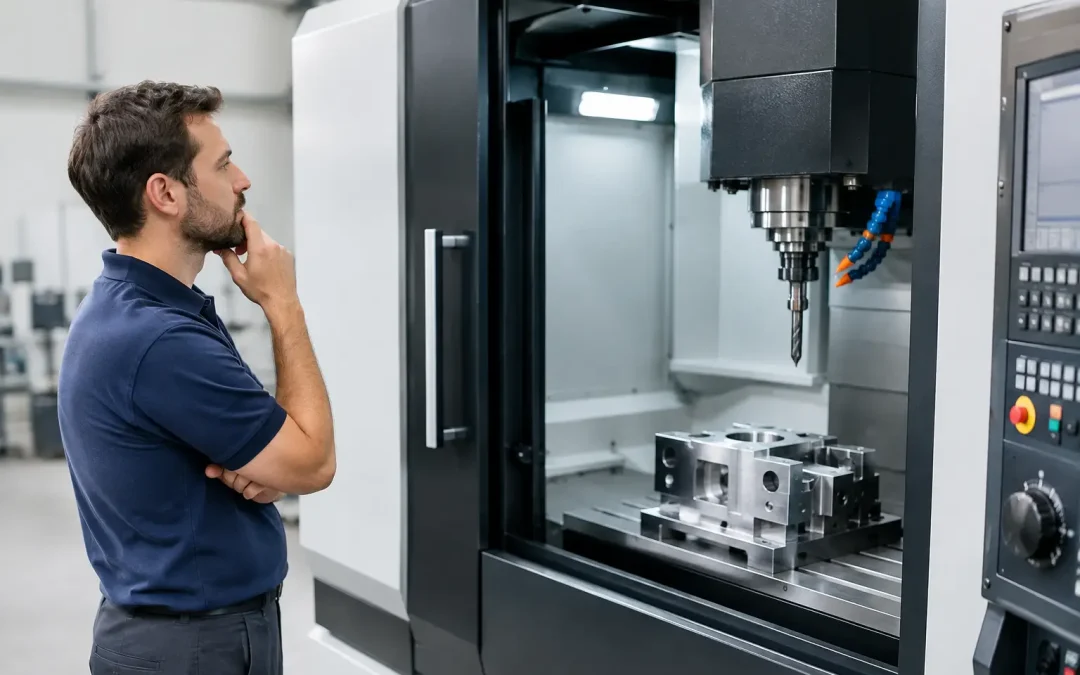
A vertical machining center that looks right on a spec sheet can still become a costly production problem if its travel, control, spindle, or loading arrangement does not match the work on your floor. When you buy vertical machining centers, the goal is not simply to find the lowest machine price. It is to add dependable capacity without creating a bottleneck in programming, setup, maintenance, or delivery.
For shops replacing an aging machine, bringing work in-house, or responding to a new contract, a used VMC can offer a faster and more capital-efficient path than waiting for new equipment. The right purchase starts with a clear production requirement and ends with a transaction plan that accounts for inspection, rigging, freight, installation, and support.
Buy Vertical Machining Centers Based on the Work
The part family should drive the machine search. Start with the largest and most demanding part you expect to run, then account for the next 12 to 24 months of anticipated work. A VMC that handles today’s smallest components may limit growth if new parts require greater X, Y, or Z travel, a larger table, or more tool capacity.
Table load matters as much as travel. A machine may physically fit a workpiece while lacking the table capacity or fixture clearance required for safe, repeatable machining. Consider the combined weight of the part, fixture, vises, tombstones, and any fourth-axis equipment. Also review the distance from spindle nose to table. Tall fixtures and deep pockets can quickly consume usable Z-axis clearance.
Material and cycle time also influence the spindle decision. Aluminum production often benefits from higher spindle speeds and rapid tool changes. Steel, stainless, cast iron, and tougher alloys may call for torque, rigidity, and a spindle taper suited to heavier cuts. A 40-taper VMC is a versatile choice for many shops, while a 50-taper machine may be the better fit for large workpieces, aggressive metal removal, or demanding tooling.
Do not assume more capability is automatically better. A larger, heavier machine can bring higher freight, rigging, electrical, and floor-space costs. If the work is small and high-volume, an efficient compact VMC with a proven control may deliver a better return than a machine built for parts you rarely produce.
Evaluate the Machine Beyond the Listing
Used machinery value is tied to condition, configuration, and history. The model year provides context, but it is not a complete measure of a VMC’s remaining value. A well-maintained machine with documented service and reasonable operating hours may be a stronger purchase than a newer machine that has seen hard production use or deferred maintenance.
Ask direct questions about spindle condition, way covers, lubrication, coolant systems, tool changer operation, alarms, and recent repairs. If available, review maintenance records and identify whether major components have been rebuilt or replaced. A spindle replacement can be a positive sign when it was completed properly, but buyers should understand who performed the work and whether documentation is available.
An inspection is especially valuable when the machine will support critical production. Run the spindle through its speed range, observe tool changes, verify axis movement, and check for unusual noise, vibration, or leaks. Test the control, review active alarms, and confirm that the machine completes basic operational functions. For tighter-tolerance work, evaluate backlash, positioning performance, and spindle runout with qualified technical support.
Cosmetic condition is useful but secondary. Paint wear and shop dirt may be expected on a working machine. What matters more is whether the VMC has been maintained, can be powered and demonstrated, and has a configuration that supports your application. Transparency about known issues is more valuable than a polished listing with unanswered technical questions.
Controls, Software, and Shop Compatibility
The control is central to the machine’s usability. FANUC, Haas, Siemens, Heidenhain, Mitsubishi, and Mazak controls all have established places in the market, but the right choice depends on your team and workflow. A familiar control can reduce training time, speed up programming, and make troubleshooting easier for operators and maintenance personnel.
Check available memory, networking capability, probing options, high-speed machining features, and any software required for your programming process. Older controls can remain reliable and productive, but they may require practical workarounds for modern file transfer or shop connectivity. That is not necessarily a reason to walk away. It is a reason to understand the operating plan before the machine reaches your floor.
Tooling and accessories can materially affect total value. A fourth axis, rotary table, probe, chip conveyor, coolant-through-spindle package, toolholders, vises, or pallet changer may reduce the additional investment required to put the machine into production. Verify which accessories are included rather than assuming they are part of the sale.
Compare Total Acquisition Cost, Not Just Price
The purchase price is only one part of the capital decision. Freight, loading, rigging, unloading, electrical connection, air supply, foundation requirements, tooling, and startup time all deserve a place in the budget. A lower-priced machine located across the country may not be the lowest-cost option after logistics are considered.
Before committing, confirm the machine’s overall dimensions, weight, voltage, phase, and amperage requirements. Compare them to the doorway, ceiling clearance, crane access, floor loading, and power available at your facility. These details prevent last-minute surprises that can delay installation or increase rigging costs.
Lead time has its own value. If production demand is immediate, a machine that is available, inspectable, and ready for shipment may be more valuable than an alternative with a lower sticker price but uncertain availability. Downtime, outsourced work, and missed delivery commitments can cost far more than a reasonable difference in purchase price.
A dependable dealer should help make the process clear. Revelation Machinery supports buyers with nationwide access to used industrial equipment, responsive communication, and practical coordination from machine selection through shipment. That support is particularly useful when a buyer needs to move quickly without compromising on the facts needed to make a sound decision.
Choose the Right Buying Channel
Used VMCs are commonly available through dealer inventory, private transactions, and online auctions. Each route has advantages, and the best option depends on urgency, technical confidence, and risk tolerance.
Dealer inventory can provide a more straightforward buying process, especially when you need application guidance, condition details, or assistance arranging freight. A dealer may also have access to comparable machines that are not yet broadly advertised. This can matter when you need a specific table size, spindle taper, control, or brand.
Private sales can occasionally offer attractive pricing, but buyers must take on more responsibility for verification, payment security, removal planning, and communication. For experienced teams with the time and technical resources to manage the transaction, that can be workable. For a shop that needs certainty and speed, the added friction may outweigh the savings.
Auctions can create strong buying opportunities, particularly during plant closures, consolidations, and surplus asset sales. They also require discipline. Review inspection windows, buyer’s premiums, payment deadlines, removal dates, and the equipment’s operating status before bidding. An auction purchase is often sold as-is, where-is, so the buyer needs a clear maximum bid that includes all downstream costs.
Questions to Answer Before You Commit
A purchase decision becomes easier when your team can answer a few operational questions clearly. What part sizes, materials, and tolerances will the machine support? What is the minimum spindle speed, torque, and tooling capacity required? Can your operators program and maintain the selected control? Is there enough floor space, power, and rigging access to install it without disrupting current production?
Also ask whether the machine creates a complete production solution or merely adds another constraint. A VMC without suitable fixturing, workholding, probing, or programming capacity may sit idle longer than expected. Build those requirements into the purchase plan from the beginning.
The best used vertical machining center is the one that arrives ready to solve a defined production need, fits your operating environment, and gives your team room to grow. Make the decision with verified information, realistic logistics, and a partner that responds when production cannot wait.