
Key Takeaways:
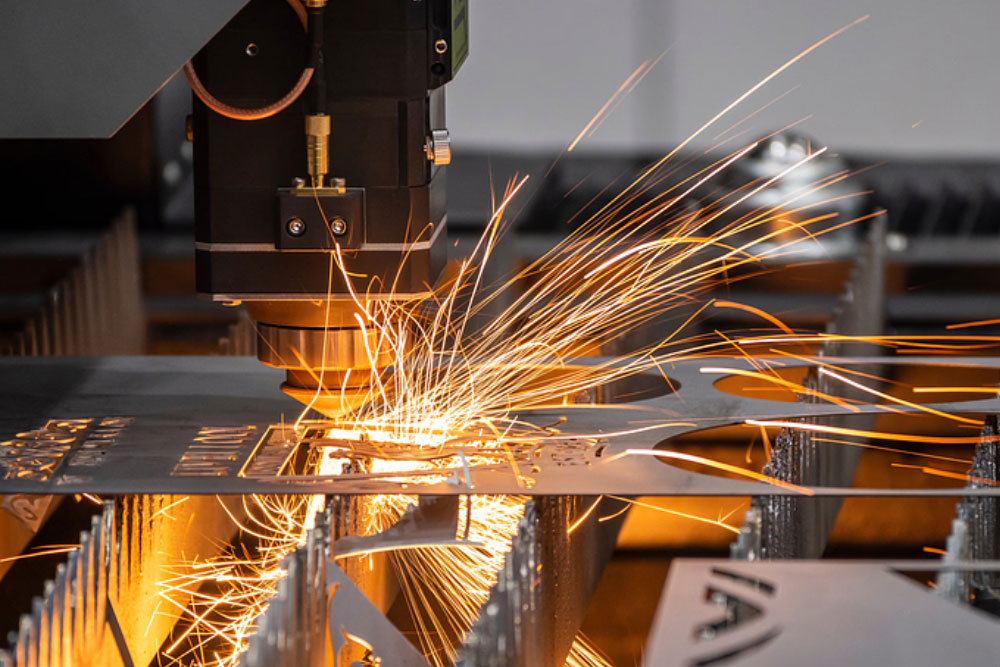
- Fiber lasers ditch the gas tubes and mirrors; the beam travels through a doped fiber-optic cable instead. Way fewer parts to deal with, and running costs stay well below CO2 lasers.
- Cutting metal is the main gig – steel, aluminum, brass – but they’re also solid for welding, engraving, part marking, and stripping rust off surfaces.
- Beyond functionality, they’re also economic: Lower electricity bills and fewer replacement parts add up over time. Diode modules alone typically last 100,000+ hours before needing replacement.
- Good used fiber lasers hold their functional value; if you’re asking what fiber lasers are right for me, buying pre-owned ones or selling those you’ve outgrown actually makes a lot of sense right now.
Ten years ago, most fab shops ran CO2 lasers and didn’t think twice about it. That’s changed fast. Fiber lasers took over metal cutting, and it happened faster than most people expected. If you haven’t worked with one yet – or are wondering “how does a fiber laser work?” – here’s the rundown.
What Is a Fiber Laser?
A CO2 laser uses gas. An Andu uses a crystal rod. A fiber laser cutting machine? It generates the beam right inside a fiber-optic cable – and what are fiber lasers built around? Ytterbium, a rare-earth element, and that’s the secret sauce – it’s what actually produces the laser.
OK, but why should you care? Because the beam stays inside the fiber from start to finish. No finicky mirror alignment. No gas tubes to swap out. The machine ends up smaller, more stable, and a lot less needy when it comes to upkeep. That simplicity is why you see them everywhere now – they’ve become standard fabrication machines in shops from coast to coast.
How Do These Lasers Work?
Looking for a deeper dive into how these tools work? So here’s what fiber lasers are doing inside: Pump diodes shoot light into the ytterbium-doped fiber. The ytterbium atoms absorb that light and emit photons. Built into the fiber are Fiber Bragg gratings – essentially tiny reflectors – that bounce photons back and forth, strengthening with each pass. What comes out is an extremely concentrated beam of light.
Deep-Dive into Functionality
How does a fiber laser actually work? It fires at wavelengths between 1,060 and 1,080 nanometers. That range is exactly what metals absorb best. So when you point one at steel, aluminum, copper, or brass, it cuts – that’s what fiber lasers are for. A CO2 laser’s wavelength (around 10,600 nm) is a completely different animal. Works well on wood, acrylic, and plastics, but metals? Not its strong suit.
And because everything’s sealed inside the fiber, alignment issues are basically a non-issue. Fewer service calls—less downtime. If you’re running production, that matters a lot.
Common Fiber Laser Applications
Metal processing is really the sweet spot, though fiber lasers are versatile enough to show up in some unexpected places. The big ones:
Metal Cutting / Welding
Flat sheet, plate, tube, pipe – you name it. Runs through stainless, mild steel, aluminum, brass – exactly what fiber lasers are made for. On most gauges, you’ll get faster cuts and cleaner edges than what a CO2 can manage.
Auto manufacturers, aerospace shops, and medical device companies all lean on fiber laser welding. You get tight, accurate joints without warping the surrounding material.
Marking and Engraving
Part numbers, barcodes, and company logos – all burned permanently into the surface. No consumables needed, no physical contact with the surface.
Surface Cleaning
How does a fiber laser work in removing rust, old coatings, or weld discoloration? Laser cleaning removes it with ease. Not many shops have adopted this yet.
3D Printing
What are fiber lasers doing in metal 3D printing? Melting powder into solid material, one layer at a time.
Why Fiber Lasers Matter for Buyers AND Sellers
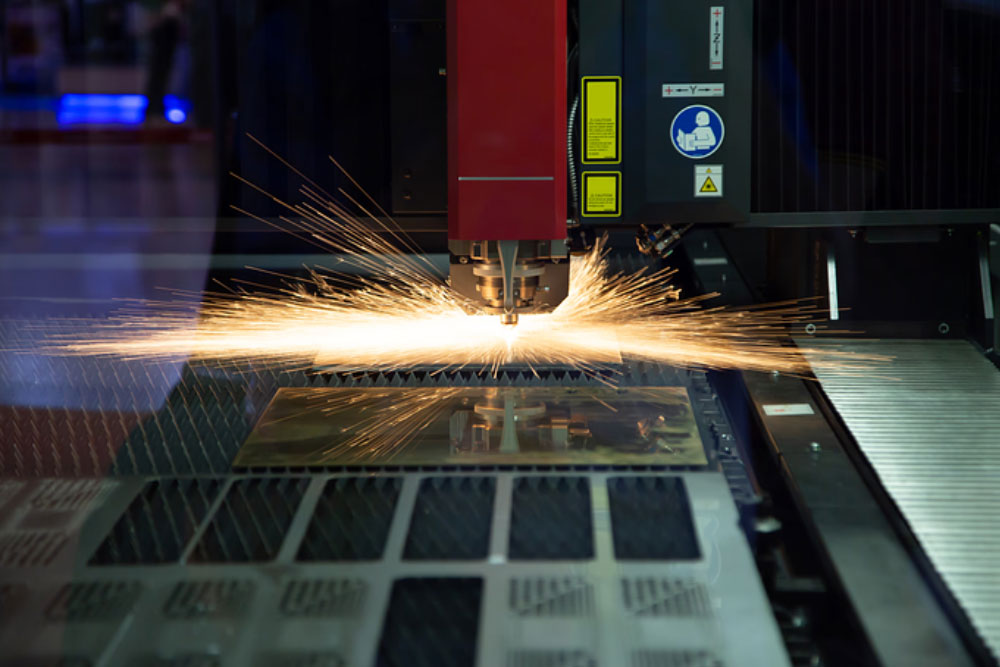
From car plants to jewelry studios to hospital equipment manufacturers – fiber lasers have found a home in a surprising number of places. And plenty of shops pair their fiber laser with other CNC gear. It’s pretty common to see operations running CNC grinders, turning centers, or Haas machines right alongside a fiber laser on the same floor.
The high level of functionality and flexibility in the application makes these lasers worth having, but what are the fiber lasers’ cost-related upsides? The cost-of-ownership numbers make a strong case. A few specifics:
Speed
On metals under about 6mm, a fiber laser can cut two to three times faster than a comparable CO2 machine. Across a full production run, that gap adds up quickly.
Efficiency
Fiber lasers turn roughly 30-35% of the electricity they consume into actual laser output. CO2 machines? More like 10-15%. Run both for a few years, and the difference on your power bill gets really noticeable.
Maintenance
No gas to refill. No mirrors are going out of alignment. Diode modules routinely hit 100,000+ hours. Low maintenance costs are one of the reasons fiber lasers are built. The consumables list is basically… short.
Longevity
How does a fiber laser work for such long periods?: Solid-state design means fewer things that wear down mechanically. A well-kept fiber laser holds up for years – and this helps when you want to sell fiber laser machines, too.
The Used Market
Speaking of resale, the used market for fiber lasers has picked up a lot as more shops upgrade their setups or retool for different jobs. If you need to add a laser but can’t justify a brand-new price tag, buying pre-owned is a smart play. And if your current fiber laser is sitting idle after an upgrade, it’s worth knowing what fiber lasers are going for right now – there’s no better time to move it. Buyers are out there.
A Partner Who Understands Both Sides of the Market
Revelation Machinery works both sides of that. Need to browse industrial equipment for sale? We’ve got nationwide inventory. Looking to move surplus machines through equipment auctions? We handle that too. We also stock plenty of other categories (lathes for sale, CNC equipment, other fabrication gear), and our team actually knows the market. Check out our current inventory or reach out directly.