
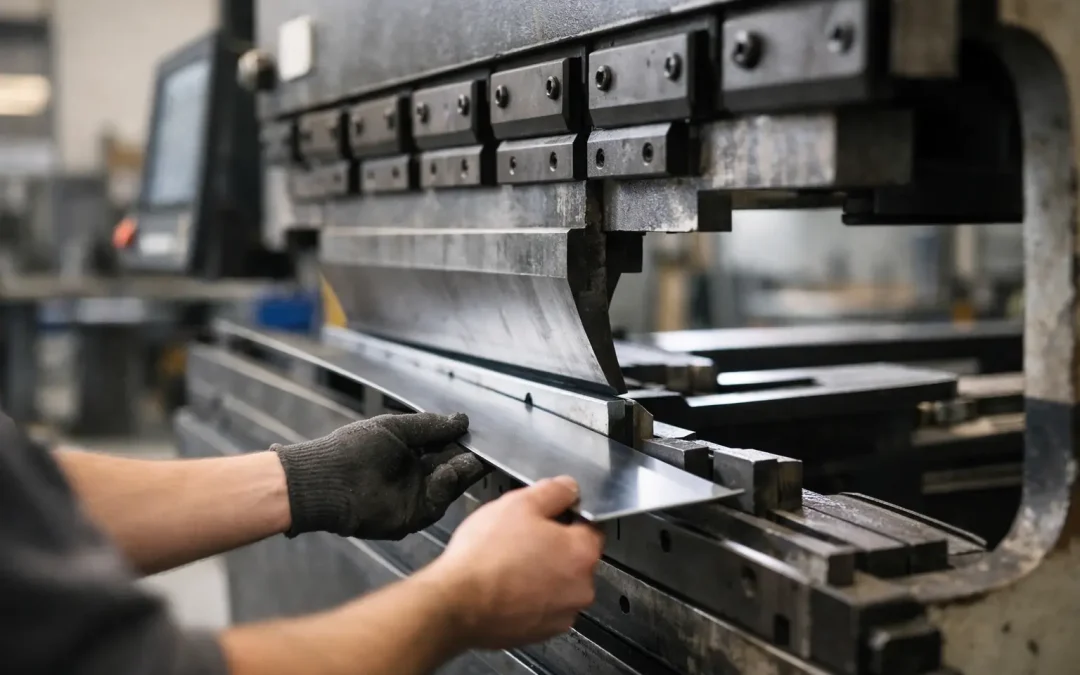
A press brake that cannot hold angle, repeat a bend, or accept the tooling your work requires quickly becomes a production bottleneck. For fabrication shops, the right press brakes create capacity without tying up capital that may be needed for material, labor, automation, or customer growth. The wrong machine can introduce expensive setup delays, quality issues, and unplanned repair work.
Used equipment can be an excellent answer when the machine is matched to the application, inspected with care, and moved by experienced professionals. The decision is not simply about finding the highest tonnage or the lowest asking price. It is about selecting a machine that fits the parts you run, the labor available on the floor, and the work you expect to win next.
Start With the Work Your Press Brake Must Handle
Tonnage is the first specification most buyers consider, and for good reason. A machine must have enough forming force to bend the material thickness, width, and type you process. But tonnage alone does not define whether a brake is right for the job. The same machine can be appropriate for one part and undersized for another depending on die opening, bend method, grain direction, and material tensile strength.
Air bending generally requires less force than bottoming or coining, but it also depends on consistent material and proper tooling. Mild steel, stainless steel, aluminum, and high-strength materials each behave differently. If your shop regularly forms heavier plate or long parts, work with actual part dimensions and material specifications rather than relying on a general tonnage chart.
Bed length matters just as much. A 10-foot brake may suit the majority of a shop’s work, while a 14-foot or 16-foot bed can be necessary for panels, cabinets, enclosures, architectural components, and long structural parts. Longer beds bring additional considerations: machine footprint, transportation complexity, crown compensation, and the need to maintain consistent bend angles across the full length.
Also look at daylight, stroke, throat depth, and open height. These specifications affect whether operators can form boxes, channels, deep flanges, and parts with return bends without interference. A brake with adequate tonnage but limited daylight may still prevent you from producing the work you intended to bring in-house.
Choosing Between Mechanical, Hydraulic, and CNC Press Brakes
The best machine type depends on production volume, part complexity, operator skill, and budget. Older mechanical brakes can offer straightforward operation and strong value for basic bending applications. They are often a practical fit for shops running repeatable, lower-complexity parts where speed and simplicity matter more than programming flexibility.
Hydraulic press brakes are common across modern fabrication environments because they provide controllable force, dependable performance, and broad application range. Many used hydraulic machines offer excellent value when they have been properly maintained. Buyers should evaluate the condition of cylinders, seals, hoses, valves, hydraulic pumps, and control systems, especially on equipment with significant service hours.
CNC press brakes deliver the greatest advantages when shops run varied parts, short production batches, complex bend sequences, or tight tolerances. Multi-axis backgauges reduce manual layout and can improve repeatability across jobs. Controls with graphical programming, offline programming compatibility, and operator-friendly interfaces can reduce setup time, but there is a trade-off. More advanced controls may require training, software support, and a clearer understanding of what replacement parts or service access will look like over time.
For many buyers, a proven CNC hydraulic brake from a recognized manufacturer is the most balanced choice. It can support production growth without the cost of a new machine, provided the control, backgauge, ram movement, and safety systems are operating as intended.
Backgauge Capability Drives Real-World Productivity
Backgauge configuration deserves close attention because it has a direct effect on setup speed and part consistency. A basic two-axis backgauge may be sufficient for straightforward flanges and repetitive bends. More complex work may benefit from additional axes that allow fingers to move independently, support tapered parts, and position difficult geometries without manual adjustment.
Ask how your operators currently set up jobs. If they spend time measuring each flange, moving stops by hand, or correcting inconsistencies during a run, an upgraded backgauge can produce a meaningful operational return. On the other hand, paying for advanced axes that your work never uses may not be the best allocation of capital.
Inspect Condition Beyond the Nameplate
Brand recognition matters, but condition determines value. A well-maintained used press brake from a respected manufacturer can serve a shop for years. A machine with deferred maintenance, damaged tooling interfaces, or unsupported controls can carry costs that are not visible in the purchase price.
Begin with the frame, bed, ram, and connections. Look for evidence of collision damage, cracked welds, unusual repairs, or excessive wear. Test ram movement through its full stroke where possible. The ram should move smoothly, respond consistently, and hold position without unusual noise, vibration, or hydraulic leakage.
Evaluate the ram-to-bed alignment and the machine’s ability to produce consistent angles across a sample part. Crowning systems, whether manual or CNC-controlled, can be particularly valuable on longer brakes because they help offset deflection during bending. If your business produces long, precision components, this feature may be more important than a modest difference in rated tonnage.
Controls should be powered up and tested whenever possible. Confirm that screens, buttons, emergency stops, foot pedals, light curtains, and safety devices function correctly. Review available manuals, electrical diagrams, maintenance records, and tooling documentation. A machine with clear documentation and known service history is easier to put into production and easier to support later.
Tooling Is Part of the Investment
A press brake purchase is not complete until the tooling plan is clear. Punches, dies, holders, adapters, clamps, and segmented tooling determine the range of parts the machine can form. A brake may be priced attractively but require a substantial tooling investment before it can run your production work.
Check the machine’s tooling style and clamping arrangement. Common tooling systems make it easier to source replacements, add specialty shapes, and build a flexible tooling library. Inspect included tooling for wear, chips, bending, corrosion, or mismatched sections. Even small damage can affect bend quality and introduce repeatability issues.
Consider whether you need precision-ground tooling, hemming tools, gooseneck punches, narrow dies, radius tooling, or tooling for specialty forming. If you operate with frequent job changes, quick-change clamping can save considerable operator time. The right tooling package may justify a higher equipment cost because it shortens the path from delivery to productive output.
Plan for Power, Rigging, and Installation Before You Buy
Moving a press brake is a specialized project. These machines are heavy, often top-heavy, and sensitive to improper rigging. Before committing to a machine, verify the equipment weight, overall dimensions, electrical requirements, foundation needs, doorway clearances, floor capacity, and final placement route.
Electrical compatibility is a common issue with used machinery. Confirm voltage, phase, amperage requirements, and whether a transformer or electrical upgrade will be necessary. A machine that appears to be a strong purchase can lose its cost advantage if installation requirements were not identified early.
Delivery timing also affects production planning. If you are replacing a failed brake or adding capacity for a committed customer program, coordinate removal, transportation, rigging, setup, and operator training as one schedule. Fast sourcing is valuable, but a smooth installation is what keeps your production floor moving.
Buying Used Equipment With Confidence
A dependable equipment partner can help reduce the risk of a used machinery purchase by providing accurate specifications, clear condition details, responsive answers, and support through delivery. Revelation Machinery works with manufacturers nationwide to source, sell, and liquidate fabrication equipment, including used press brakes from recognized brands.
When evaluating available machines, be prepared to share the materials you bend, maximum part length, typical thickness range, required tolerances, production volume, facility constraints, and preferred control features. That information allows an experienced seller to identify equipment that fits your operation rather than presenting a generic list of machines.
Price should be evaluated against readiness, not viewed in isolation. A lower-priced brake that needs controls work, tooling, hydraulic service, or lengthy installation may cost more in downtime than a properly equipped machine that can be placed into service quickly. For buyers with immediate needs, access to in-stock equipment and lightning-fast service can be as valuable as the machine itself.
For sellers, surplus press brakes can retain meaningful value when marketed accurately to the right buyer base. Whether a shop is upgrading, consolidating operations, or closing a facility, direct sale, consignment, and auction options can provide a practical path to recover value while clearing valuable floor space.
The right press brake should give your team more than bending capacity. It should give them confidence that the next quote can be accepted, the next job can be set up efficiently, and the equipment on the floor will support the work that keeps your business moving.