
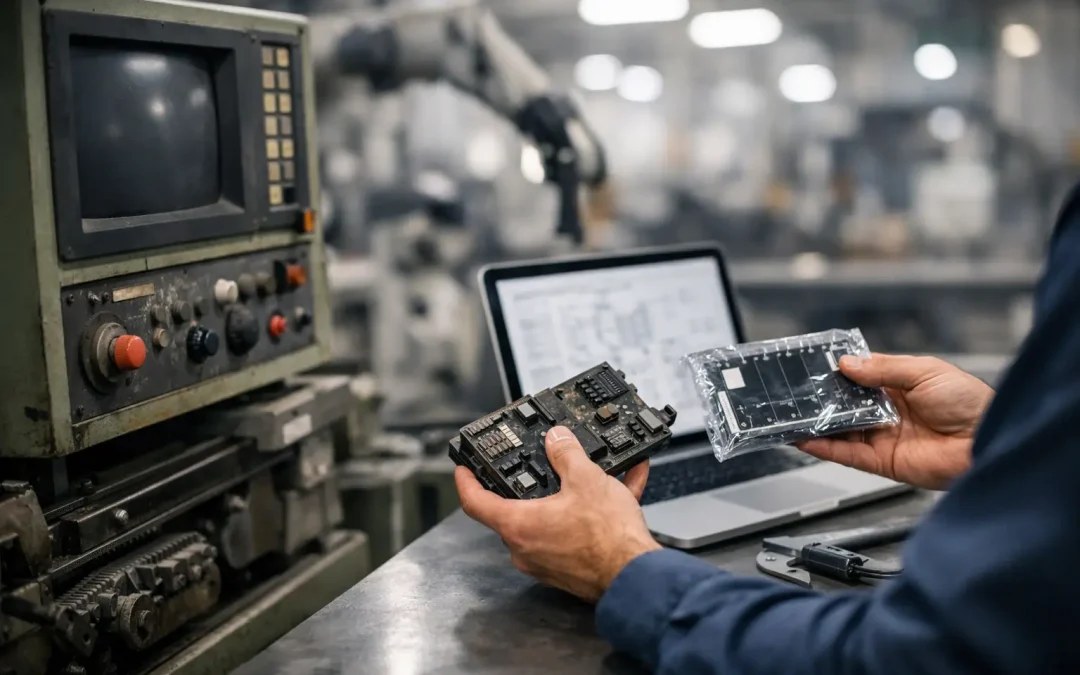
A control failure, worn spindle, or discontinued drive can turn a productive machine into the bottleneck that holds up an entire schedule. Obsolete machine sourcing gives manufacturers a practical path forward when OEM support has ended, lead times for new equipment are unacceptable, or a direct replacement is the fastest way to protect production.
For a machine shop, fabricator, packaging operation, or industrial processor, the objective is rarely to buy the newest model available. The objective is to restore capacity with equipment that fits the work, the floor plan, the available power, and the team already running the operation. That takes more than finding a machine with a familiar nameplate. It requires a clear sourcing process, realistic inspection standards, and a partner that can move quickly when uptime is on the line.
Why obsolete equipment becomes a production problem
Machines become obsolete for different reasons. A manufacturer may discontinue a model line, stop producing electronics, or end parts support after a merger. In other cases, the machine remains mechanically capable but uses a legacy CNC control, servo drive, hydraulic component, or proprietary board that is increasingly difficult to repair.
The risk is not limited to a complete machine failure. A plant may have a working vertical machining center, press brake, lathe, or laser that runs well until one small component fails. Once that part is unavailable, a repair that once took a day can become a weeks-long search. Production planners are then forced to outsource work, reshuffle schedules, or delay customer commitments.
Buying new equipment is sometimes the right answer, particularly when higher throughput, automation, tighter tolerances, or changing customer requirements justify the investment. But new machinery can involve long delivery windows, tooling changes, training demands, facility upgrades, and a much higher capital commitment. A comparable used machine can be the more practical solution when the priority is restoring capacity quickly.
Obsolete machine sourcing starts with the application
The fastest search is not always the best search. Before contacting dealers, reviewing auction listings, or requesting quotes, define exactly what the replacement needs to accomplish. A machine that looks equivalent on paper may not accept the current fixtures, communicate with existing programs, handle the required material, or fit the available footprint.
Start with the part family and workload. Identify the material types, largest workpiece dimensions, tolerance requirements, cycle-time expectations, and anticipated production volume. For CNC equipment, document axis travel, spindle taper, spindle speed, tool capacity, control preference, and any fourth- or fifth-axis requirements. For fabrication equipment, confirm tonnage, bed length, backgauge configuration, tooling compatibility, and material thickness range.
Then identify the site constraints. Electrical requirements, compressed air, coolant systems, foundation conditions, overhead clearance, loading access, and machine weight can eliminate otherwise suitable options. A replacement that cannot be rigged into the building or powered without an expensive upgrade is not a rapid recovery plan.
Compatibility should also be evaluated honestly. Matching the same make and model can reduce retraining and simplify program transfer, but it is not always necessary. A newer used alternative with a supported control and available service network may offer a stronger long-term position. The right choice depends on whether the equipment is a short-term capacity bridge, a spare for a critical process, or a core asset expected to run for years.
Build a search specification that dealers can act on
Vague requests slow down the process. “Looking for an older CNC lathe” produces a wide list of possibilities and more back-and-forth than an operations team needs. A concise specification helps an equipment dealer identify viable inventory, locate off-market equipment, and screen out machines that will not work.
A useful request includes the preferred make and model, acceptable alternatives, required capabilities, control type, maximum age if applicable, geographic preferences, and target timing. Include photos of the existing machine, its serial plate, control screen, tooling, and surrounding floor area when possible. Those details can reveal critical information that does not appear in a basic machine description.
Be clear about what is non-negotiable and what is flexible. For example, a shop may require a 40-taper vertical machining center with a specific table size but be willing to consider several control generations. Another operation may need a specific press brake because existing tooling, programs, and operator familiarity make substitution costly. This distinction lets the sourcing team act with speed without presenting unsuitable options.
Evaluate condition beyond the listing description
Used machinery is not a commodity. Two machines with the same model number and similar year can have very different value based on operating history, maintenance practices, hours, options, wear, and how long they have been sitting idle.
A listing description should be the start of due diligence, not the finish. Ask for clear photos, video of the machine operating when available, serial-number confirmation, maintenance records, alarm history, available manuals, and a complete list of included accessories. For CNC machinery, pay close attention to control condition, spindle performance, axis movement, lubrication systems, way covers, tool changer operation, and whether the machine can complete a demonstration cycle.
For press brakes and other fabrication equipment, inspect ram movement, hydraulic condition, backgauge accuracy, tooling, crowning systems, safety equipment, and control functionality. For fiber lasers, verify source hours, resonator information, chiller condition, assist gas setup, automation components, and the condition of the cutting bed.
An inspection may require a technician, an experienced in-house maintenance lead, or a third-party evaluator. That additional effort is justified when the machine will support a critical process. On lower-cost backup equipment, a buyer may accept more risk if the price leaves room for repairs. The appropriate inspection level depends on the machine’s role and the cost of a missed delivery date.
Consider direct purchase, auction, and alternatives
There are several channels for obsolete equipment sourcing, and each has trade-offs. Direct dealer inventory is often the best fit when speed, transaction support, and a clearer path from quote to shipment matter most. A dealer can also locate equipment through its network when the needed machine is not currently listed.
Online auctions can produce strong values, especially during plant closures, consolidations, and surplus liquidations. However, auction buyers need to understand the terms, inspection windows, buyer premiums, payment requirements, rigging responsibilities, and removal deadlines before bidding. The lowest hammer price does not necessarily represent the lowest delivered cost.
Private-party purchases may offer access to a specific machine, but they can create more work around verification, payment protection, deinstallation, loading, and transportation. For a time-sensitive replacement, the operational cost of managing those details internally can outweigh a lower purchase price.
Revelation Machinery helps manufacturers assess these options with a nationwide supply network, used equipment inventory, online auctions, and responsive support for buying, selling, and liquidation decisions. The goal is not simply to locate a machine. It is to help move the right asset from its current location to a productive place on your floor.
Plan logistics before committing to the machine
Many equipment transactions lose time after the purchase order is issued. A machine may be ready to sell, but not ready to move until utilities are disconnected, fluids are managed, a rigger is scheduled, and loading details are confirmed. If the equipment is inside a plant, removal can require coordination with site safety rules, dock availability, union requirements, or limited access hours.
Request machine dimensions, weight, loading method, and exact location early. Confirm whether the seller will disconnect and load the equipment or whether those services fall to the buyer. For larger assets, obtain rigging and freight estimates before final approval, not after. Transit insurance, crating needs, and delivery-site unloading must be part of the plan.
The receiving facility needs equal attention. Have the pad, electrical connection, air supply, coolant, network connection, and operator schedule ready before delivery. If the existing machine is still limping along, schedule the changeover to preserve as much capacity as possible. A well-planned installation can turn a replacement purchase into a controlled transition instead of an extended outage.
Reduce future exposure to obsolete equipment
Once a hard-to-find machine or component has been sourced, use the experience to strengthen the maintenance strategy. Identify machines that create single points of failure, review parts availability, and maintain accurate records for controls, drives, motors, pumps, boards, and specialty tooling. A modest inventory of critical spares can prevent a future emergency.
It also helps to document acceptable replacement models before a breakdown occurs. Maintenance leaders, operators, and production managers often know which machines can take over the work, but that knowledge is rarely organized into a formal plan. A replacement matrix gives the purchasing team a head start when timing matters.
The right obsolete machine may not be the cheapest listing or the closest machine on a map. It is the one that returns dependable capacity with a clear understanding of condition, total cost, and delivery requirements – so the next unexpected failure becomes a manageable equipment decision rather than a production crisis.