
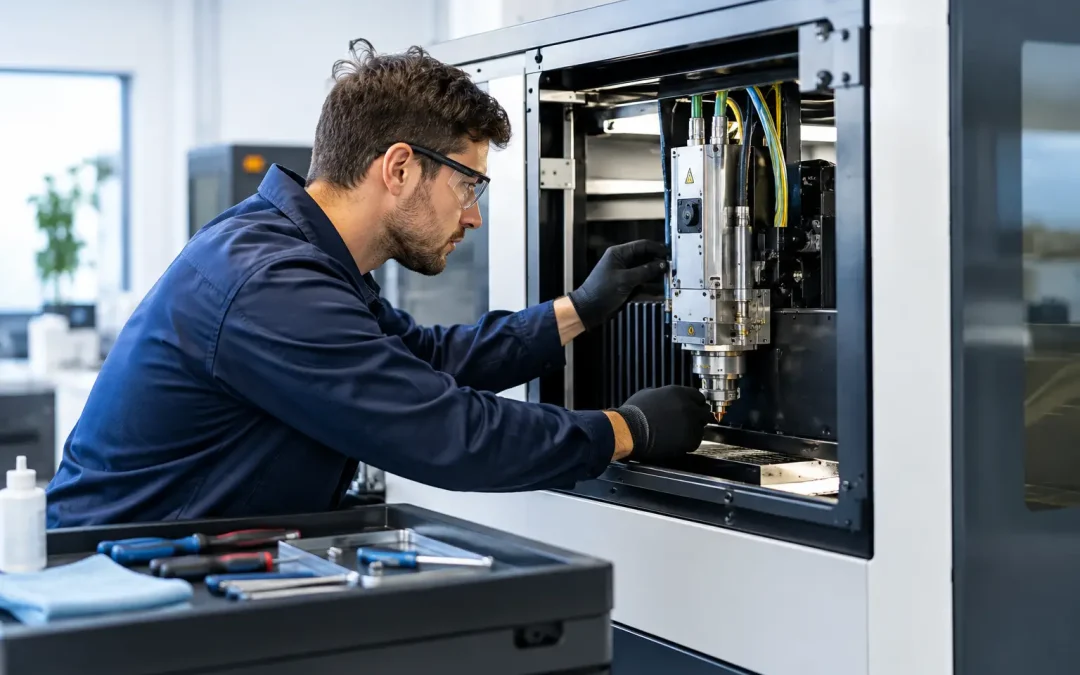
A fiber laser that starts leaving dross on otherwise routine parts is rarely giving a random warning. It is usually signaling a maintenance issue: contaminated optics, declining assist-gas quality, a worn nozzle, poor chiller performance, or a setup condition that has moved out of tolerance. Fiber laser maintenance is not simply a scheduled expense. It protects throughput, part quality, operator time, and the value of a high-dollar capital asset.
For fabricators running tight delivery schedules, the objective is straightforward: catch small issues before they become a lost shift, damaged material, or an emergency service call. The most effective program combines disciplined daily checks, documented preventive work, and a clear escalation process when cut quality changes.
Why Fiber Laser Maintenance Affects More Than the Machine
A fiber laser is a production system, not just a cutting head. Beam delivery, optics, assist gas, motion components, extraction, cooling, software, and material handling all influence the cut. When one area begins to drift, the symptom may appear somewhere else. A dirty protective window, for example, can reduce cutting performance and eventually create enough heat to damage more expensive optics.
The cost of delayed maintenance is also larger than a replacement part. Poor cut quality can create secondary deburring, scrap, missed shipment dates, and operator troubleshooting time. An unplanned shutdown may disrupt downstream bending, welding, paint, or assembly departments that depend on cut blanks arriving on schedule.
Maintenance also matters when it is time to sell, trade, or liquidate equipment. Buyers evaluating a used fiber laser look closely at machine condition, service history, operating hours, chiller condition, automation functionality, and the availability of manuals and records. A clean, documented machine inspires confidence and can support a stronger resale outcome.
Daily Fiber Laser Maintenance Starts at the Cutting Head
The cutting head deserves consistent attention because it operates closest to the cutting process. At the beginning of each shift, inspect the nozzle for spatter, deformation, and evidence of a recent collision. Confirm that nozzle centering is correct. Even a slight centering issue can affect gas flow and produce uneven edge quality.
Check the protective window or cover slide according to the machine manufacturer’s procedure. Look for haze, burns, spots, or contamination. Do not wait for a visible failure if cut performance has changed. Protective optics are designed to be replaced before contamination reaches higher-value components.
Operators should also inspect the ceramic ring, sensor cable condition, and cutting head exterior. A cracked ceramic, loose component, or damaged cable can lead to height-control problems. These checks take minutes, but they help prevent crashes that can result in much longer downtime.
Record findings in a shift log rather than relying on memory. A simple log that tracks nozzle changes, protective-window replacements, cut-quality concerns, alarms, and material type can reveal patterns. If one job repeatedly causes contamination or a certain assist-gas setup creates inconsistent results, the history gives maintenance personnel a starting point.
Keep Optics Clean Without Creating New Damage
Optical components require care, not aggressive cleaning. Using the wrong wipes, solvents, pressure, or technique can scratch a lens or leave residue behind. Follow the original equipment manufacturer’s approved process for each optic, including the correct inspection method and replacement intervals.
A clean work area matters here. Keep optic storage containers sealed, use clean gloves or approved finger cots, and avoid exposing components to unnecessary dust or oil mist. Compressed shop air is not a substitute for approved cleaning practices. If the air supply contains oil, moisture, or particulate, it can make contamination worse.
There is a practical trade-off in replacement decisions. Replacing a protective window too early adds consumable cost, but running one too long risks heat damage and a much more expensive repair. Shops should set a baseline interval based on their material mix, production volume, and observed contamination rate, then adjust from documented results.
Watch for These Cut-Quality Changes
Operators are often the first to see a maintenance issue. Excess dross, increased burrs, inconsistent pierces, wider kerf, discoloration, or a rough edge can point to several causes. The issue may be optics, nozzle condition, focus position, assist gas, material variation, or cutting parameters.
Do not assume every quality problem requires a major service event. Start with the basics: inspect the nozzle, verify centering, check protective optics, confirm gas pressure and purity, and review the program against the correct material thickness. If the issue continues, move to a more detailed diagnostic process rather than repeatedly changing parameters and masking the root cause.
Control Cooling, Gas, and Air Quality
The chiller protects the laser source and cutting head from excessive heat. Check coolant level, temperature, alarms, hose condition, and signs of leakage on the schedule recommended by the machine builder. Use only the specified coolant or water treatment approach. Improvised fluids may create corrosion, biological growth, conductivity problems, or deposits that restrict flow.
Chiller filters, heat exchangers, and condenser surfaces need regular cleaning. A chiller working in a dusty fabrication environment may require more attention than one installed in a clean, climate-controlled area. Restricted airflow forces the system to work harder and can create temperature instability that affects reliability.
Assist gas is just as critical to finished part quality. Nitrogen, oxygen, and compressed air must meet the purity, pressure, and delivery requirements of the application. Inspect filters, drains, regulators, supply connections, and hoses. Moisture or oil in the gas line can contaminate optics and degrade cuts, while pressure loss can show up as poor edge quality or incomplete cutting.
If the machine uses shop compressed air, treat the air system as part of the laser maintenance plan. Confirm that dryers and filters are operating properly and that condensate is removed. A laser can be mechanically sound while poor air quality continues to create avoidable operating problems.
Do Not Neglect Motion, Extraction, and Material Handling
Fiber laser maintenance extends beyond the beam path. Keep rails, bellows, rack-and-pinion components, cable carriers, lubrication systems, and limit switches in the condition and service interval specified by the manufacturer. Listen for new noises during travel and watch for changes in positioning accuracy, vibration, or repeated axis alarms.
Clean scrap, slag, and small offcuts from the cutting bed and surrounding work zone. Accumulated material can interfere with sheet support, create collision risks, reduce extraction effectiveness, and increase fire exposure. Inspect slats regularly. Severely damaged or overloaded slats can affect material stability and make unloading more difficult.
Extraction and filtration equipment deserve the same operational discipline. A clogged filter, poor duct condition, or weak airflow can increase smoke in the cutting area and leave residue on machine components. It can also create a more difficult environment for operators. Review differential pressure readings and maintenance indicators instead of waiting until visible smoke becomes the trigger.
For automated systems, include shuttle tables, load/unload equipment, pallet changers, sensors, clamps, and safety interlocks in the inspection routine. Automation increases throughput, but it also introduces more components that need verification. A minor sensor fault can stop an otherwise healthy laser cell.
Build a Maintenance Schedule Around Production Reality
A workable plan assigns ownership and defines what happens when an issue is found. Daily operator checks should be brief and repeatable. Weekly tasks can include cleaning accessible surfaces, checking filters and drains, inspecting hoses and cables, and reviewing alarms. Monthly or quarterly work may include deeper mechanical inspections, calibration checks, lubrication verification, chiller service, and extraction maintenance.
The exact interval depends on machine model, laser power, shift count, materials, coating types, shop cleanliness, and automation level. A laser cutting clean stainless on one shift will not have the same maintenance profile as a high-volume operation processing coated plate across multiple shifts. Manufacturer requirements should set the baseline, while shop data should guide adjustments.
Document completed work, replacement parts, alarms, service visits, and any recurring quality condition. This record supports better troubleshooting, helps managers forecast consumable needs, and gives future buyers a clearer picture of how the asset was operated.
When to Call for Service Instead of Pushing Production
Some conditions should not be worked around. Repeated cutting-head crashes, persistent laser-source or chiller alarms, damaged fiber cables, unexplained power loss, coolant leaks, abnormal electrical issues, or optics that repeatedly fail all justify qualified service support. Continuing to run can turn a contained issue into a costly repair and a longer outage.
Before calling, gather the alarm code, machine serial number, recent maintenance history, material and program details, photos of the cut, and a description of what changed. Clear information helps service personnel diagnose faster and reduces time spent repeating basic checks.
When evaluating a pre-owned laser, request the same evidence you would maintain on your own equipment: service records, operating condition, available tooling and manuals, automation status, and details on any known repairs. Revelation Machinery helps manufacturers buy and sell equipment with confidence by bringing needed transparency to those decisions.
The best maintenance program is the one your team can execute consistently under production pressure. Keep the checks practical, document the work, and treat a change in cut quality as useful data. That discipline keeps a fiber laser ready for the jobs that cannot wait.