
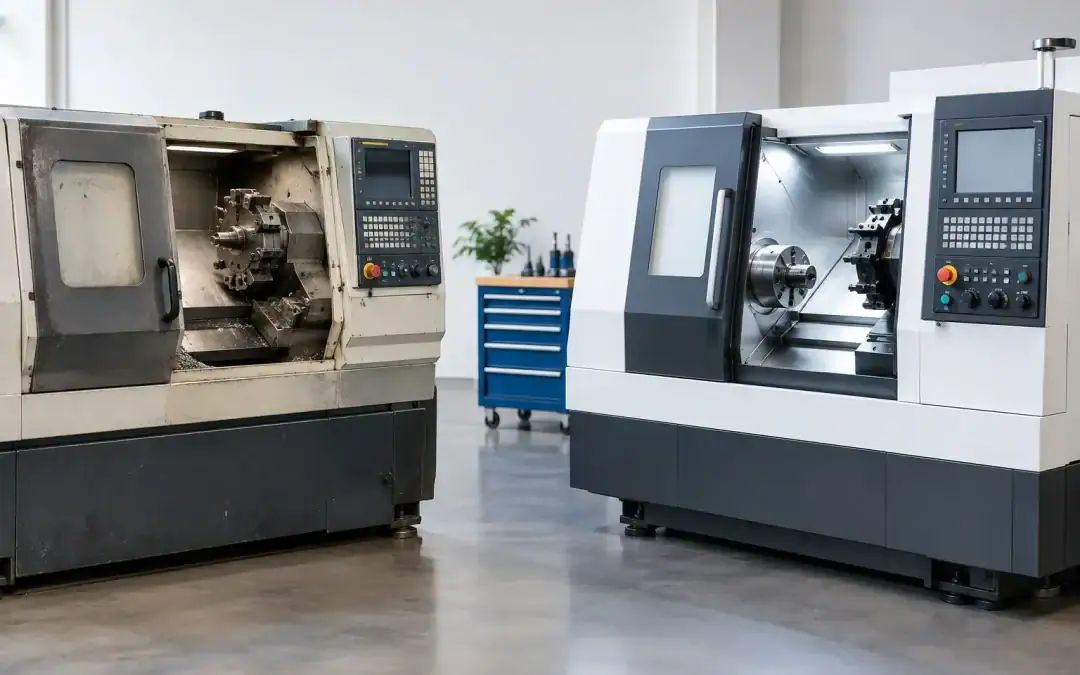
A spindle failure, a new contract, or an aging manual machine can force a capital decision faster than most shops would like. The used CNC lathe vs new question is not simply about finding the lowest purchase price. It is about protecting production, matching the machine to the work, and putting capital where it produces the best return.
For many manufacturers, a well-selected pre-owned CNC lathe delivers the capacity, control, and reliability needed to take on work now. For others, a new machine is the right call because of automation requirements, specialized specifications, or a long-term technology roadmap. The strongest decision starts with the job requirements, not the sales brochure.
Start With the Parts You Need to Run
Before comparing machine age, compare the work. A turning center that is ideal for short-run aluminum parts may be a poor fit for heavy-duty steel shafts, bar-fed production, or complex mill-turn work. Define the maximum swing, turning diameter, work envelope, spindle bore, bar capacity, chucking needs, tolerances, materials, and expected annual run time.
Cycle time matters too. If a lathe will support a high-volume production cell, small differences in rapid rates, tool-change time, spindle acceleration, or live-tool capability can compound over thousands of parts. If the machine will handle repair work, prototypes, and recurring low-volume jobs, flexibility and immediate availability may matter more than shaving seconds from every cycle.
This process often changes the direction of the purchase. A shop may begin by looking for a new basic two-axis lathe, then find that a used machine with a subspindle, Y-axis, and live tooling creates more value by reducing secondary operations. Another shop may discover that a simple new machine with factory support is the better operational fit than a more complex used platform its team does not need.
Used CNC Lathe vs New: The Real Cost Comparison
The purchase price is the most visible difference, but it is only one line in the investment. Used CNC lathes can offer substantial savings compared with comparable new equipment, particularly when buying recognized brands with established service networks and broad availability of tooling and replacement components. That lower entry cost can preserve cash for workholding, tooling packages, inspection equipment, programming, labor, or additional capacity.
A used machine can also depreciate differently than a new one. Much of the initial depreciation may have already occurred, which can help protect resale value when a shop later upgrades or changes production direction. For growing manufacturers, that flexibility can be valuable. Buying the right used machine today may make it possible to add a second machine sooner instead of tying up the full capital budget in one new asset.
New CNC lathes generally bring a manufacturer warranty, current control technology, published performance specifications, and a predictable support path. Financing may be easier in some cases, and a new machine can be configured around a specific process from the outset. Those advantages carry real value when uptime requirements are strict or when a plant needs to standardize controls and automation across several locations.
The right comparison is total cost of ownership over the period you expect to own the machine. Include transportation, rigging, installation, electrical work, tooling, workholding, training, preventive maintenance, possible repairs, software, and lost production during startup. A low-cost machine that needs extensive service before it can produce parts is not a bargain. A higher-priced machine that begins generating revenue quickly may be the better investment.
Lead Time Can Decide the Purchase
When production is waiting, lead time becomes a cost. New equipment availability can vary widely by manufacturer, model, options, and factory schedule. A standard machine may be available quickly, while a machine with automation, a subspindle, special voltage, or advanced tooling can require a longer wait.
Used inventory can give buyers access to equipment that is available now. This is especially important after an unexpected breakdown, during a capacity surge, or when a new customer requires a fast launch. A pre-owned CNC lathe that is inspected, properly represented, and ready to ship can shorten the path from purchase order to chips on the floor.
Availability is also about configuration. Certain models, controls, and options may be difficult to source new or may no longer be offered in the same form. The used market can provide access to proven platforms with features that fit an established process. For shops that already have operators, post processors, tooling, and service familiarity around a particular machine family, that continuity can reduce transition risk.
Assessing Risk in a Used CNC Lathe Purchase
A used CNC lathe should be evaluated as a production asset, not as a commodity. Machine age alone does not determine condition. A 12-year-old turning center that ran one shift with disciplined maintenance can be a stronger candidate than a newer machine subjected to heavy, poorly documented use.
Ask for clear information about the machine’s history, specifications, control, included accessories, known condition, and current location. Review whether it has a parts catcher, bar feeder interface, chip conveyor, tool presetter, live tooling, tailstock, subspindle, or other features that affect your process. Confirm the power requirements and make sure the machine will fit through your facility doors and into the planned production area.
When possible, inspect the equipment or arrange a demonstration. Listen for unusual spindle noise, review axis movement, inspect the way covers and hydraulics, and evaluate the condition of the turret, chuck, tailstock, and electrical cabinet. Run sample parts if the opportunity exists. Check geometric accuracy and repeatability against the tolerance requirements of your work rather than assuming every machine must meet the same standard.
Serviceability deserves equal attention. Controls from major manufacturers and machine brands with active North American support are often easier to maintain than obscure or unsupported platforms. Determine who can service the machine locally, what critical replacement parts are available, and whether your maintenance team is comfortable with the control and mechanical design. A dependable dealer should be direct about what is known, what has been tested, and what the buyer should verify before completing the transaction.
When New Equipment Is Worth the Premium
New equipment is often the stronger choice when a process depends on capabilities that older machines cannot provide. That may include integrated robotic automation, advanced in-process probing, high-pressure coolant, modern safety requirements, faster processing for complex programs, or specialized multi-axis turning and milling functions.
It also makes sense when a company is building a standardized production system. A multi-location manufacturer may prioritize the same control family, identical tooling packages, consistent training, and centralized spare-parts planning. In that setting, the benefits of uniformity can outweigh the savings of acquiring different used models as they become available.
A new CNC lathe can also support a longer ownership horizon. If the machine will operate two or three shifts for many years, the warranty, factory commissioning, current technology, and planned maintenance structure may justify the upfront cost. This is particularly true where a single machine is a bottleneck and downtime affects multiple downstream operations.
When a Used CNC Lathe Creates More Value
Used equipment is often the practical answer for shops expanding capacity, replacing a failed machine, entering CNC turning for the first time, or adding a dedicated machine for a stable family of parts. It can allow a manufacturer to buy more capability than a new-equipment budget would otherwise support.
The best opportunities tend to be machines from recognized builders with common controls, appropriate hours, documented care, and configurations that align closely with the parts being produced. A machine with useful options already installed can save both money and lead time. For example, acquiring a used live-tool lathe with bar-feed capability may remove the need to add a separate secondary operation or manually load short parts.
This is where experienced sourcing matters. Revelation Machinery helps manufacturers identify pre-owned equipment that fits operational requirements, move quickly when the right asset is available, and manage the practical details from quote through delivery. The goal is not merely to sell a machine. It is to help keep production moving with equipment that makes financial and operational sense.
Make the Decision Around Production, Not Preference
There is no universal winner in the used CNC lathe vs new decision. A new machine may offer the best path for a highly automated, long-horizon production program. A used machine may provide faster capacity, lower capital exposure, and a better return for a job shop or growing manufacturer.
Build the decision around the parts, the delivery deadline, the expected utilization, and the consequences of downtime. Then evaluate individual machines with the same discipline you apply to quoting a critical job. The right lathe is the one that arrives in time, holds the required tolerances, fits the team and workflow, and earns its place on your floor.