
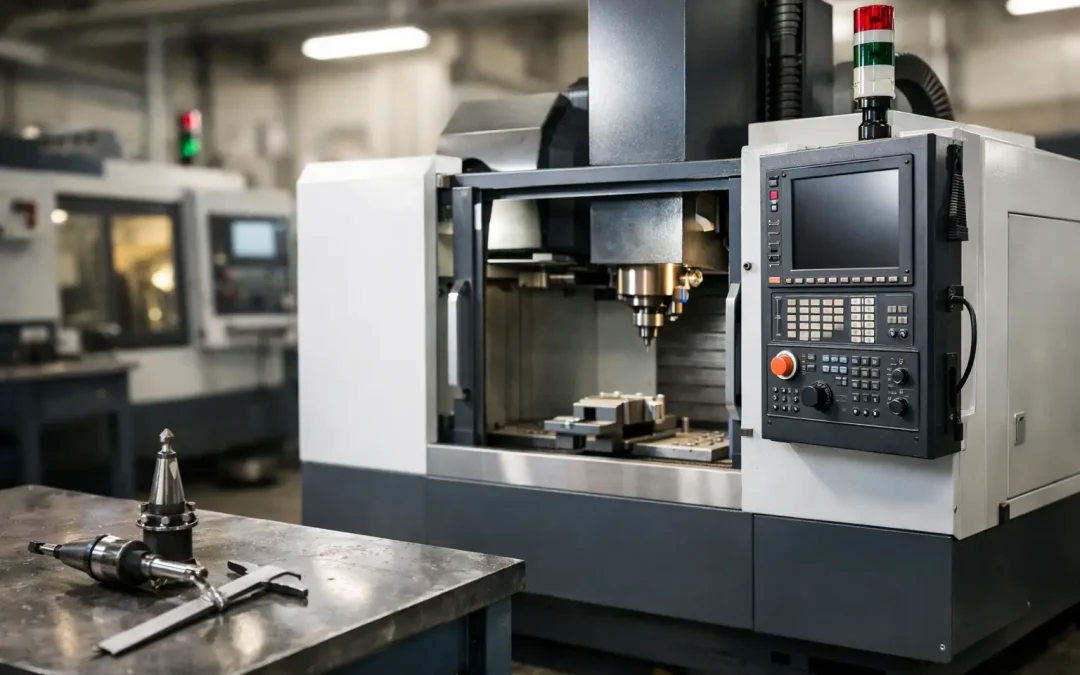
A used VMC can add spindle time without tying up capital in a new-machine lead time, but the wrong purchase can create a maintenance problem that reaches far beyond the shop floor. This used vertical machining center guide is built for manufacturers that need to add dependable capacity, replace aging equipment, or source a capable machine quickly without compromising production.
The best used vertical machining center is not always the newest model, the largest table, or the lowest-priced listing. It is the machine that matches your parts, tooling, operator experience, electrical requirements, floor space, and production schedule. A sound buying process starts with those operating realities and ends with a clear plan for inspection, rigging, delivery, and startup.
Start With the Work the Machine Must Do
Before comparing brands or control generations, define the job. Review the materials you cut, your largest and smallest workpieces, expected tolerances, annual spindle hours, required tooling, and whether your work is primarily prototype, short-run, or repeat production. These details determine whether a compact VMC, a standard 40-taper machine, a high-speed model, or a larger 50-taper platform makes practical sense.
Travel is one of the first filters. Confirm X, Y, and Z-axis travel against your largest fixture and part, not simply the raw workpiece dimensions. Also account for tool length, vise height, fixture plates, rotary tables, and the clearance needed to load parts safely. A machine may have enough advertised travel but still fall short once real tooling and workholding are installed.
Spindle selection deserves the same attention. Higher RPM can be valuable for aluminum, composites, smaller cutters, and high-speed finishing. For tougher materials or larger tooling, torque at lower RPM may matter more. A 12,000 RPM spindle is not automatically a better fit than an 8,000 RPM spindle if your work centers on stainless, alloy steel, or heavy milling.
Toolchanger capacity affects daily throughput. A 20-tool carousel may suit simple parts and low-mix work, while a 30- or 40-tool machine can reduce setup time when jobs require multiple drills, end mills, probes, boring tools, and specialty cutters. Consider the toolholder style already used in your shop as well. Standardizing around existing CAT, BT, or HSK tooling can limit additional cost and operator disruption.
What Drives Used VMC Value
Age matters, but condition and configuration usually matter more. A well-maintained machine with documented service history can be a stronger investment than a newer unit that has run unattended production with limited preventive maintenance. The price should reflect more than the nameplate year.
Brand reputation, control platform, spindle condition, axis performance, toolchanger operation, coolant system, chip management, and included accessories all influence value. A machine equipped with a fourth-axis rotary table, probing, through-spindle coolant, a chip conveyor, and substantial toolholding may justify a higher purchase price because it can enter production with fewer add-ons.
Control generation is particularly relevant. Confirm that your programmers and operators can work efficiently with the CNC control installed. Check whether the control supports the programming methods, networking, memory capacity, and data-transfer process your operation uses. Older controls can still run profitable work, but a lower acquisition price may be offset by limitations in support, integration, or replacement components.
There is also a practical difference between buying a machine for occasional overflow work and buying one for a production-critical cell. For noncritical work, a lower-cost machine with acceptable accuracy may be appropriate. For tight-tolerance, customer-facing, or high-volume production, spending more for known condition, inspection access, and a more current control can reduce operational risk.
Used Vertical Machining Center Inspection Priorities
A thorough inspection should move beyond a visual walk-around. Clean paint and a powered-on control are not proof of mechanical health. Whenever possible, see the machine under power, review its operating behavior, and ask direct questions about its history, maintenance, and current readiness.
Focus on these areas during an evaluation:
- Spindle condition: Listen for unusual bearing noise during acceleration and deceleration. Review spindle runout if testing is available, and ask about rebuild history, crashes, alarms, and through-spindle coolant use.
- Axis movement and backlash: Watch each axis travel through its range at low and high feed rates. Look for hesitation, vibration, excessive noise, way-cover damage, or inconsistent movement. Ball screw and bearing wear can affect accuracy and repair costs.
- Toolchanger performance: Cycle the automatic toolchanger repeatedly. Confirm that it indexes, changes tools, and recovers from normal operating sequences without faulting.
- Control and electrical systems: Check for active alarms, damaged screens, weak keys, battery warnings, cabinet contamination, overheated components, and evidence of improvised electrical repairs.
- Coolant and chip systems: Inspect the tank, pumps, filters, coolant plumbing, chip auger or conveyor, and enclosure. Neglected coolant systems can point to broader maintenance gaps.
- Table, ways, and enclosure: Review the table for crash marks, thread damage, corrosion, and fixture-related wear. Check way covers, wipers, windows, doors, and the general condition of the enclosure.
If the machine can cut a test part, use that opportunity. A basic test can reveal surface finish concerns, positioning issues, spindle noise, or thermal behavior that may not appear when the machine is idle. For critical applications, an independent inspection or machine alignment review can be worthwhile before funds are committed.
Documentation adds useful context. Request available maintenance records, alarm history, manuals, electrical diagrams, installation details, and information on recent repairs. A seller may not have every record, particularly in a plant closure or auction setting, but transparent answers help you assess what is known, what is uncertain, and what should be budgeted after purchase.
Budget for the Machine You Need, Not Just the Listing Price
The purchase price is only one part of the capital decision. A used VMC may require freight, rigging, unloading, placement, electrical work, air connections, coolant, tooling, workholding, programming, inspection, and operator training before it produces its first saleable part.
Build a complete landed-cost estimate before making an offer or bidding at auction. Confirm the machine’s weight, dimensions, voltage, phase, air requirements, foundation needs, and loading access at your facility. A machine that fits physically may still be difficult to route through a low doorway, around columns, or into an occupied production area.
Plan for a reasonable commissioning reserve. Even a carefully maintained used machine may need batteries, filters, wipers, lubrication service, a coolant-system cleaning, or replacement wear items after relocation. This does not mean every used purchase carries a major repair risk. It means smart buyers protect the project budget so a minor startup issue does not delay an urgent capacity plan.
Auction purchases require additional discipline. Auctions can create access to competitively priced equipment, especially from surplus inventories and facility consolidations, but buyers should understand inspection windows, buyer’s premiums, removal deadlines, payment terms, and equipment condition disclosures. If the machine is sold as-is, your due diligence before bidding becomes even more important.
Match the Source to the Level of Risk You Can Carry
Buying from a private seller, an auction, or an established machinery dealer can each be appropriate depending on your budget, timeline, and technical resources. A private transaction may offer a direct price advantage, but it can leave the buyer responsible for evaluating condition, coordinating removal, and resolving incomplete documentation.
Auction inventory can be an efficient route to machines from major manufacturers, but speed matters. Buyers need to inspect early, set a firm all-in budget, and arrange rigging before removal deadlines become a problem. A dealer transaction often provides more support around machine sourcing, communication, logistics, and equipment selection, which can be valuable when production schedules are tight or internal buying resources are limited.
Revelation Machinery helps manufacturers buy and sell equipment with confidence by combining nationwide equipment access with responsive support through sourcing, auctions, resale, and liquidation. For buyers, the practical advantage is having a partner that understands both the machine and the operational urgency behind the purchase.
Make the Purchase Decision With Production in Mind
A used VMC should be evaluated as a capacity decision, not simply an asset purchase. Ask how quickly it can be installed, whether your team can program it, what parts it can run on day one, and where it fits in the flow of material, inspection, and shipping. The answers often matter more than a modest difference in purchase price.
When the machine, condition, support path, and installation plan all align, used equipment can be one of the fastest ways to protect margins and keep commitments moving. Buy the machine that gives your operation a clear path to dependable first parts, then put it to work.