
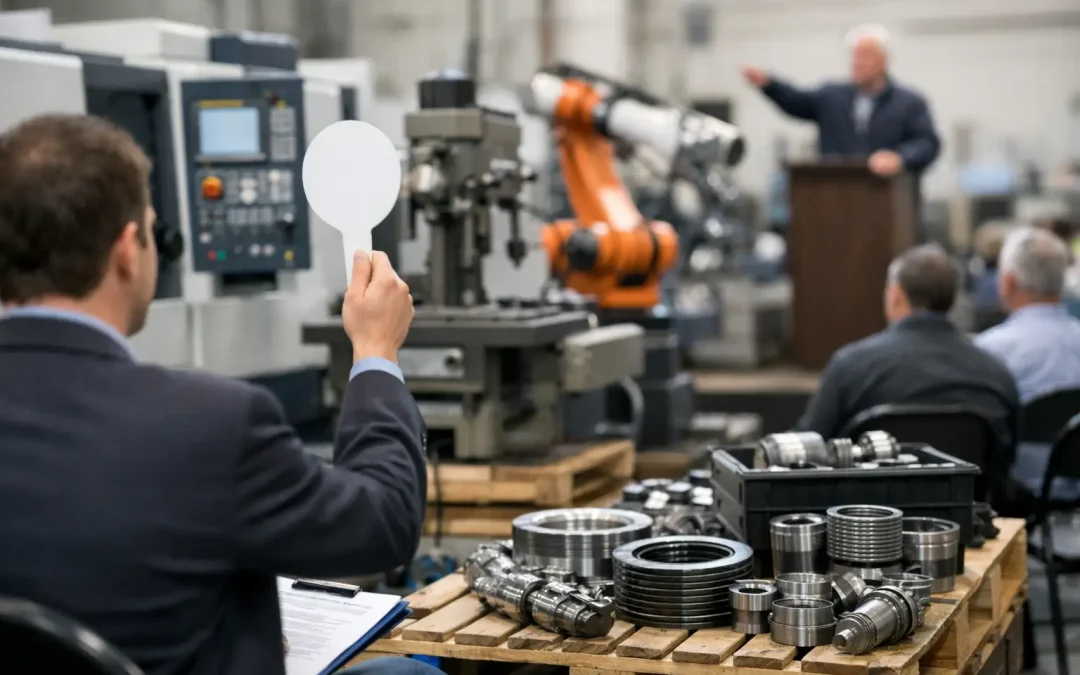
A plant closure can put a late-model CNC, press brake, fiber laser, or packaging line on the market with a short bidding window. For buyers who are prepared, auction surplus manufacturing assets can create a direct path to added capacity without the lead times and capital commitment of new equipment. For buyers who are not prepared, an apparent bargain can turn into a costly idle asset sitting on the floor.
The difference is not simply the winning bid. It is the discipline used before bidding, the clarity around total acquisition cost, and the ability to move quickly once the auction closes. Whether you are replacing a failed machine, adding a second shift, or building out a new production cell, auctions reward buyers who know exactly what they need and what they can support.
Why auction surplus manufacturing assets deserve a closer look
Surplus equipment enters the market for many reasons: a manufacturer upgrades its technology, consolidates facilities, changes product lines, reduces capacity, or closes a plant. The reason for sale does not automatically reflect the condition of the equipment. A well-maintained machine from a large facility may have documented service history, tooling, automation components, and controls that remain highly valuable to the next owner.
Auctions can also provide access to machinery that is difficult to find through standard channels. A specific tonnage press brake, multi-axis lathe, large-capacity vertical machining center, dust collection system, or complete fabrication department may be available only when an operation releases a group of assets. Buyers can acquire individual machines or build a coordinated package from one location.
The trade-off is certainty. Auction equipment is commonly sold as-is, where-is, often with limited time for inspection and removal. There may be no opportunity to negotiate after the hammer falls. That makes preparation more valuable than impulse bidding.
Start with the production requirement, not the listing
The strongest auction buyers begin by defining the operating need in practical terms. Identify the materials, part dimensions, tolerances, cycle-time target, power requirements, floor space, and labor skill available at your facility. If the machine will be added to an existing cell, confirm compatibility with current tooling, workholding, material handling, programming software, and downstream processes.
A machining center may look comparable based on travel and spindle speed, yet have a control generation that does not fit your programming workflow. A press brake may offer sufficient tonnage but lack the bed length, backgauge configuration, or tooling ecosystem needed for your part mix. A fiber laser may be priced attractively but require assist gas capacity, electrical service, extraction, or operator training that changes the project economics.
Write down your non-negotiables before reviewing lots. This keeps the team focused when bidding accelerates and helps separate a useful opportunity from equipment that is merely inexpensive.
Review the listing like an equipment file
Auction descriptions, photos, videos, maintenance records, and serial numbers can reveal a great deal, but each source has limits. Review the listed specifications against the OEM documentation whenever possible. Confirm the model, year, control, options, capacity, included accessories, and stated operating condition. Photos should be checked closely for control screens, tooling, guarding, conveyor systems, electrical cabinets, and visible wear.
Ask direct questions early. Is the machine under power? Can it be inspected? Are manuals, electrical diagrams, tooling, chucks, pallets, or spare parts included? Has the equipment been disconnected? Are rigging services available on site? Clear answers help buyers price risk correctly.
If an in-person inspection is available, use it. Bring a qualified maintenance technician, programmer, or operator when the asset is central to production. Check for alarms, axis movement, leaks, spindle condition, hydraulic performance, safety devices, and obvious repair needs. A quick inspection cannot guarantee future performance, but it can prevent a major mismatch.
Build a real acquisition budget before you bid
The winning bid is only one line in the project cost. Auction premiums, sales tax where applicable, payment terms, rigging, loading, freight, insurance, installation, electrical work, foundations, repairs, replacement tooling, and commissioning all affect the final number.
For a smaller standalone machine, those additional costs may be manageable. For a large press, laser system, injection molding machine, or production line, removal and installation can materially exceed expectations if planning begins after the sale. Equipment located in a tight facility, on an upper level, or connected to surrounding systems may require specialized rigging and a more detailed removal plan.
Set a maximum all-in price, then work backward to establish the highest bid you can place. Include a contingency for unknowns, especially when equipment cannot be powered up or inspected fully. This approach protects capital and gives your team a clear stop point when bidding becomes competitive.
A disciplined buyer is willing to let a lot go. Another machine will become available. Tying up budget in an asset that cannot be installed economically is rarely a win, regardless of how low the hammer price looked.
Plan removal before the auction closes
Removal deadlines are not administrative details. They are part of the purchase decision. Many auctions require buyers to remove equipment within a defined window, and missed deadlines can lead to storage fees, forfeiture, or unnecessary pressure on a rushed logistics team.
Before bidding, verify the pickup location, available loading dates, site access restrictions, door dimensions, dock availability, crane access, and required certificates of insurance. Confirm whether the seller provides loading or whether the buyer must supply riggers, forklifts, lifts, skates, and transport. Also determine whether the equipment needs to be professionally disconnected before removal.
Freight should be matched to the machine, not guessed from a photo. Weight, dimensions, center of gravity, crating needs, and required permits all affect transport. A machine that arrives safely but cannot clear your receiving door or reach its planned location still delays production. Measure the path from the truck to the final installation point, including overhead clearance, turns, floor load limits, and utility connections.
Bid with speed, but not emotion
Online auctions move fast near closing time. Register in advance, review bidder requirements, understand the payment schedule, and make sure the person authorized to bid knows the maximum approved amount. Do not wait until the final minutes to resolve account, tax, or payment questions.
Some auctions use extended bidding, meaning a bid placed near closing can extend the lot’s closing time. This helps prevent last-second sniping, but it also means a buyer needs to stay engaged until the lot is truly closed. Build that time into the plan, particularly when multiple related lots are being pursued.
When buying a group of machines, prioritize the assets that make the production plan work. A complete cell may be more valuable than a collection of standalone bargains. On the other hand, buying an entire department is not always the right move if half the equipment duplicates capabilities you cannot use or resell efficiently.
Know when an auction is the right channel
Auction surplus manufacturing assets are especially effective when your requirements are defined, your team can act within the sale timeline, and you have the internal capability or outside support to inspect, remove, and commission equipment. They can be an excellent fit for expansion projects, replacement machines, secondary capacity, spare equipment, and operations with flexible delivery schedules.
A direct purchase may be a better fit when uptime is the immediate priority, a machine must meet precise specifications, or you need a more controlled transaction with inspection, testing, financing, delivery coordination, and support built into the process. It depends on the machine’s role in your operation. The equipment that supports a critical customer program deserves a different level of certainty than a supplemental capacity purchase.
Working with an experienced industrial equipment partner can help buyers evaluate available auction lots against the wider used market. Revelation Machinery supports manufacturers with auction opportunities, used equipment sourcing, and practical guidance around the details that determine whether a purchase will perform after it reaches the shop floor.
Turn a winning lot into productive capacity
Once the sale closes, the work shifts from acquisition to execution. Schedule removal immediately, confirm the condition of the machine at pickup, and document included components before transport. Keep manuals, photos, control backups, service records, and packing lists together so the installation team has what it needs.
At your facility, treat commissioning as a production project. Complete utilities, leveling, safety checks, calibration, and operator training before the machine is expected to carry customer work. Run representative parts, verify quality, and allow time to address issues before committing the asset to a demanding schedule.
The best auction purchase is not the machine with the lowest bid. It is the machine that reaches your floor, performs the work you bought it for, and helps your operation move forward without creating a new bottleneck.