
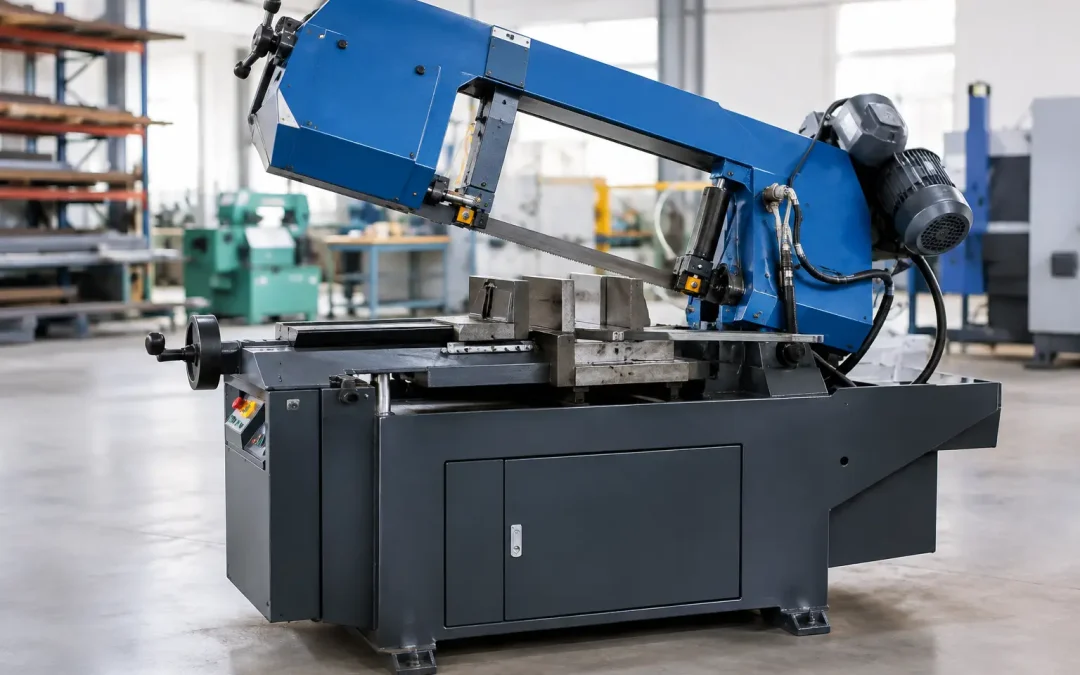
A band saw that cannot keep up with material flow becomes a production bottleneck fast. For shops cutting bar stock, structural material, tubing, bundles, or large forgings, industrial band saws need to deliver repeatable cuts, dependable uptime, and capacity that matches the work coming through the door. Buying used can be a smart capital decision, but only when the machine is evaluated against the real demands of the operation.
The right saw is not always the biggest machine or the lowest-priced option. It is the machine that fits your material range, throughput target, available floor space, and maintenance capabilities without tying up unnecessary capital. A disciplined buying process helps manufacturers move quickly while protecting operational continuity.
Start With the Work, Not the Machine
Before reviewing brands, listings, or auction opportunities, define what the saw must do on an ordinary production day and at peak demand. Material shape and size matter, but so do alloy, wall thickness, cut accuracy, and the number of cuts required per shift.
A shop cutting occasional rounds and rectangular stock may be well served by a manual or semi-automatic horizontal saw. A production operation processing hundreds of repetitive cuts each day will usually benefit from an automatic saw with a programmable feed system, material handling capability, and reliable chip management. Paying for automation that will sit idle is wasteful, but underbuying capacity can create overtime, delayed shipments, and excessive wear on a smaller machine.
Consider the full material envelope rather than only the largest diameter or width you expect to cut. A saw may have enough stated capacity for a large workpiece but still be a poor fit if its vise arrangement, table height, loading method, or blade size slows routine jobs. For bundle cutting, confirm that the vise can hold the load securely and that the saw has sufficient horsepower and feed control for the application.
Horizontal, Vertical, and Miter-Cutting Designs
Horizontal band saws are the standard choice for cut-to-length work in fabrication, machining, steel service, and production environments. They are designed to process material efficiently, often with automatic cycling and feed systems. Gravity-feed models can be practical for lower-volume work, while hydraulic-feed and CNC-controlled models give operators more control over consistency and output.
Vertical band saws are better suited to contour cutting, trim work, notching, and jobs where the operator needs to guide the material through the blade. They can be highly valuable in fabrication departments, but they do not replace a horizontal production saw for repetitive bar cutting.
Mitering capability deserves close attention when the work includes frames, structural members, or angled cuts. A saw with a simple manual miter may be sufficient for occasional angles. For frequent changeovers and repeatable angle work, powered miter functions can save time and reduce setup errors. The trade-off is more complexity, so condition and service history become even more important on used equipment.
Evaluate Capacity, Accuracy, and Production Rate Together
Saw capacity is easy to compare on a spec sheet. Production performance is not. Two machines with similar cutting envelopes can produce very different results depending on blade speed range, motor horsepower, feed design, machine rigidity, and operator controls.
For metal cutting, variable blade speed is especially valuable when your operation handles different materials. Carbon steel, stainless, aluminum, tool steel, and nickel alloys require different cutting approaches. A machine with limited speed control may work well for a narrow mix of material but force compromises when work changes.
Feed pressure and feed rate should also be adjustable and predictable. Excessive feed can strip teeth, deflect the blade, or produce a poor finish. Too little feed reduces output and can cause blade rubbing or work-hardening in certain materials. Shops that rely on accurate downstream machining should look closely at cut squareness and repeatability, not just cycle time.
Automatic machines should be assessed by more than their advertised unattended capability. Ask how material is loaded, how short remnants are handled, whether the feed gripper is appropriate for your stock, and how the control manages multiple cut lengths. A highly automated saw can produce strong returns when paired with the right loading process. Without that support, the machine may still require constant operator attention.
What to Inspect on a Used Band Saw
Used machinery gives buyers access to recognized brands and higher-capacity equipment at a more manageable acquisition cost. However, a band saw’s appearance alone does not reveal its condition. The inspection should focus on the systems that affect cut quality, reliability, and safety.
Begin with the blade wheels, guides, and guide arms. Worn guides can allow blade movement that affects accuracy, while damaged wheels or poor tracking can shorten blade life. Check whether guide arms travel smoothly and lock securely at the correct position. On automatic saws, inspect the vise, feed carriage, shuttle system, and hydraulic components for consistent movement and signs of leakage.
The gearbox, drive system, and motor deserve attention as well. Listen for unusual noise during operation and verify that the machine changes speeds correctly where applicable. Coolant flow should reach the cutting area effectively, since insufficient coolant can accelerate blade wear and compromise performance. Chip conveyors, augers, and cleanup systems may seem secondary, but neglected chip removal creates maintenance headaches and interrupts production.
Controls are another practical consideration. Older controls can be perfectly workable, particularly on manual and semi-automatic machines. Still, buyers should confirm that buttons, sensors, safety interlocks, displays, and automatic functions operate as intended. If proprietary electronic components are outdated or difficult to source, factor that risk into the purchase decision.
A test cut is one of the most useful checks when available. Evaluate squareness, surface finish, blade tracking, cycle behavior, and repeatability across several cuts. If a live demonstration is not possible, request clear documentation, photos, videos, and condition information. Transparency matters because the cost of a saw is more than its purchase price. Rigging, freight, installation, blades, electrical work, and initial repairs all affect the final investment.
Choose Features That Match Your Labor and Material Flow
The best industrial band saws are selected as part of a production system. A machine that cuts quickly but requires a forklift operator for every load may not improve throughput. Likewise, a fully automatic saw may be a strong investment if it allows a skilled operator to oversee multiple processes instead of standing at one machine all day.
For higher-volume applications, look at powered infeed and outfeed options, roller tables, bundle clamping, automatic material feed, and remnant management. These features can reduce handling time and make cutting more predictable. They also require space, integration planning, and maintenance, so they should be evaluated against actual production volume.
Blade availability and cost should remain part of the conversation. Blade width, length, tooth pitch, and material need to fit your cutting mix. Bi-metal blades are common for general metal cutting, while carbide-tipped blades can make sense for difficult materials or demanding production applications. Better blades can improve results, but they cannot compensate for poor setup, inadequate coolant, or a worn saw.
Plan the Transaction Beyond the Purchase Order
A used equipment purchase should include a clear plan for removal, transportation, installation, and startup. Confirm machine dimensions, weight, electrical requirements, and access conditions before committing. Doorways, ceiling clearances, foundation needs, forklift capacity, and rigging logistics can determine whether a machine is truly ready for your facility.
For buyers working against a tight production deadline, speed matters, but so does clarity. An experienced machinery partner can help verify specifications, coordinate information, and identify equipment that aligns with your budget and timeline. Revelation Machinery supports manufacturers with used equipment sourcing and responsive transaction support, helping reduce the friction between identifying a need and putting equipment into service.
Sellers should apply the same practical mindset. A surplus saw may hold meaningful value when its specifications, condition, tooling, documentation, and availability are presented clearly. Direct sale, consignment, and auction options can each be appropriate depending on timing, asset quantity, and the seller’s recovery goals.
When an Industrial Band Saw Is the Right Capital Move
Adding cutting capacity can be justified by more than a growing order book. It may reduce outside processing costs, shorten lead times, improve material yield, or free up labor for higher-value work. The strongest case is built on measurable operating gains rather than a general desire for more equipment.
Compare the expected cost of ownership with your current process. Include labor, outside cutting charges, scrap, blade consumption, downtime, and delays caused by waiting for material preparation. Then evaluate whether a used saw offers enough capacity and remaining service life to create a reasonable payback period.
A well-matched used band saw can become one of the most dependable machines on the floor. Buy with a clear understanding of the work, inspect the systems that control accuracy and uptime, and plan for installation before the truck arrives. That preparation gives your team a better chance to turn a capital purchase into reliable production capacity from the first shift.