
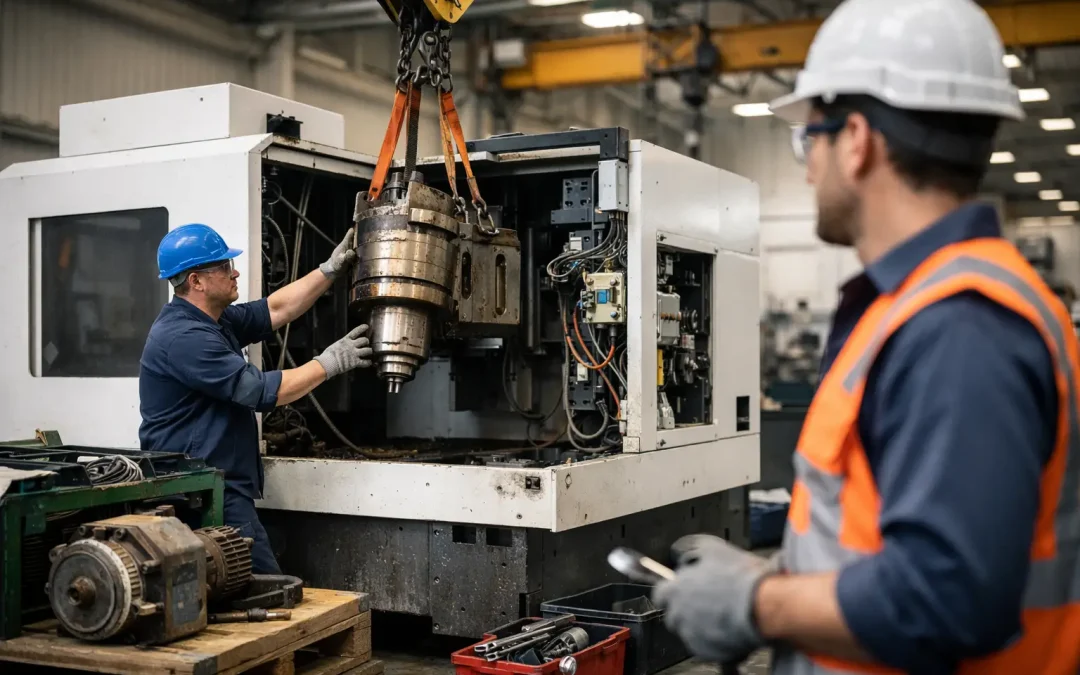
A machine can look like a liability the moment production stops, but that does not make it worthless. A disciplined machine decommissioning process protects people, preserves resale value, prevents costly facility damage, and keeps a shutdown from disrupting the work still happening around it. Whether you are replacing one CNC machine or closing an entire department, the order of operations matters.
For most manufacturers, the best outcome is not simply getting equipment out of the building. It is creating a controlled path from final production run to safe removal, accurate asset disposition, and a clean handoff to the next phase of operations.
1. Define the scope before scheduling removal
Start by deciding exactly what is being decommissioned. That sounds basic, but the scope often expands once a machine is opened up. A vertical machining center may include a chip conveyor, coolant system, transformer, mist collector, automation cell, bar feeder, tooling, workholding, manuals, spare parts, and peripheral electrical equipment. Each item may have a different removal method and resale value.
Build an asset list that includes the manufacturer, model, serial number, approximate year, control type, condition, capacity, and known operational issues. Photograph the machine from multiple angles, including the control, data plate, enclosure, and accessories. If the equipment is still powered, capture a video of it running. That documentation supports safer planning and gives prospective buyers or liquidation partners a clearer basis for valuation.
At this stage, identify what will be sold, retained, scrapped, transferred to another facility, or removed by a contractor. The right disposition depends on age, condition, market demand, removal cost, and how quickly the floor space is needed.
2. Create a shutdown plan with production and maintenance
The best decommissioning plans are built with input from operations, maintenance, EHS, IT, and facilities. Production leaders know which jobs must be completed before shutdown. Maintenance teams understand the machine’s utilities, history, and physical condition. Facilities personnel can flag access restrictions, floor loading concerns, and building modifications that may be required for removal.
Set a final production date, then establish a clear shutdown window. Avoid scheduling removal based only on the rigger’s availability if the machine needs time to cool down, drain, clean, back up programs, or disconnect from connected systems.
A shutdown plan should account for nearby equipment as well. A large press brake or CNC lathe may share compressed air, electrical service, coolant infrastructure, dust collection, or material flow space with machines that will remain in operation. Disconnecting one asset without understanding those dependencies can create avoidable downtime elsewhere in the plant.
3. Protect personnel through lockout, isolation, and cleanup
Safety comes before valuation or logistics. Follow your facility’s lockout/tagout procedures and verify that all energy sources have been isolated. Depending on the machine, this may include electrical power, compressed air, hydraulics, pneumatic pressure, steam, gas, stored mechanical energy, and elevated components.
The equipment should be cleaned and prepared before a buyer, rigger, or appraiser arrives. Remove chips, drain coolant where appropriate, secure moving parts, and address leaks. Coolant, hydraulic oil, lubricants, batteries, refrigerants, and other materials may require specific handling or disposal procedures based on local, state, and federal requirements.
Do not treat this as a housekeeping detail. A machine that is clean, drained, and properly secured is safer to inspect and move. It also presents better, which can affect buyer confidence and resale value.
4. Secure data, programs, and proprietary information
Modern machine tools often hold more information than owners realize. CNC controls may contain programs, setup data, tooling libraries, production parameters, network settings, and operator notes. Connected equipment may also store user credentials or have access to plant networks.
Before the equipment leaves your control, work with IT and engineering to back up any files you need and remove information you do not want transferred. This can include proprietary programs, customer part details, network configurations, and licensed software credentials.
The approach depends on the control and the intended disposition. If a machine is being transferred internally, you may want a full backup for quick recommissioning. If it is being sold, the buyer may benefit from basic machine parameters and manuals, but your proprietary production files should not go with it. Document what was retained, erased, or transferred so there is no uncertainty later.
5. Determine value before treating equipment as scrap
One of the most common and costly mistakes is assuming older equipment has no market. A machine may no longer fit your production requirements while still being valuable to a smaller shop, a startup, a contract manufacturer, or a buyer seeking a specific brand, control, capacity, or hard-to-find part.
Market value is influenced by more than age. Machine condition, hours, maintenance history, tooling, automation, control generation, electrical requirements, location, and demand within the equipment category all matter. A well-maintained CNC machine with documented operation and desirable options can command significantly more attention than an equivalent machine with missing documentation and unknown condition.
This is where a qualified used machinery dealer or liquidation partner can help determine the strongest sale path. A direct purchase may be the right choice when speed and certainty matter most. Consignment can make sense for specialized equipment with a longer selling window. An auction may be effective for a plant closure, surplus package, or group of assets that need to move on a fixed timeline.
The trade-off is straightforward: the fastest path is not always the highest-return path, and the highest-return path is not always compatible with an urgent floor-space deadline. Establish priorities early.
6. Plan rigging, access, and transportation details
Rigging should never be an afterthought. Before removal day, verify machine dimensions, weight, center of gravity, lifting points, and any special requirements from the manufacturer. Confirm the path from the machine to the loading area, including door openings, aisle widths, overhead clearance, dock access, ramps, floor condition, and crane or forklift availability.
A removal plan should also address building protection. Large machinery may require temporary floor protection, steel plates, equipment relocation, door frame removal, or coordination with landlords and property management. If the machine is on an elevated slab or in a constrained area, engineering review may be necessary.
The machine must be prepared for transport as well. Axes should be secured, loose components packaged, electrical cabinets protected, and accessories clearly labeled. Improper preparation can turn a saleable asset into a damaged shipment before it reaches the truck.
7. Keep records through the entire machine decommissioning process
Documentation provides control when multiple teams, vendors, and assets are involved. Maintain a record of the asset list, photos, serial numbers, shutdown approvals, environmental handling, buyer agreements, rigging scope, bills of lading, and final disposition.
For regulated industries or larger facilities, records may also be needed for insurance, internal asset accounting, lease requirements, environmental compliance, or audit purposes. Even in a smaller shop, clear documentation reduces confusion over what left the facility, what was retained, and who is responsible for each remaining task.
Assign one internal point person with authority to make decisions during the project. That person does not need to perform every task, but they should be able to confirm the scope, approve changes, coordinate access, and resolve issues quickly. Delays often occur when riggers, buyers, maintenance staff, and facilities teams are all waiting for separate approvals.
8. Inspect the space after removal and close the project
Once the equipment is gone, inspect the area before declaring the job complete. Look for exposed wiring, open utility lines, fluid residue, damaged concrete, anchor bolts, wall penetrations, and overhead obstructions. Cap or disconnect utilities safely, remove anchors where required, and determine whether the floor needs patching before new equipment is installed.
This is also the right time to reconcile the asset list against what was removed. Confirm that tooling, spare parts, manuals, attachments, and peripheral equipment were handled according to the plan. Small items can carry meaningful value, and they are often the first things misplaced during a busy plant move.
A well-run decommissioning project creates options instead of urgency. With accurate equipment information, safe shutdown practices, and a realistic sale and removal plan, manufacturers can recover value while keeping operations moving. When timing is tight, Revelation Machinery can help evaluate equipment disposition and coordinate a practical path from surplus asset to completed sale.