
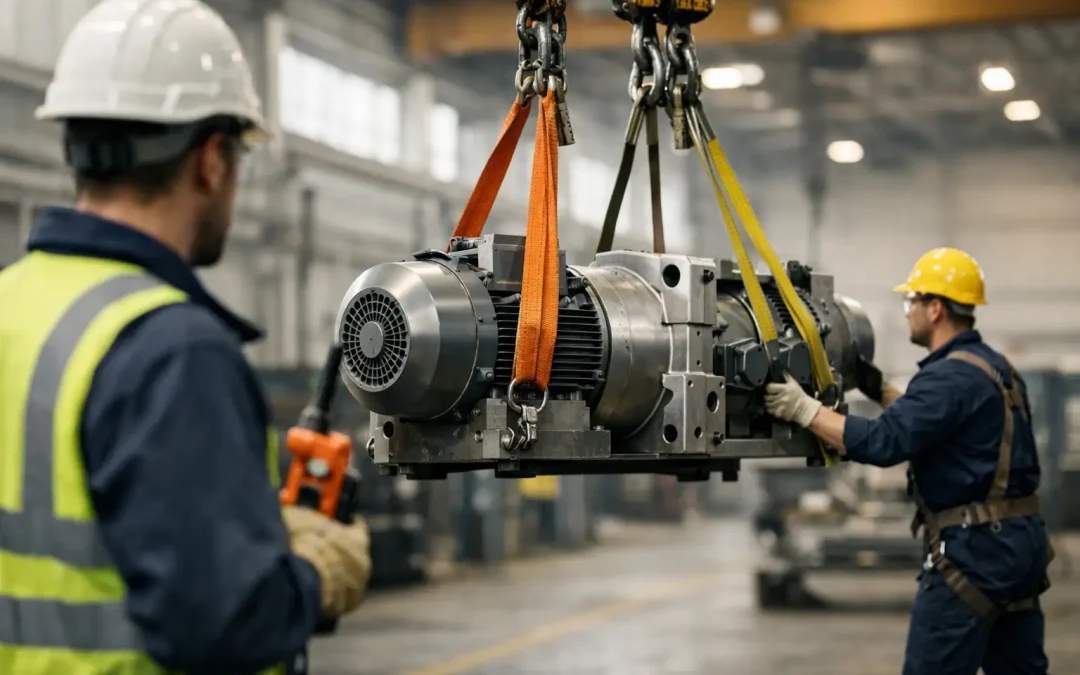
A new CNC machine center may look stationary once it is bolted to the floor, but getting it into position is a controlled lifting and transportation project. If you are asking, what is machine rigging, the short answer is this: it is the specialized process of safely lifting, moving, positioning, and securing heavy industrial equipment.
For a manufacturer, the stakes are high. A rigging mistake can damage a spindle, distort a machine base, block a production aisle, injure personnel, or turn a planned weekend move into days of lost output. Proper machine rigging protects the equipment, the building, and the people responsible for keeping the operation moving.
What Is Machine Rigging in a Manufacturing Facility?
Machine rigging applies trained labor, engineered planning, and purpose-built lifting equipment to relocate machinery that is too large, heavy, or sensitive for ordinary material handling. It can involve moving a press brake across a shop, unloading a fiber laser from a truck, placing a vertical machining center in a new cell, or removing an entire line during a plant consolidation.
The work is more specialized than simply putting forks under a machine and driving away. Industrial machinery has uneven weight distribution, designated lifting points, vulnerable components, and clearance requirements that must be respected. A 20,000-pound machine may have a relatively small footprint, a high center of gravity, or a control cabinet that cannot tolerate impact or weather exposure.
A qualified rigging team evaluates these details before the move begins. The objective is not just to get the machine from Point A to Point B. It is to deliver it in operating condition, positioned correctly, without creating a safety incident or an expensive delay.
What Machine Rigging Typically Includes
The scope depends on the machine, site, and distance involved. A simple internal relocation may require a forklift, skates, and a small crew. A more complex move may require cranes, hydraulic gantries, heavy-haul trailers, permits, route coordination, and a multi-day installation plan.
Machine rigging commonly includes disconnecting and preparing equipment for transport, lifting it from its existing location, loading it onto a truck or trailer, unloading it at the destination, moving it through the facility, setting it in its final location, and anchoring or leveling it as required. It may also include protective wrapping, crating, temporary storage, and coordination with electricians, millwrights, OEM technicians, or installers.
The rigging contractor does not necessarily perform every follow-up task. For example, reconnecting power, compressed air, coolant, dust collection, hydraulics, or automation may fall to other qualified trades. Clear scope definition matters because a machine can be physically placed yet still be days away from production if utility work and commissioning are not coordinated.
Why Machinery Requires a Different Approach
Industrial equipment is not handled like general freight. The machine’s weight is only one variable. Riggers must account for its dimensions, center of gravity, lifting provisions, structural condition, and the route from its current location to the new one.
A multi-axis lathe may require special attention to its turret, tailstock, chip conveyor, and enclosure. A press brake may need a planned lift that prevents frame twist. A fiber laser has sensitive optics and related support equipment that demand careful handling. Even seemingly straightforward equipment such as a bandsaw or compressor can create challenges when access is tight or floor conditions are unknown.
Facility conditions matter just as much. Door openings, overhead obstructions, dock height, slab capacity, slopes, trench drains, columns, and sprinkler lines can all affect the method used. A route that looks clear on a walkthrough may not support the wheel load of a forklift or the turning radius of a machinery mover.
That is why dependable machine rigging starts with site verification rather than assumptions.
The Planning Behind a Safe Machine Move
A professional rigging plan begins with information. The team should know the make and model, approximate weight, overall dimensions, serial number, available manuals, and whether the machine is operational. Photos of all sides of the equipment and the loading path are especially useful when obtaining quotes and identifying potential constraints.
From there, the rigger assesses the move. They confirm lifting points, determine the center of gravity, select properly rated slings or spreader bars, and identify the equipment needed to handle the load. They also inspect access at both locations and establish a safe travel path.
For larger projects, planning may include a written lift plan, site safety requirements, traffic control, crane setup, and sequencing around active production. If equipment is being removed from a closing plant, the schedule may also need to account for utility shutdowns, employee access, building deadlines, and multiple buyers retrieving assets from the same facility.
A strong plan reduces surprises. It also helps operations leaders schedule the move around production commitments instead of reacting to problems after a truck has arrived.
Common Equipment Used in Machine Rigging
There is no single rigging tool for every machine. The right solution depends on load weight, geometry, access, elevation change, and travel distance. Experienced crews may use forklifts, hydraulic lifting jacks, machinery skates, toe jacks, rollers, air casters, gantries, mobile cranes, boom trucks, flatbeds, and specialized heavy-haul trailers.
Rigging hardware is equally important. Slings, shackles, chains, spreader beams, lifting lugs, and load levelers must be selected and inspected for the specific lift. Using hardware with adequate capacity is essential, but capacity alone is not enough. Sling angles, attachment points, and load balance directly affect the forces involved.
This is one reason an ordinary warehouse forklift may not be the right answer. A forklift with sufficient nameplate capacity can still be a poor choice if the load blocks the operator’s view, sits too high, shifts during transport, or exceeds the facility floor’s safe loading capacity.
Machine Rigging, Millwright Work, and Freight: Know the Difference
These services often overlap, but they are not interchangeable. Freight transportation focuses on moving equipment from one geographic location to another. Machine rigging focuses on safe lifting, loading, unloading, and placement. Millwright work generally involves installation, alignment, assembly, and mechanical setup.
A complete machinery relocation may require all three. A rigging crew can load a machining center in one state and set it in another, while a millwright or OEM technician performs precision leveling, geometry checks, and startup work afterward. In some cases, one provider can coordinate the full project. In others, the buyer or seller manages separate vendors.
Before accepting a quote, ask what is included at pickup and delivery. Confirm whether the price covers disconnection, loading, freight, unloading, indoor placement, leveling, anchoring, debris removal, and insurance requirements. The lowest number can become expensive if critical scope items were excluded.
When to Schedule Rigging During a Machine Purchase or Sale
Rigging should be discussed early, especially for used machinery. Buyers need to know whether a machine can enter their facility, fit their available space, and be installed within the desired production window. Sellers need a realistic removal plan so equipment does not become a bottleneck during a relocation, auction, or plant closure.
For buyers, it helps to gather facility details before committing to a machine. Measure doorways and aisles, verify overhead clearance, confirm electrical requirements, and identify the final machine location. A pre-move assessment can reveal whether a dock, crane, temporary wall opening, or alternate route will be necessary.
For sellers, proper rigging preparation can improve the sale process. Machines that are accessible, clearly identified, disconnected according to an agreed scope, and ready for removal are easier to market and easier for purchasers to retrieve. That can reduce disputes and keep liquidation timelines on track.
Revelation Machinery works with manufacturers who need to buy, sell, and move industrial equipment with confidence. Whether equipment is headed to a growing shop or leaving a surplus facility, early coordination between the equipment transaction and the rigging plan helps protect both value and uptime.
Choosing a Machine Rigging Partner
Experience with industrial machinery should be a baseline requirement. Ask whether the provider regularly handles the type of equipment you are moving and whether they can explain their proposed method clearly. A capable partner will ask detailed questions about the load, site access, timing, safety expectations, and final placement.
Verify insurance, safety practices, equipment capacity, and responsibility for subcontractors. For large or unusual moves, request a site visit or detailed review rather than relying on a rough estimate based only on a machine model number. Transparency before the move is far better than change orders after the crew is mobilized.
The right rigger is not simply a transportation vendor. They are part of the operating plan. Their work affects machine condition, installation timing, labor safety, and your ability to return to production.
When heavy equipment needs to move, treat rigging as a planned capital project, not a last-minute logistics task. The extra preparation is usually small compared with the cost of damaged machinery, missed production, or an avoidable safety event.