
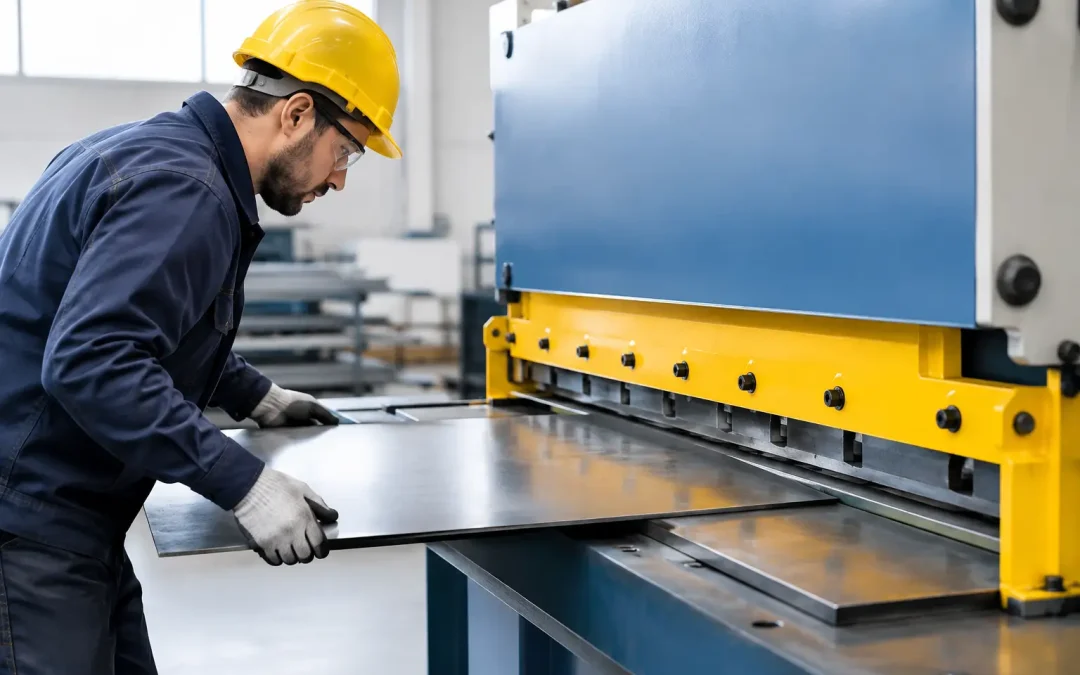
A shear that is undersized for the material will slow production, strain components, and produce inconsistent edges. A machine that is oversized for the job can tie up capital without improving throughput. For shops buying or selling metal shears, the right decision starts with the actual work on the floor: material type, sheet thickness, cut length, required accuracy, and the volume moving through the operation.
Shearing is often one of the first steps in a fabrication workflow. When it runs reliably, downstream bending, welding, laser cutting, and assembly stay on schedule. When it becomes a bottleneck, every department feels it. That is why capacity ratings and machine condition deserve more attention than a low asking price alone.
Start With the Workpiece, Not the Machine
The most useful specification on a shear is not the overall footprint or even the brand name. It is the material the machine must cut consistently. Manufacturers commonly state capacity in mild steel at a specified tensile strength. That rating does not automatically apply to stainless steel, high-strength steel, aluminum, or other alloys.
Stainless steel and high-strength material generally require more cutting force than mild steel of the same thickness. Aluminum may be easier to shear, but it can mark or deform if hold-downs, blades, and material support are not set up correctly. Before comparing equipment, document the thickest material, the most common material, and the widest blank your operation needs to process.
Cut length matters just as much. A 10-foot shear may be ideal for standard sheet processing, while a 12-foot or longer machine can reduce handling and secondary trimming on larger blanks. But longer machines require more floor space, can cost more to transport, and may not make sense for a shop primarily cutting narrow strips. Buy capacity that supports real production requirements with a reasonable margin, not a specification sheet built around rare exceptions.
Common Types of Metal Shears
Different shear designs serve different production needs. The best fit depends on material, volume, operator preferences, maintenance capability, and budget.
Hydraulic swing-beam shears
Hydraulic swing-beam shears are a common choice for general fabrication. Their upper blade swings through the cut, providing a practical combination of power, reliability, and straightforward operation. Many shops value these machines for cutting mild steel plate and sheet in recurring production work.
For a used buyer, hydraulic shears can offer strong value because they are widely available in a range of lengths and capacities. Inspect the hydraulic system carefully, however. Cylinder leaks, weak pumps, damaged hoses, and inconsistent pressure can turn an attractive purchase into an urgent repair project.
Hydraulic guillotine shears
Guillotine shears use a vertical blade movement and are often selected for heavier-duty cutting or applications where cut quality and control are priorities. Many models include adjustable rake angle and blade clearance, which can improve results across varying thicknesses and material types.
The trade-off is complexity. A guillotine shear with programmable controls, backgauge positioning, and multiple adjustment systems can increase productivity, but those features also need to be tested. For high-volume work, the time saved through repeatable setups can justify the investment. For occasional cutting, a simpler machine may offer better value.
Mechanical shears
Mechanical shears remain productive assets in the right environment. They are often valued for fast cycling and durable, proven construction. A well-maintained mechanical shear can be a practical solution for shops with repeat work and operators familiar with clutch, brake, and flywheel systems.
Condition is especially important on these machines. Brake response, clutch engagement, guarding, lubrication, and mechanical wear must be evaluated before purchase. A machine that appears to run can still have safety or maintenance issues that affect its place on a modern production floor.
Alligator and specialty shears
Alligator shears are designed for bar stock, structural material, scrap, and recycling applications rather than clean, full-sheet processing. Other specialty shears may be built for slitting, notching, or niche material handling needs. These machines should be evaluated around the specific stock profile and feed process, not simply by tonnage or blade size.
Capacity Ratings Can Be Misleading
A shear rated for 1/4-inch mild steel is not necessarily the right choice for routine 1/4-inch production. Ratings often represent a maximum under defined conditions, not the ideal daily workload. Cutting at the upper limit repeatedly can increase wear on blades, hydraulic components, and the drive system while compromising edge quality.
A more dependable approach is to identify the material that makes up most of the workload, then choose a machine that handles it comfortably. If the shop regularly cuts 3/16-inch mild steel and only occasionally processes 1/4-inch stock, a 1/4-inch shear may be appropriate. If 1/4-inch material is the everyday job, moving up in capacity may protect uptime and provide a better long-term operating margin.
Blade length, blade condition, rake angle, and clearance adjustment also affect results. Excessive burrs, twisting, bowing, or distortion may point to dull blades or poor setup, but they can also indicate a machine that is mismatched to the material. A test cut using representative material is one of the most valuable steps in equipment evaluation.
Evaluate Used Metal Shears Beyond the Paint
Used machinery can deliver substantial capital savings, particularly when a buyer can identify a well-maintained machine with the needed capacity and controls. The inspection should focus on operational evidence, not cosmetic appearance.
Run the shear through a full cycle and listen for unusual mechanical noise, hesitation, vibration, or inconsistent motion. Check that the hold-downs engage properly and that the blade travels smoothly through the cut. Inspect blades for chips, uneven wear, and signs that they have been neglected or improperly adjusted. Replacement blades may be available, but their cost and lead time should be part of the purchase decision.
The backgauge deserves equal attention. For repeat work, an accurate and dependable backgauge directly affects labor time, part consistency, and material yield. Verify its travel, squareness, positioning repeatability, and control functions. On CNC-equipped machines, confirm that the control powers up, stores programs, and responds correctly through its available functions.
Also review the practical details that can delay installation: electrical requirements, machine dimensions, weight, hydraulic fluid condition, manuals, tooling, guarding, and loading access. Freight, rigging, and placement are part of the equipment investment. A responsive equipment partner can help clarify those details before the machine reaches your facility.
Match Controls and Automation to Your Workflow
A basic manual backgauge can be a sensible choice for low-volume or variable work where operators make frequent judgment calls. It keeps the machine simple and may reduce upfront cost. For shops processing repeated blanks, however, programmable backgauges can deliver a meaningful return through faster setups and fewer measurement errors.
Automation should solve a real constraint. Powered sheet supports, front feeding, material handling systems, and advanced control packages can increase throughput, but they require floor space, training, and maintenance support. A high-production operation may need them to keep pace. A smaller fab shop may gain more value from a reliable conventional hydraulic shear with good blades and a dependable backgauge.
Consider the entire cell. If material arrives at the shear by forklift and finished blanks are stacked manually, cycle time may be driven by handling rather than the machine itself. Improving sheet storage, staging, and discharge can sometimes create more usable capacity than purchasing a faster shear.
When Selling a Shear, Documentation Protects Value
For plant consolidations, upgrades, and surplus asset sales, clear information helps attract qualified buyers and supports a faster transaction. Record the make, model, serial number, cut length, capacity, control type, electrical details, and included accessories. Current photos, operating video, maintenance records, and honest notes on known issues create a more transparent sale process.
A machine does not need to be new to be marketable. Buyers want confidence that the equipment is accurately represented and that logistics can be coordinated efficiently. Whether the best path is a direct sale, consignment, or auction depends on the machine, timeline, and desired recovery value. Revelation Machinery helps manufacturers evaluate those options and move equipment with the urgency a changing facility requires.
The right shear should make the next production run easier, not introduce a new source of uncertainty. Define the work, verify the condition, and account for installation before committing capital. That discipline keeps a sheet-cutting purchase focused on what matters most: dependable output, controlled costs, and a machine that earns its place on the floor.