
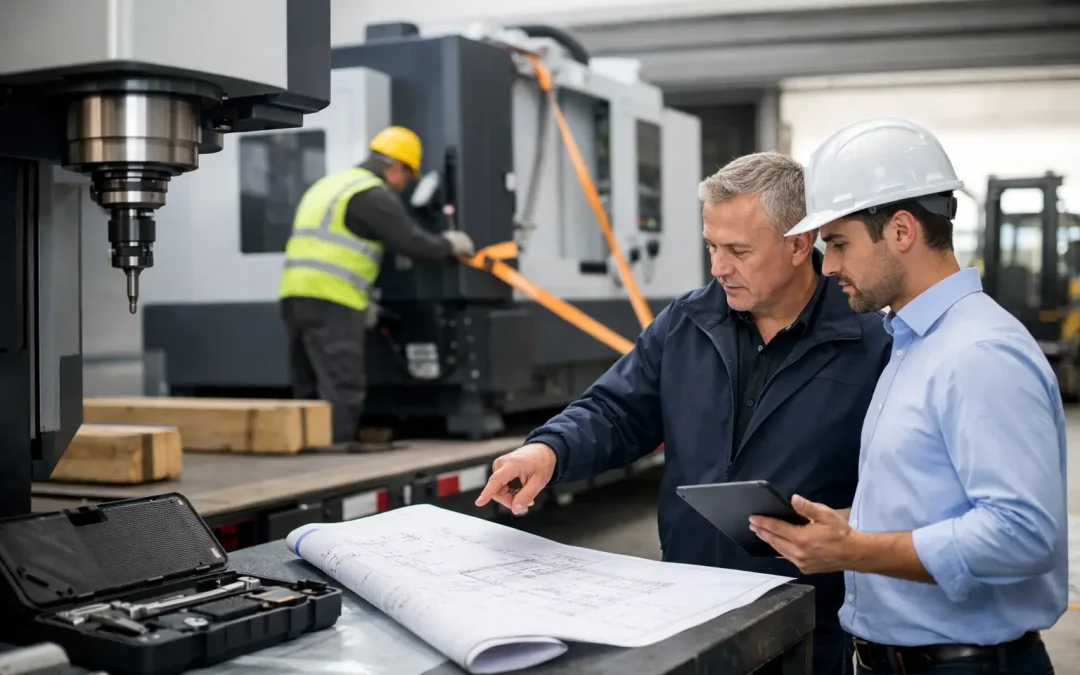
A CNC machine can look ready to move the moment the last part comes off the table. In reality, CNC relocation planning starts much earlier. A machining center, multi-axis lathe, or large turning center is a production asset with utility connections, precision components, stored parameters, tooling, and material-flow requirements that all need to arrive intact at the next location.
The cost of a poorly planned move is rarely limited to rigging. Lost production time, damaged way covers, missing accessories, electrical mismatches, coolant leaks, and an unverified machine startup can turn a short relocation into weeks of avoidable downtime. A disciplined plan protects the machine, the people handling it, and the schedule your customers depend on.
CNC Relocation Planning Starts With the Production Schedule
The first decision is not which rigger to call. It is when the machine can leave without putting commitments at risk. Work backward from the date the machine must be producing qualified parts at its new location, not from the date the truck is available.
Account for the final production run, work-in-process completion, inspection requirements, tooling removal, utility disconnect, rigging, transport, placement, installation, alignment, and test cutting. If the machine supports a critical customer program, build contingency into the schedule. A move that appears to require three days of physical handling may need two weeks when production, site readiness, and startup verification are included.
For a plant consolidation, the sequence matters just as much as the calendar. Move support equipment in the order that enables startup: chip conveyors, mist collectors, coolant systems, transformers, bar feeders, automation cells, and inspection equipment may all affect how quickly a CNC can return to useful work. A machine that arrives first but cannot run because its support equipment is elsewhere is still idle capital.
Define the Scope Before Anyone Disconnects the Machine
Create a machine-specific relocation file for every asset. The file should identify the manufacturer, model, serial number, approximate weight, dimensions, control type, rigging points, electrical requirements, air requirements, and any special handling instructions. Include photographs of the machine in operating condition, its control cabinet, electrical connections, coolant equipment, conveyors, guarding, and accessories.
This is also the time to confirm what is included in the move. Toolholders, collets, rotary tables, spare parts, manuals, probes, pallets, transformers, chip handling systems, and workholding can be separated from the machine quickly during a shutdown. Labeling and inventory control prevent a high-value accessory from becoming an expensive missing item at the destination.
Document the machine’s current performance before relocation. Record spindle hours where available, alarms, axis backlash readings, geometry reports, and any maintenance issues already known to the team. This baseline helps distinguish a pre-existing condition from move-related damage and gives maintenance teams a clear startup target.
Prepare the Origin and Destination Sites
A relocation succeeds or fails at both ends of the route. The origin site must allow safe extraction, while the destination must be ready to accept, place, and power the equipment without delay.
At the origin, verify ceiling height, door openings, floor capacity, aisle clearance, crane coverage, and the path from the machine to the loading area. Check for obstructions that are easy to overlook, including sprinkler lines, low-hanging ductwork, overhead doors, mezzanines, floor trenches, and parked equipment. The machine footprint is only part of the equation. Rigging equipment and a loaded truck need room to operate safely.
At the destination, confirm the layout against the actual machine dimensions, not a rough estimate from memory. Leave clearance for service access, electrical cabinets, chip removal, loading material, and operator movement. A tightly packed layout may save floor space but can make routine maintenance slower and create unnecessary safety risks.
Utilities deserve the same level of attention. Confirm incoming voltage, phase, amperage, disconnect location, compressed air quality and pressure, coolant provisions, network access, and any requirements for foundation work or anchoring. A machine may be rated for a voltage range, but the installation should still be reviewed by a qualified electrician and compared against the manufacturer’s requirements.
Floor conditions also require a practical review. Large CNC equipment may require a reinforced pad, leveling provisions, vibration considerations, or anchoring based on the manufacturer, machine configuration, and local conditions. Do not assume that because a machine operated on one concrete floor it can be placed anywhere in another building.
Choose Partners Based on CNC Experience
General freight capability is not the same as machine-moving expertise. The team handling the move should understand how to secure a CNC, protect precision surfaces, manage control cabinets, and follow approved lifting procedures. Ask how the carrier and rigging provider will handle loading, blocking, weather exposure, insurance, permits, and delivery scheduling.
The lowest transportation quote is not always the lowest relocation cost. A carrier may offer an attractive rate while excluding services that are essential to the move, such as crating controls, disconnect support, specialized trailers, or coordinated unloading. Compare scope, liability coverage, equipment, timing, and communication expectations before selecting a provider.
For long-distance moves, route planning may involve oversize permits, bridge restrictions, seasonal limits, and scheduled delivery windows. Those details can affect both cost and lead time. Build them into the plan early rather than treating them as last-minute logistics issues.
Control the Shutdown, Packing, and Transport Process
Once the schedule and sites are confirmed, assign a single internal owner for the relocation. That person does not need to perform every technical task, but they should coordinate production, maintenance, safety, rigging, facilities, and outside providers. Clear ownership prevents gaps between disconnect, loading, delivery, and startup.
Before shutdown, back up all machine data that can be saved. Depending on the control, that may include parameters, offsets, part programs, ladder files, tool data, probing settings, and network configurations. Keep copies in a secure location separate from the machine. Photograph control screens and cable labels where useful, especially on older equipment with limited documentation.
During preparation, follow the manufacturer’s guidance for securing moving components. Protect exposed ways, ballscrews, spindles, control panels, and glass scales. Drain or manage fluids according to safety and transportation requirements, then secure doors, axes, and loose components. Never improvise lift points or rely on a forklift where the machine’s weight distribution and approved rigging method call for specialized handling.
A useful transfer package should travel with the project manager or be stored digitally, not simply placed in a cabinet on the machine. It should include:
- Machine specifications, serial numbers, and pre-move photographs
- Control backups, manuals, and electrical drawings
- Accessory and tooling inventory with labels or identification numbers
- Rigging plan, carrier details, and insurance documentation
- Destination utility requirements and startup acceptance criteria
At loading, verify the machine and every tagged accessory against the inventory. At delivery, inspect the shipment before the rigging crew leaves whenever possible. Photograph any visible damage, missing components, or concerns immediately. Fast documentation supports a faster resolution if a claim or repair is required.
Install for Accuracy, Not Just Power-On
A CNC relocation is not complete when the control powers up. The machine must be positioned, leveled, connected, inspected, and tested to confirm that it can produce acceptable work.
Installation requirements vary by machine type and application. A compact vertical machining center may be placed and leveled relatively quickly, while a large horizontal, five-axis machine, or mill-turn platform can require more detailed geometry checks, foundation work, and OEM-level commissioning. The right level of validation depends on the machine’s complexity, tolerance requirements, age, and the parts it will run.
Start with visual and mechanical checks. Inspect for shipping damage, reconnect accessories, verify lubrication systems, check fluids, and confirm that safety circuits, doors, interlocks, and emergency stops function correctly. Then have qualified personnel complete electrical connections and verify phase rotation, grounding, voltage, and control alarms before applying full operating loads.
After leveling and warm-up, validate machine condition against the pre-move baseline. Check axis movement, spindle operation, toolchanger function, coolant flow, probing, and automation interfaces. Run a test program and cut representative material when appropriate. For work with tight tolerances, use an indicator sweep, ballbar test, laser calibration, or other accepted measurement method based on the capability required.
Do not rush this stage to recover lost hours. A machine that is producing parts without verified geometry or process capability can create scrap, missed delivery dates, and customer quality exposure. The better approach is to define acceptance criteria before the move, then release the machine to production only after those criteria are met.
When Buying, Selling, or Consolidating Changes the Plan
Relocation planning often overlaps with capital decisions. A manufacturer may move its best equipment to a growth facility while selling surplus machines from a closing plant. Another shop may decide that the cost to move, repair, and reinstall an older machine exceeds its current market value.
That decision depends on more than age. Consider machine condition, available service support, tooling compatibility, replacement cost, capacity needs, expected downtime, and resale demand. A well-maintained CNC from a recognized builder can be worth relocating or selling, while a machine with major control or spindle issues may require a different asset recovery strategy.
Revelation Machinery helps manufacturers evaluate used CNC equipment, surplus assets, direct-sale opportunities, consignment, and auction options when a relocation creates equipment that no longer fits the operation. The goal is straightforward: keep productive capital working where it delivers the most value and recover value from the assets that do not.
A well-run relocation gives the new facility more than a machine on the floor. It gives operations a documented, verified asset that is ready to support the next order with confidence.